


La figlia del clan racconta la ’ndrangheta a caccia della libertà
di Raffaella Calandra

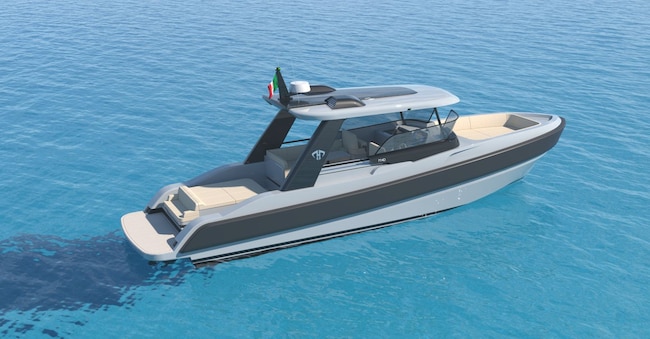
To build and market the first hydrogen-powered tender yacht in Italy and internationally. This is the objective, already at an advanced stage of realisation, of the agreement signed by two historic Made in Italy companies: the Med group, which has been producing boats for professional and military use for over 30 years, and the Marine division of Tesya, an international company, with 28 branches worldwide, which belongs to the Tedeschi family and operates in various sectors (from construction to energy transition, up to asset management and automated intralogistics).
The project, named H1, aims to combine luxury, technology and sustainability, in a boat 12 metres long and 3.2 metres wide, designed to accommodate up to 16 passengers and for which a maximum construction and delivery time of eight months is envisaged, starting from the order of the owners.
H1 will be fitted on board with a propulsion system, developed by Tesya, with fuel cells and fuelled by compressed green hydrogen, which will allow the boat to sail in protected marine areas (Eca) and in settings of naturalistic value. It is a technology developed and tested by the company (through its subsidiaries Cgt and Finanzauto) on the two chase boats built by Bluegame (Sanlorenzo Group) and used in the last America's Cup by the US America's Magic team and the French Orion Express team. Boats that have travelled over 4,000 nautical miles of actual navigation, with technology that Tesya now puts at the service of a tender, the design of which is by naval architect (and sailor) Tommaso Spadolini.
The America's Cup chase boats, explains Alejandro Benito, marine director of the Tesya group, 'were capable of reaching a speed of 50 knots, with both hydrogen and electric propulsion. For H1 we do not intend to reach such a high speed, but the idea is that it will be around 35 knots. Our Marine division normally provides propulsion solutions for all ships, not only for pleasure but also for cargo, in every segment. Now we have also started with the electrification part, which is complementary to the engines that we can deliver or supply, as well as with the alternative fuels part: hydrogen, methanol, ammonia; all solutions that are starting to be applied, to solve the problem of carbon dioxide emissions.
The boat is also the result of a careful market analysis. "We have seen," says Benito, "that there is a potential business, which concerns the owners of large yachts, who can have this tender to move perhaps to an island or make a small trip. We think there could be an interesting market and we have also verified that, already in many ports in the Mediterranean, not only in Italy but also in Spain and Greece, there is the possibility of filling the tanks with hydrogen. And this is a key point of the project, because without the logistics of hydrogen, even if we build a beautiful boat, we could not make it work".

