The initiative

'Media Bias/Media Offenders': Trump's media blacklist on White House website

The White House turns its official website into an interactive blacklist: newspapers and reporters end up in the 'Hall of Shame', with scores, insults and guilty verdicts. From the Washington Post to CBS News, the president's war on alleged fake news becomes government infrastructure

by Angelica Migliorisi

6' min read

Translated by AI
Versione italiana

6' min read

Translated by AI
Versione italiana

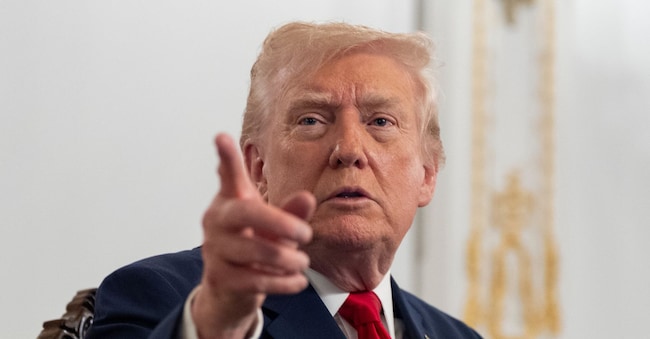
Gone are the days when Donald Trump insulted newspapers on his Truth Social. Now he indexes them on the official White House website. With the launch of the "Media Bias/Media Offenders" page on whitehouse.gov, the administration has turned the federal government's portal into a permanent noticeboard of guilt against newspapers and journalists. A blacklist with names, surnames, titles of articles and alleged 'crimes', displayed on the institutional showcase of the president of the United States. At the centre of the first wave of targets is CBS News, flanked by the Boston Globe and the Independent.

Each week the site presents the three"media offenders of the week", complete with logo photos, aggressive graphics and slogans "Misleading. Biased. Exposed". For each case, the headline, the journalist, the disputed headline and a tab divided into three sections: 'The Offense' (the accusation), 'The Truth' (the White House version), 'Key Points' (the supporting arguments) are listed. The reader is invited to 'shill for the truth' and share the most outraged excerpts on social media.

Loading...

It all stems from a viral video in which Democratic Senators Mark Kelly and Elissa Slotkin, along with other colleagues, call on military and service personnel to 'remember the oath to the Constitution' and to refuse 'unlawful orders'. A message designed to reassure the military in a climate of high political tension. Trump's response, however, shifts the confrontation by an order of magnitude: on Truth Social he accuses the senators of "seditious behaviour, punishable by death", raises posts calling for them to be "hanged" as George Washington would have done, and speaks of "traitors" who attack national security. When CBS, the Boston Globe, and the Independent report on the story, emphasising the gallows language and the risk of political violence, the White House turns the tables: in the indictment on its official website, it accuses them of 'falsely suggesting' a call for executions, insists it was only a call for 'democratic accountability', and brands the coverage as 'subversive'.

Also in the crosshairs is the person, not just the headline. Nancy Cordes, chief White House correspondent for CBS, is named in full in the tabloid as an example of 'misrepresentation'. She is the same journalist who, over the Thanksgiving weekend, had asked the president persistent questions about the security lapses that allegedly caused the gunshot wounding of two West Virginia National Guard members in Washington, in a context where it had already emerged that the suspect had a history of radicalisation. On that occasion Trump had dismissed her as a 'stupid person' on camera. A few days later, her name appeared in the Hall of Shame.

What makes CBS's presence even more significant is the web of interests surrounding it.The network belongs to Paramount Global, which recently emerged from a troubled merger with David Ellison's Skydance Media, son of Oracle founder Larry Ellison, now among the richest and most influential men in Silicon Valley. The $8.4 billion deal went through the filter of the Federal Communications Commission, headed by a Trump-appointed chairman, and was unblocked after Trump himself settled a $10 billion defamation lawsuit he had filed against CBS over an episode of "60 Minutes" with Kamala Harris: the litigation settled in July 2025 with a cheque for $16 million, a minuscule amount compared to the initial demand but symbolically enough to claim a political victory and turn the old enmity into a business relationship.

Immediately after the merger was approved, the new ownership redesigned the editorial line of CBS News. Bari Weiss, a journalist and podcaster who became famous for her criticism of the 'progressive woke' and more conservative views on Israel, university campuses and digital culture, was appointed editor-in-chief. Under her leadership, the newsroom was restructured: away with several programmes and projects on DEI (Diversity, Equity and Inclusion) and climate, into new formats closer to the language of podcasts and opinionism, cuts to correspondents from sensitive areas such as Gaza and the downsizing of some figures linked to social movements. CBS seemed on the way to a repositioning that should have reassured the White House. Yet, the network still ended up in the top 3 of 'offender' media. Because there are no structural allies: all it takes is one week of bad headlines or a story that irritates the president to be hung on the wall.

Trump and his spokesmen present the initiative asa simple response to 'systemic bias' in the press. They cite Gallup polls certifying trust in the mainstream media at an all-time low and Media Research Center studies showing that, in the first months of 2025, coverage of the president on the major generalist networks was negative more than 90% of the time. In this narrative, the Media Bias page would be a form of self-defence: if the press strikes, the White House has the right to react, document and counter-argue.

The fears of associations such as the ACLU, Freedom of the Press Foundation revolve around the imbalance: it is one thing to have a tough, even aggressive confrontation between political leaders and the media; it is another to build a blacklist curated by the executive. The biggest risk is not that the Washington Post, CBS or the New York Times will stop criticising Trump, since they have economic means and legal tools to defend themselves. The real danger is the effect on those who are most vulnerable (local reporters, freelancers, small newspapers) who see a colleague end up in the Hall of Shame and 'learn a lesson'. It is the so-called 'chilling effect': there is no need to censor, it is enough to make it clear that the attention of power can become personal. An implicit threat that is added to the explicit one of personal insults - from 'stupid person' to 'Quiet, piggy' - thrown in front of the cameras.

Portavoce Casa Bianca: Giornalista chiamata Piggy? Stampa dovrebbe apprezzare franchezza Trump

Then there is the way the site plugs into the broader machinery of Trump's political communication. The Media Bias page tabs don't stay locked away in a corner of whitehouse.gov, they get revived on X, on Truth Social, on fundraising mailing lists and on podcasts by commentators close to the White House. They become the reading grid for entire political communities, fuelling micro-campaigns targeted against individual journalists, used to support boycotts, pressure on advertisers and coordinated protests.

The very selection of the 'culprits' reveals the political logic behind the tool. In the Hall of Shame appear newspapers traditionally hostile to Trump, such as the Washington Post - for years in the crosshairs for its tight fact-checking on the president's statements - and MSNBC, accused of 'hysteria' over his economic agenda and, in particular, over the $500 billion plan for the national artificial intelligence infrastructure, the Stargate project. But there is no shortage of theoretically 'closer' media: some sections of the Wall Street Journal, for instance, guilty of delving into Trump's ties with Jeffrey Epstein, crop up on the fringes of the rankings; others are spared. The absence of figures who are also the subject of furious attacks on social media, such as ABC host Jimmy Kimmel, suggests that the choices are not merely reactive but calibrated. In other words, hit where it suits, spare where a communication channel is still needed or where confrontation might cost too much in economic and regulatory terms.

Finally, the historical plan. In the first term, the first cracks in the Trump-media relationship were seen, including withdrawal of accreditation, exclusions from briefings, attempts to discriminate between 'serious media' and 'fake news' by granting privileged access to conservative channels. Today, however, the White House does not just decide who goes into the press room, but compiles a public dossier on the 'bad guys' to be pointed out to public opinion. It is a use of communicative power that not only speaks to a base already convinced that the media are part of a hostile 'deep state', but also risks dragging institutions and citizens into a spiral in which the truth is no longer the result of a comparison between different sources, but the product of an official page that distributes 'scarlet letters'.

Copyright reserved ©
Loading...

Brand connect

Loading...

Newsletter

Notizie e approfondimenti sugli avvenimenti politici, economici e finanziari.

Iscriviti