
Media, the narrative of reality changes by involving diversity
. .

3' min read
3' min read
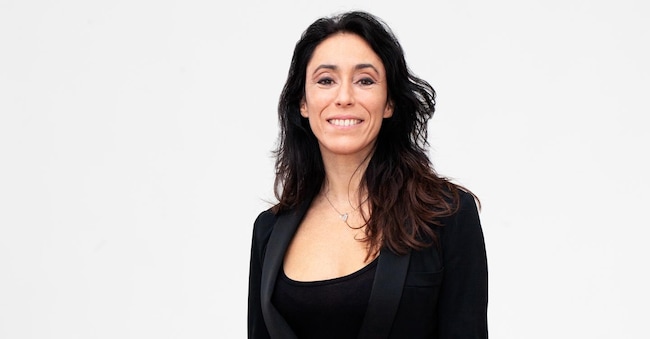
The coverage given by the seven Italian news programmes to Lgbtq+ news in 2023 was 0.4%, according to the Diversity Media Report. A doubled percentage compared to the previous year (0.2%), but certainly still infinitesimal. "That 0.4% is chilling," comments Francesca Vecchioni, president of the Diversity Foundation, which, together with the Pavia Observatory, annually conducts the study on inclusive representation in the Italian news and entertainment media.
"Italian information is mostly political information and deals with Lgbtq+ issues in a political sense," Vecchioni continues, "The theme of representation, on the other hand, is also hearing about Lgbtq+ people not only to discuss rights or because they are involved in news cases. A datum, that of the television news, which should also be read in the light of the audience: it is enough to consider the fact that among the over 64 year-olds 96% habitually watch the RAI networks, while the percentages are lower and lower if we go to the younger population groups and therefore more predisposed to the social change that Italy is experiencing.
The watershed of civil unions
.A positive boost in the media's general representation of the LGBT+ community certainly came from the approval of civil unions in 2016. "Many walls also collapsed in the ability to tell these stories and Italy was able to take steps forward, which in other European countries had already been made," notes Vecchioni, who adds: "Recognition at the regulatory level was therefore a positive driver and the representation of the Lgbtq+ community improved. It was as if a taboo had fallen, which had already fallen at the social level'.
TV programmes
.The presence of queer characters within mainstream linear television has therefore been growing, but this has not always been accompanied by a representation that goes beyond stereotypes. "Television programmes make the big mistake of assuming that their audiences are unknowledgeable about LGBT+ issues and this leads to repeating familiar entertainment mechanisms, with largely cleared and reassuring faces of the community".
Digital Productions
.Those who, on the other hand, do not have to worry about creating a schedule divided by time slot and type of audience present in that slot, is digital. This greater editorial freedom is reflected in a vast and varied content production, capable of providing a representation of the LGBT+ community that is closer to real society. 'The question, on the digital side, is the ability to navigate through this content,' Francesca Vecchioni points out, 'being able to choose and find those that express the best skills. The older generations certainly have more difficulty, and this could be a limitation'.

