
Medical evacuations from Gaza, Europe lags behind: too few patients accepted
Europe has hospital facilities to receive far more patients than at present, but according to aid workers there is a lack of a shared political decision

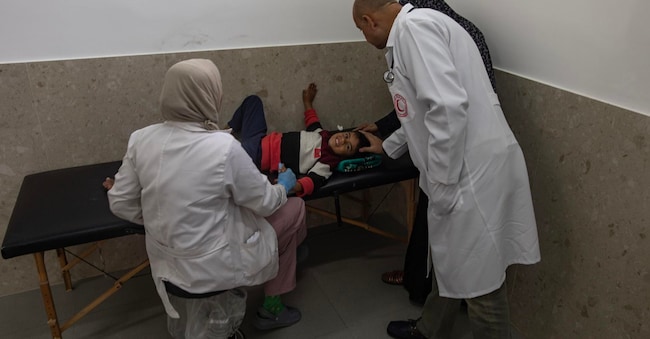
More than two months after the ceasefire came into force, the number of medical evacuations from the Gaza Strip to Europe has not only not increased, but has continued to slow down. This is the fact that most worries the humanitarian organisations working on the ground and that emerges clearly from the figures released by Médecins Sans Frontières and the World Health Organisation (WHO): access to life-saving treatment remains one of the unresolved nodes of the humanitarian emergency.
According to MSF, 148 people in need of specialist treatment were evacuated from Gaza in October, which fell to 71 in November, while for December it is estimated that the total number of evacuations will not exceed 30. A downward trend that clashes with the expectations linked to the ceasefire and which, according to humanitarian organisations, has already had dramatic consequences: hundreds of patients have died while waiting to be transferred abroad or for treatment that the Gaza health system has long been unable to guarantee.
The overall numbers help to frame the scale of the problem. From October 2023 to date, the WHO has evacuated over 7,600 patients from the Gaza Strip to third countries. About two thirds are children. Most of the transfers were to countries in the Middle East and Gulf region, which absorbed the bulk of the health emergency. Europe, as a whole, played a marginal role. According to the latest available data, EU countries are currently hosting 397 patients evacuated from Gaza through the WHO mechanism, an extremely small quota when compared to the needs estimated by the UN agency, which speaks of tens of thousands of people in need of treatment unavailable in the Strip.
Widening the view to the so-called WHO European Region, which also includes non-EU countries, over a thousand people were evacuated from Gaza. Even in this case, however, the figure remains small and concentrated in a few states, with a strong unevenness in the distribution of efforts. Within the Union, the weight of the evacuations fell on a small number of countries.
The Italian case is an emblematic example of the potential, but also the limitations, of the European approach. More than 18 months after the start of the conflict, Italy continues to organise regular medical evacuations - both through the WHO and through Italian bilateral missions - mainly for minors with serious injuries, amputations, oncological diseases or chronic conditions that can no longer be treated in Gaza. According to updated data from the Ministry of Foreign Affairs, more than 230 Palestinian children have been transferred to Italy together with their families, for a total of more than 840 people received through humanitarian and medical missions. The latest operation, on 8 December, brought to Italy 17 children with complex pathologies and 63 accompanying persons, distributed in a network of hospitals involving more than 20 facilities in different regions.


