
Medicine, attempted phishing in Bologna. The public prosecutor's office opens an investigation
Cineca, which managed all IT operations for the Medicine tests, also denounced the spread of fake news by some law firms concerning the exams themselves and their regularity

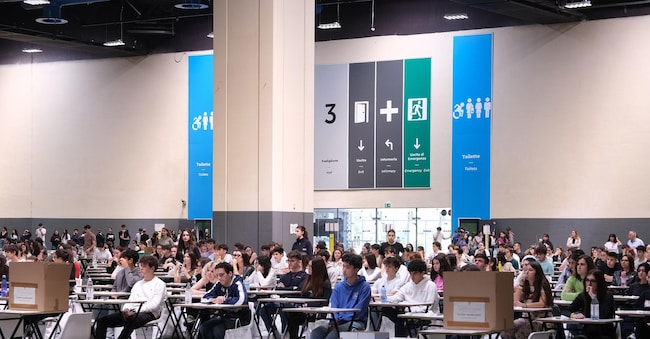
They would have tried to sneak onto the servers of Cineca, which managed all computer operations for the Ministry of University for the Medicine tests, in order to pretend to be 'colleagues' and ask questions in advance. Not only that, they would spread fake news from some law firms about the exams themselves and their regularity.
This is what emerges from the complaints and complaints submitted by Cineca - and agreed with the University Ministry - to theprosecutor's office of Bologna, which has opened a file on the matter.
How they did it: Cineca's complaint
The attempts to steal the applications, using the so-called 'phishing' technique, occurred close to the second roll call on 10 December. Starting at 10.58 a.m. on 7 December, reads the complaint filed by Cineca, "two e-mail accounts traceable to anonymous services and configured to imitate addresses that can be associated with Cineca staff sent e-mail messages to various Cineca staff members involved in the preparation of the physics test on 10 October 2025. In these communications the senders, falsely qualifying themselves as Cineca personnel, insistently requested that the exam topics scheduled for the test be sent. On the morning of 9 December, the same e-mails were delivered again to some of the same recipients. Also on the same day, a further e-mail account, configured to impersonate a manager of the Ministry of Universities, sent numerous communications to a single Cineca recipient'.
Cineca did not bite
Having realised the danger, Cineca did not take the bait and immediately contacted theNosc Emilia-Romagna (Nucleo operativo sicurezza cibernetica), which activated the procedures already adopted in similar cases consisting of the controlled sending of replies containing links and documents specifically designed to identify the IP address of the recipient, presumably the perpetrator of the scam.
The Other Strand
As mentioned, there are two strands to the investigation. In the complaint, in fact, there is also room for a report on some law firms that allegedly spread fake news about the regularity of the tests: in fact, it seems that on the social profiles of some lawyers, screenshots were published with the questions on 9 December, i.e. the day before the exams. Incorrect questions, published with the alleged aim of proving that the tests were irregular and an appeal could be made
Brand connect


Newsletter Scuola+
La newsletter premium dedicata al mondo della scuola con approfondimenti normativi, analisi e guide operative
Abbonati