Diversity

Mediobanca, starting with language to build inclusiveness

WORDS - Win Over Radicated Diversity Stereotypes is the project that promotes the development of a language respecting the uniqueness of each individual

by Letizia Giangualano

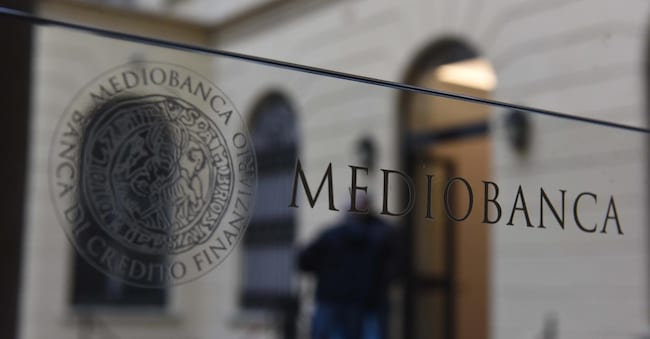
SEDE MEDIOBANCA

4' min read

4' min read

What does it mean to speak inclusively? How is it learnt? What resistance is encountered? Answering these questions is a collective task that certainly involves individuals themselves, but also organisations, companies and institutions as actors in the public space and generators of culture.

Dealing with the topic of inclusive language confronts us with a landscape full of nuances and, at times, unexpected resistance. Exploring new forms of expression, confronting emotional barriers, resistance, entrenched beliefs. Of course it helps to have a developed level of empathy towards minority groups, but goodwill alone is not enough.

Loading...

WORDS - Win Over Radicated Diversity Stereotypes - is the Mediobanca Group's project that promotes the development of a greater awareness of the power of language as a tool to foster inclusion and respect for the uniqueness of each individual, from which a book was born that brings together contributions from experts.

"The responsible approach to business is rooted in the DNA of the Mediobanca Group, which wishes to contribute to positive social change by promoting a corporate culture based on diversity and inclusion. With the toDEI project we have experienced the benefits of valuing the uniqueness of people in the workplace. WORDS allows us to take a step forward in our commitment, sharing with our community of reference practical answers to achieve inclusion in their daily lives through language, the most powerful tool that everyone has to create relationships and impact on the social reality in which they live," said Olimpia Di Venuta, Group Diversity & Inclusion Manager of Mediobanca.

Openness to the Lgbtq+ community

Piazzetta Cuccia's commitment to inclusive language also includes heteronormativity and Lgbtq+-themed language. The fourth chapter of the publication, edited by Francesco Ferreri, cultural anthropologist and trainer, and Lorenzo Gasparrini, feminist philosopher and trainer, is dedicated to this topic.

"Often the way we talk," the contribution reads, "divides the world into two categories, into two reference models that seem absolute: female/male. This brings with it certain behaviours that are considered socially accepted, acceptable and 'normal', leaving no room for other possibilities. Our language can, on the other hand, give us back that space, to pause the binary view of the world, which we also convey with our words. To facilitate this change, it might help to become aware of the meaning of certain terms that are often confused with each other'.

The chapter also contains a glossary of terminology useful for understanding how to talk about and with the LGBT+ community, and also answers the objection: but if they are private facts, why is it really necessary to talk about them at work? "Why, if we are heterosexual, do we have no problem telling facts about our private lives at work, whereas if we are gay it is almost taboo? What is the difference? Actually none, yet a sentence like the one quoted could happen. All of us, regardless of our emotional and sexual orientation, need connection, closeness, contact and affection. So why see differences in our private lives? By using a language that is more open to the affective diversity of others, we can contribute to a 'safer' working environment, from an emotional and psychological point of view. And this can foster more opportunities for people to choose to tell their stories, to the extent that they want to".

Who demonstrates more openness to inclusive language?

.

In order to respond to the need to develop a shared and inclusive language, the Mediobanca Group started from an initial internal listening phase, led by the Università Cattolica del Sacro Cuore of Milan, to investigate the roots and contents of resistance and reluctance among the corporate population. The research "What if it were you?" coordinated by two professors from the Università Cattolica del Sacro Cuore of Milan and promoted by the Mediobanca Group, in collaboration with the training company Diversity and Inclusion Speaking, ended with a survey aimed at the entire corporate population, involving 1110 employees.

It emerged that those who experience the effects of careless and disrespectful language more personally, such as the female population and those belonging to minority groups, show greater openness and sensitivity towards more inclusive communication. The opposite is true for the male population and those who belong to the majority groups (heterosexuals, people without disabilities and those who do not belong to minority ethnic groups in our country).

In particular, 44.8% of women (compared to 32.6% of men) would be very interested in receiving training and deepening the topic of inclusive language. Confirming this trend, we see that 46.3% of people belonging to minority groups declare a full willingness to learn more about the topic, through training and updates, while majority groups are more resistant, showing interest and willingness in only 36.3% of cases.

"WORDS - What inclusive speech means"

.

The results of the research were collected in the publishing project "WORDS - What does inclusive speech mean", edited by Alexa Pantanella. A choral volume that is divided into 7 chapters, conceived to give practical and concrete answers to doubts, questions, curiosity and resistance that emerged from the research itself.The first chapter highlights how the Italian language has always been in evolution, not only to record but also to support the changes taking place in the social context. There is then a chapter devoted to the language of gender, with particular reference to professional and educational titles in the feminine and to the use of the masculine in an over-extended form; one that introduces and explains the phenomenon of ageism (discrimination on the basis of age); one that focuses on shedding light on certain terms related to disability and ableism.

Mediobanca's commitment

The guidelines of the Mediobanca Group's strategy currently focus on gender, cultural and generational diversity. The project in which the book "Words" was born is a path aimed at creating a more inclusive work environment, promoting a corporate culture based on understanding, respect and appreciation of differences.

Copyright reserved ©
Loading...

Brand connect

Loading...

Newsletter

Notizie e approfondimenti sugli avvenimenti politici, economici e finanziari.

Iscriviti