
Mediterranean: container volumes expected to rise despite the Strait of Hormuz
The SRM research centre forecasts a 2.8 per cent annual increase in port traffic up to 2030. Italian ports are also handling more freight

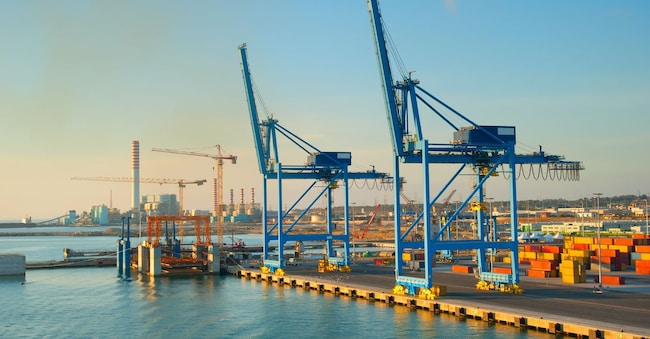
Although shipping traffic through the Strait of Hormuz has fallen by 95 per cent and the geopolitical situation in the Middle East is also affecting traffic through the Suez Canal, containerised freight traffic in the Mediterranean is on the rise and is expected to continue growing at least until 2030. This is according to the ‘Italian Maritime Economy 2026’ report by SRM, the research centre affiliated with Intesa Sanpaolo.
The study was presented in Naples and highlights, amongst other things, that, despite geopolitical tensions and the reduced use of the Suez Canal, the Mare Nostrum ‘continues to strengthen its strategic role in world trade. In 2025, the region’s main container ports handled over 72 million TEUs (a unit of measurement equivalent to a 20-foot container), representing an overall increase of 5.9 per cent’. Furthermore, ‘intra-Mediterranean container traffic continues to expand: in 2025, volumes grew by 6.3 per cent compared with the previous year, exceeding 3.2 million TEUs’. Moreover, despite the far from encouraging developments in the Strait of Hormuz, ‘the forecasts for 2030 – as highlighted in the SRM report – indicate a 15 per cent increase in Mediterranean container traffic over the five-year period, equivalent to an average annual rate of 2.8 per cent, which is higher than the global average’.
As for Italian ports, “in 2025, the port system authorities handled a total of 511 million tonnes of cargo (+3.5%)”, with all the main traffic segments showing growth (liquid bulk, containers and ro-ro). Container traffic, meanwhile, “reached 12.8 million TEUs (+7.1%), driven mainly by strong growth in transhipment activities (+13.3%)”.
According to Massimo Deandreis, managing director of SRM, Italian and Mediterranean ports continue to grow at an above-average rate “because geopolitical tensions are not halting maritime trade, but are reorganising it. At this stage, the Mediterranean is strengthening its central role as a hub connecting Europe, Asia, Africa and the Middle East. Businesses and carriers are seeking more resilient routes, greater diversification and ports capable of ensuring operational continuity. Italian and Mediterranean ports are growing because they are part of this new landscape: they are not merely transit points, but strategic infrastructure for economic security, energy, industry and European supply chains. This is also demonstrated by a comparison with the Northern Range: today, Mediterranean container ports handle more cargo than the major ports of Northern Europe. Ten years ago, this would have been far from a foregone conclusion.”
With regard to the situation in the Middle East, Deandreis points out that, ‘before the crisis, Hormuz was one of the world’s main energy hubs: 37 per cent of crude oil, 28 per cent of LPG and 19 per cent of LNG by sea passed through it, whilst the share for containers was more modest: around 3 per cent. Today, in terms of volumes, we are experiencing a period of high volatility; but the key point is to highlight that traffic through the Strait has fallen by around 95 per cent compared with normal levels. This figure illustrates the fragility of chokepoints: even when container traffic is limited, the impact on energy, costs, insurance, routes and freight rates can quickly spread to the entire global maritime economy. At the same time, the major carriers are reacting swiftly, activating alternative routes and intermodal solutions that integrate sea, road and rail, particularly on the Arabian Peninsula. It is a clear signal: in the new global logistics landscape, efficiency depends on the ability to diversify routes, hubs and modes of transport.”


