
Mediterranean: container traffic on the rise despite the crises
SRM study: cargo volumes are set to rise by 7 per cent in 2025, with a further 15 per cent increase forecast between now and 2030. EU operators are seeing a 13 per cent increase in capacity, whilst non-EU operators are seeing a 13 per cent decrease.

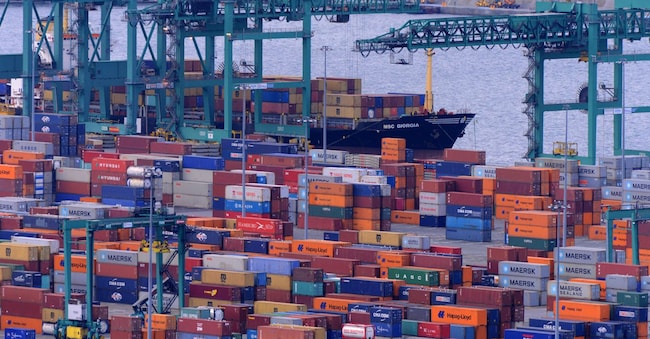
Despite the geopolitical crises afflicting the world and, in particular, despite the deadlock in the Straits – caused in Suez by the Houthi attacks on ships (which are currently grounded) and in Hormuz by the clashes between the US and Iran – container traffic in the Mediterranean continues to grow. This is according to *Il Mediterraneo, un mare da 102 milioni di teu* (The Mediterranean: a sea of 102 million TEUs), a report by SRM (the research centre affiliated with Intesa Sanpaolo) which will be presented today at Naples Shipping Week (an event concluding on Sunday), during the Port & ShippingTech Conference.
In 2025, container traffic in the Mediterranean increased (Srm analysis based on Drewry data) by 7 per cent compared with the previous year; and the forecast for 2026 is for a 3.3 per cent increase on 2025; so growth is set to continue, albeit at a more modest rate, despite the events in the Strait of Hormuz.
Moreover, in 2025, global TEU (a unit of measurement equivalent to a 20-foot container) traffic recorded a 6.4 per cent increase, which was therefore lower than that in the Mediterranean; whilst in 2026, again at a global level, the market is expected to expand, albeit at a slower pace, with growth of 2.8 per cent, which is, as we have seen, still lower than the forecast figure for the Mediterranean.
Still on the subject of forecasts, but covering a longer period, the SRM study reveals that the Mediterranean is projected to grow by +15 per cent over a five-year period, rising from 89.2 million TEUs handled in 2025 to 102 million (hence the report’s title) in 2030. This is against a backdrop of a global average increase of 17 per cent over the same period, with Asia growing by 20 per cent and North America by 12 per cent – a rate that is therefore lower than that of the Mediterranean region between 2025 and 2030.
“The Mediterranean,” emphasises Alessandro Panaro, Head of Maritime & Energy at SRM, “has continued to grow because the disruption caused by geopolitical crises has been logistical, not in terms of volumes. In short, these crises have meant that the Mediterranean has received goods later than usual, but has received them nonetheless. Companies that needed materials or had to export them in containers maintained their volumes at the same level. Perhaps, however, due to the fact that ships arrived later (by sailing round Africa, ed.), they had to change their stock management policy; but that is another matter.”


