
Mediterranean Games: Italia leads the way in medals, whilst swimming rests on its laurels
As at 31 August, around 160,000 tickets had been sold. The closing ceremony will take place on 3 September at the Iacovone Stadium

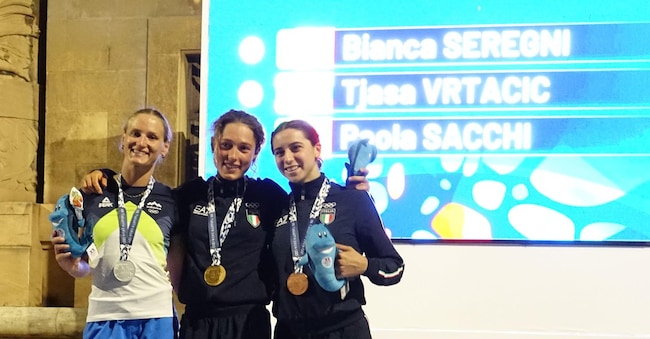
The Mediterranean Games are drawing to a close on 3 September at the Iacovone Stadium in Taranto, before the baton is passed to Kosovo, which will host the 21st edition from 24 July to 4 August 2030 in the capital, Pristina. With just a few days to go until the closing ceremony, the figures show that Italia is clearly leading the way in terms of medals won, with swimming taking the honours amongst the 33 sporting disciplines at the event, whilst around 160,000 tickets had been sold as of 31 August.
Having kicked off with the opening ceremony on 21 August, the Games are delivering some great sporting moments, public participation, vitality, enthusiasm and colour, whilst also showcasing a new image of Taranto, a city hitherto weighed down by the long-standing issues surrounding the former Ilva steelworks. In the spotlight, alongside the sporting competitions, the competitive spirit and the fact that 3,800 athletes from 26 countries in the Mediterranean region have arrived – including around 500 from Italia alone – the spotlight is also on the legacy of sports facilities built for the Mediterranean Games, funded by the 275 million allocated by the Government. Particularly noteworthy are the radically refurbished Iacovone Stadium and, among the new facilities, the swimming stadium with two 50-metre Olympic-sized pools, the PalaRicciardi for both outdoor and indoor activities, the tennis centre and the urban sports park – all located in Taranto.
President Ferrarese: a legacy for young people
“When I look back on the work carried out over the last few years, I can’t help but feel proud and grateful,” says Massimo Ferrarese, the Government Commissioner for Public Works and Chairman of the Organising Committee. “Thanks to a team of exceptional colleagues, we have achieved all this in record time, starting practically from scratch. The collaboration between the Government, technical experts and businesses is evident in the Iacovone Stadium, a symbol of this journey. It has been described as one of the most beautiful venues in southern Italia and is certainly set to be the jewel in the crown of the entire infrastructure plan. But the overall legacy that I hope the Games will leave to the young people of this city and of all the other municipalities that took part in the event is just one: the Mediterranean Games represent the starting point of a new phase for Taranto, which is set to transform this into a stable driver of economic development”.
Director-General Molfetta: Italia has so far won 51 medals out of 150
“Are we on the way down? No, we never are; we’ll be on the way down on 4 September when the last delegation leaves,” says Carlo Molfetta, General Director of the Games. “I’m a sportsman and I think that in the 88th minute, if you think the match is over, your opponents will turn it round on you. For Italia, the sport that has brought the most success so far is swimming. It has brought home 51 medals; Benedetta Pilato from Taranto won the first gold for the Italian team in her home town, and a third of Italy’s 150 medals have come from swimming. The fact that Turkey is second in the medal table comes as no surprise. Both in Tarragona, Spain, and in Oran, Algeria – at the two previous editions of the Games – Turkey performed very well.”
Who was there: from Mattarella to Albert of Monaco
Five heads of state and three heads of government have arrived in Taranto for the opening ceremony of the Games. Among the foreign heads of state, Bajram Begaj arrived from Albania, Albulena Haxhiu from Kosovo, Gordana Silianovska-Davkova from North Macedonia and Joseph Aoun from Lebanon. Prince Albert of Monaco also arrived in recent days. There was a very strong Italian turnout: President Sergio Mattarella, who delivered the opening address for the Games – and, on the sidelines of the ceremony, congratulated Ferrarese on the work carried out – Prime Minister Giorgia Meloni, the Presidents of the Senate and the Chamber of Deputies, Ignazio La Russa and Lorenzo Fontana, and several ministers: Antonio Tajani, Deputy Prime Minister and Minister for Foreign Affairs; Tommaso Foti, Minister for European Affairs; Andrea Abodi, Minister for Sport; and Giancarlo Mazzi, Minister for Tourism. Also present was the Executive Vice-President of the European Commission, Raffaele Fitto.

