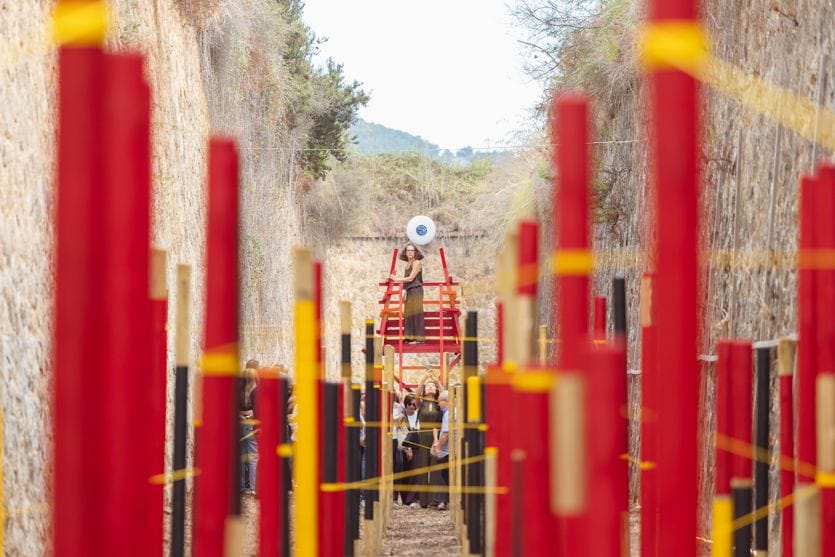
Biennale dello Stretto: the Mediterranean as a laboratory of thought – Calabria and Sicily
A long-running event, running until 13 December, in which art, architecture, design and photography explore the changes taking place in cities and in the communal spaces where communities interact

Key points
How do cities, landscapes and communities change? Does this transformation lie – before it manifests in forms – in language? What is the meaning of a boundary, of the line that divides? Could it, instead, be a threshold? How do different identities coexist? Are Calabria and Sicily necessarily separate territories, or is there another way to blend their histories so that places and people can recognise one another and interact?
Complex questions for difficult times
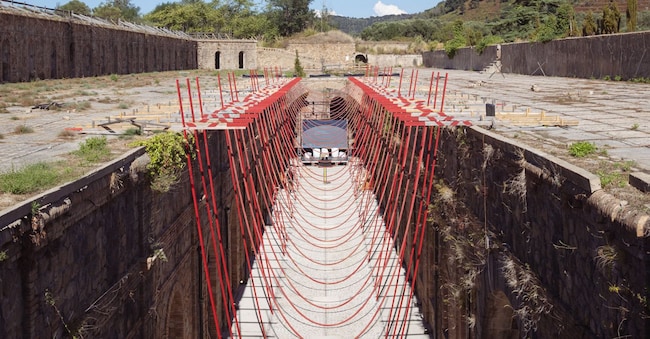
Complex questions for difficult times cross the sea, from Reggio Calabria to Messina, seeking answers in art, architecture, philosophy, design and photography: the Biennale dello Stretto transforms a stretch of the Mediterranean into a vast laboratory of thought, from Campo Calabro to the Sicilian shore. With international extensions from Agadir to Paris. It is organised by the Fondazione le città del futuro, under the direction of architect Alfonso Femia – founder and CEO of Atelier(s), with offices in Milan, Genoa and Paris – and, for this 2026 edition, with contributions from landscape architect Annalisa Metta, a lecturer at Roma Tre University, and the Moroccan architect and anthropologist Salima Naji.
Changes in cities and landscapes
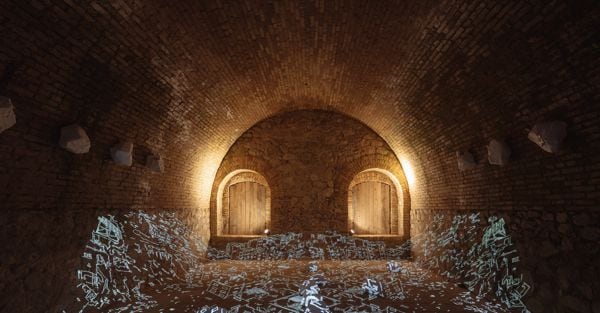
Eighty-six days of exhibitions, talks, workshops and explorations, across various venues, with the stated aim of drawing attention to the transformations taking place in the cities and landscapes of the southern Mediterranean and the Middle East, and of shifting the focus from Central Europe to the South, in a long-running cultural event (until 13 December, programme available online).
Femia: ‘The Strait, a region with the sea within it’
‘Today, cities are fragile and complex organisms in which architecture must become a collective, dynamic and shared journey. A project – in this case, stretching from one shore to the other – capable of capturing the changes taking place in these parts: human changes, urban changes and changes to the landscape,” explains architect Femia, from a fundamentally philosophical perspective. “ ‘This is why we are here, with our Biennale, which, unlike others, does not refer in its name to a single city, but to a region that encompasses the sea. A space in which water is the very essence of the landscape. And it brings people together, uniting them.’
The risk of ‘evolutionary misalignment’
At the heart of these events lie geography, the local area and the community – elements in a constant state of transformation, “with a sequence of expansions and contractions, sometimes extremely rapid, even instantaneous,” notes Annalisa Metta. “These shifts often give rise to an evolutionary misalignment that takes its toll on cities and regions.”