
Mega tunnels for a high-speed, sustainable Europe
The Brenner Tunnel and the Fehmarnbelt Tunnel are two major infrastructure projects that will transform transport and logistics in Europe

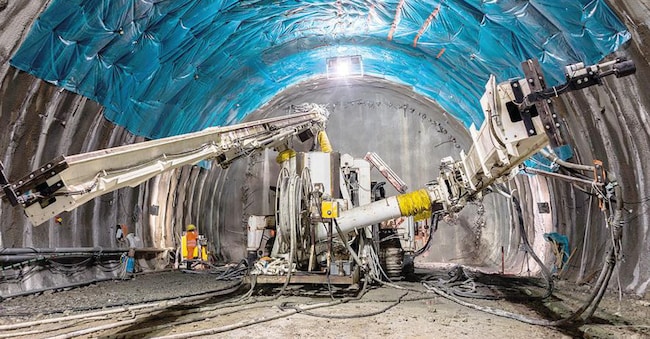
Two projects, a single goal: to create a high-speed, sustainable Europe. A total investment of over 20 billion euros (just over 10 billion each). Two tunnels that will be completed, almost in parallel, between 2029 and 2032. The first (railway) is under construction in the heart of the Alps, beneath the invisible line dividing Italia and Austria; the second (motorway and railway) is situated further north, in the Baltic region, where Denmark meets Germany and the sea has always separated peoples and trade routes. Two geological challenges overcome thanks to decades of research and planning. The Brenner Base Tunnel, which will link Fortezza (Italia) to Innsbruck (Austria), and the Fehmarnbelt Tunnel, the world’s longest undersea tunnel, are flagship projects of the TEN-T infrastructure network, set to reshape the landscape of European transport and logistics.
Two engineering masterpieces that also represent political, economic and cultural projects. They bridge geographical distances, but also those between citizens and their regions, creating opportunities. The Brenner looks south, integrating Italy’s high-speed rail network with the German rail network. The Fehmarnbelt looks north, connecting Scandinavia to Central Europe via a new trade route that facilitates trade between the Baltic ports and continental markets.
Parallel projects
Thanks to the new Brenner rail tunnel, in the construction of which the Webuild Group is also involved (the Italian company is responsible for building 50 of the total 64 kilometres), journey times by rail between Fortezza and Innsbruck will be halved from two hours to around 50 minutes, eliminating the Alpine gradients that force freight trains to brake and slow down constantly. It is estimated that the Brenner Tunnel will shift a significant proportion of freight traffic from road to rail, reducing the noise and air pollution that plagues the Isarco Valley and the Austrian Tyrol.
The Fehmarnbelt Tunnel will be just as revolutionary. The island of Fehmarn in Germany and the island of Lolland in Denmark are currently linked by ferries that carry thousands of people and heavy goods vehicles every day. However, following the signing of a bilateral agreement in 2007, plans were drawn up to link them via a road and rail tunnel running beneath the Baltic Sea. At present, the ferry crossing takes 45 minutes, plus waiting times and the time needed for boarding. With the tunnel, the journey will take 7 minutes by train and 10 minutes by car, making it possible to travel from Copenhagen to Hamburg in two and a half hours instead of the current five hours. According to the Danish company managing the project, the new link will generate economic benefits of around 3 billion euros for the Danish economy, and at least double that amount when the entire Baltic region is taken into account.
Brenner Base Tunnel
The new rail infrastructure linking Italia and Austria, known as the BBT (Brenner Base Tunnel), is set to bring about a profound change in transport flows between the north and south of Europe. Currently, the Brenner motorway is one of the most congested in Europe: every year, over 2.5 million lorries cross it, carrying more than 50 million tonnes of freight. Today, over 73 per cent of goods passing through the Brenner Alpine pass travel by road and only 27 per cent by rail. This situation is unsustainable for the Austrian authorities, who have, over time, imposed a long series of bans on lorry traffic along the Brenner motorway route. This obstructionist policy has infuriated Italia, prompting the government to lodge an appeal with the European Court of Justice against Vienna for breaching the EU’s core principles (freedom of movement for goods and people). From 2032, when the project is due to come into operation, the current imbalance between road and rail transport is expected to ease, giving the Tyrolean valleys some breathing space. Journey times for passenger trains will fall from around 85 minutes to 25 minutes on the Brenner section, whilst freight trains will take around 35 minutes instead of over 100 minutes. The train journey between Verona and Munich (Germany) will be shortened by over two hours, making the train a genuine alternative to cars and aeroplanes for medium-distance travel.


