Locarno Film festival

"Mektoub, My Love: Canto Two", end-of-summer melancholies with Kechiche

In competition at the Locarno Film Festival, the third chapter in the saga of the controversial Tunisian director

3' min read

3' min read


Loading...

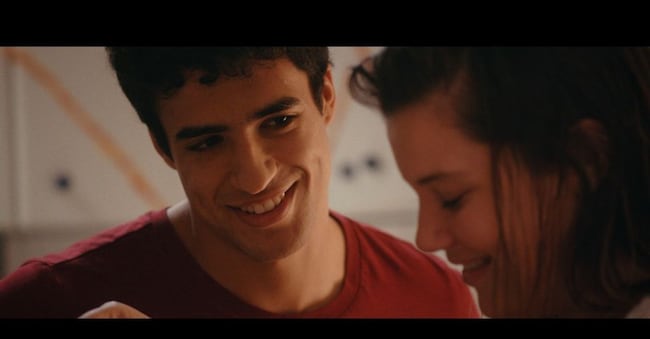
It has been eight years since the Venice Film Festival screening of 'Mektoub, My Love: Canto Uno', a beautiful film in which Abdellatif Kechiche - back in the days after winning the Palme d'Or at Cannes in 2013 for 'The Life of Adele' - recounted a summer in Sète (south of France) in 1994 and chose Amin, a young aspiring screenwriter and director, as the main character.

Eight years that vanish in a flash upon seeing 'Mektoub, My Love: Canto Due', perhaps the most eagerly awaited film in this year's Locarno Festival competition, not only because the cast has not aged (filming took place in continuity), but because the director is able to immediately plunge us back into those events, taking us to eat on the beach and dance with his characters.

What has changed is that in the 2017 film, there was zest for life, joy, exuberance and a lot of hope ready to be realised under the summer sun; now, however, the story of Amin and his friends and family is cloaked in increasingly dark, melancholic traits, as if the only possibility of fulfilment lies within the space of desire.
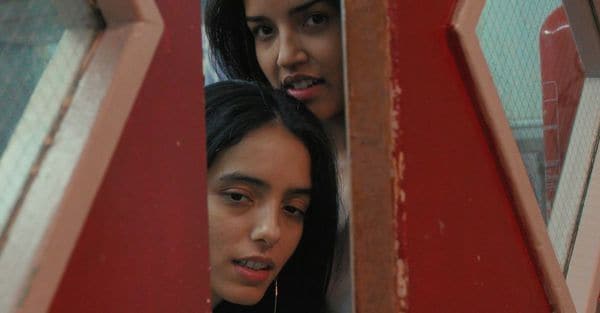
It is no coincidence that between the 'Two Songs' was 'Mektoub, My Love: Intermezzo', which was presented with a long trail of controversy at the 2019 Cannes Film Festival, due to accusations of sexism and brutal methods on set, as well as a long sequence in a bathroom that raised a real fuss.

Beyond the controversy, going back now to that film six years ago, one discovers that its function and positioning were very different from what one might have expected: after watching 'Mektoub, My Love: Canto Due', without wishing to reveal too much, one perceives how 'Intermezzo' (a film almost entirely set in a discotheque) is a product in which Kechiche played with time and its relativity, through decidedly fascinating dramaturgical keys.


A film about cinema

"Mektoub, My Love: Canto Two" opens by showing us Amin taking (us?) pictures. Even more than the previous two chapters, it is the cinema that is the great protagonist of this work in which a passage from 'Raging Bull' is also re-enacted.

In this film, Amin meets a powerful American producer and his young actress wife: interested in a script the boy has written, the two seem ready to let him realise his dream, but with some compromises on the title and the conclusion Amin had in mind. However, fate ('mektoub' means just that...) will take over in a long night sequence that coincides with a conclusion particularly emblematic for everything Kechiche has built up beforehand.

In this work of extreme naturalism, in which the end of the summer soon becomes a metaphor for something broader, Kechiche's great ability - through his editing times and directorial choices - to show us fragments of life that are so believable, between joys and sorrows, smiles and tears, represented by the gazes of characters from whom we do not want to detach ourselves, is once again striking.

Dracula

.

Also eagerly awaited in competition was 'Dracula', the new film by Radu Jude, the brilliant Romanian director who had presented the powerful 'Do Not Expect Too Much From the End of the World' at Locarno two years ago.

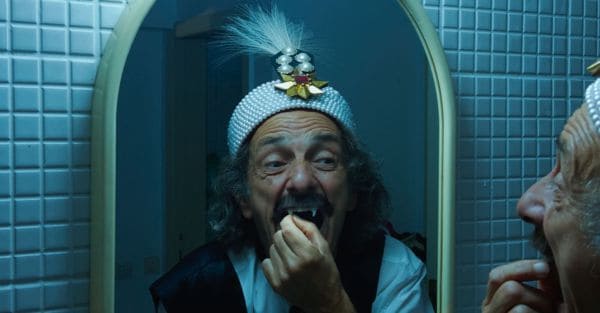
This time, however, the results are not the same: in almost three hours, Jude stages a kind of grotesque and parodic deconstruction of the figure of Dracula, through amateurish acting, heavy use of artificial intelligence, the mixing of vampirism and capitalism, and stories that fit inside other stories.

There is no shortage of ideas (the loss of Romanian identity and the brutality of a world that demands blood and violence), but there is far too much meat on the fire and the film has an excessively confused and erratic pace.


Mare's Nest

.


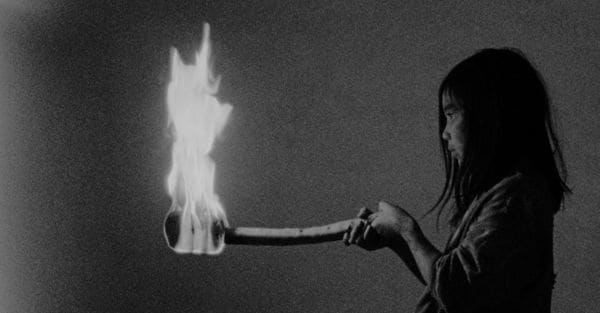
Finally, a mention must also go to Ben Rivers' curious feature film 'Mare's Nest'. Also presented in the competition, the film is about a young girl travelling through a mysterious world without adults. She will meet many peers on her path, before continuing on to a future with no certainties.

As usual, Rivers opts for a profoundly experimental and intellectual style in this feature film, which is also partly inspired by Don De Lillo's play 'The Word for Snow'. At times, there is a certain smugness and the structure is too brainy, but the suggestions are numerous and several visual passages hit the mark. Albeit with some reservations, a successful film that does not leave you at the end of the credits.

Copyright reserved ©
Loading...

Brand connect

Loading...

Newsletter

Notizie e approfondimenti sugli avvenimenti politici, economici e finanziari.

Iscriviti