
Meloni in Paris with the Volunteers, 'Italia ready to play its part on Hormuz'
There is talk of a mine clearance plan ready to be deployed, especially if the truce between Iran and the United States is extended

Key points
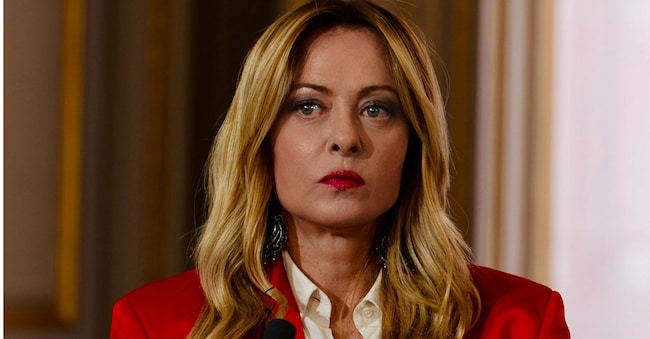
Europe is ready to do its part with a 'neutral' mission in the Strait of Hormuz and Italia to make 'its naval units available on the basis of a necessary parliamentary authorisation' as required by the Constitution. At the end of a week marked by frictions with US President Donald Trump, Prime Minister Giorgia Meloni this time decides to 'be there', to stand by the Volunteers, and participate with German Chancellor Merz in the conference convened in Paris by French President Emmanuelle Macron and British Prime Minister Keir Starmer.
Comparison on new bases
After the frost last February, around the case of Quentin Deranque, the young far-right activist who died in Lyon, and the postponement of the Italia-France bilateral summit scheduled to take place in Toulouse on 10 April, there are kisses and hugs between Macron and Meloni. The greeting between the two upon the Prime Minister's arrival at the Elysée Palace is warm, they exchange a joke, they smile. While the Four Willing are reunited with representatives of other connected countries - 'more than fifty', the French president writes on X - including China and India, news arrives of the reopening to commercial ships of the Strait of Hormuz for the duration of the ceasefire. "The reopening of Hormuz is essential for any serious negotiation project for the crisis in the Middle East," says Meloni in joint press statements with Macron, Starmer and Merz.
Meloni: Italia ready to play its part
Announcing the intention of a mission in the Strait of Hormuz is Macron. Meloni affirms that "Italia is ready to do its part," specifying two things: first of all, that "an international naval presence in Hormuz can only be started, with an exclusively defensive posture, when there is a cessation of hostilities," and that the willingness to send "its own naval units" can only take place after a "necessary parliamentary authorisation" as envisaged by "our constitutional rules. The premier adds that "a valuable experience for what we are trying to do now is that of the European operation Aspides, which has an important presence in an area adjacent to that of Hormuz". He does not mention any role for the UN, which Merz does, nor a possible US involvement, a subject that divides Macron and Starmer. The only reference to the US is to underline their mediation that led to the 'invaluable' ceasefire in Lebanon.
The reactions
In Italia, the oppositions observe the change of gear of the premier: 'How to change in order not to die, sang Fiorella Mannoia but Meloni is out of tune politically, she has put herself back at the table of those she did not want to see because she wanted to bridge Trump. She had come away with disdain, now she is backtracking,' stung Italia Viva leader Matteo Renzi. For the leader of Più Europa Riccardo Magi, 'Italia did well to participate and play a leading role but it is undeniable that it is at the same time a defeat in record time of everything it has said up to now: bet on Trump and scuttle the EU'.
Avs and M5s already warn about the contours of the naval mission: 'It can only have our consent in Parliament if it has a clear UN mandate,' Fratoianni and Bonelli declare. "The UN aegis," the Pentastellati stress, "is necessary to guarantee a clear legal framework and a clear separation from Trump's unilateral initiatives. We wonder whether Meloni's was an oversight or a first attempt to get back into the American president's good graces"

