
Meloni surpasses Craxi and celebrates: hers is the third longest government. Strategy and unknowns
Today marks the milestone of 1,094 days in office, only Berlusconi Governments 2 and 4 remain to be beaten. The promise: 'We will continue to work with seriousness and a sense of responsibility'

Key points
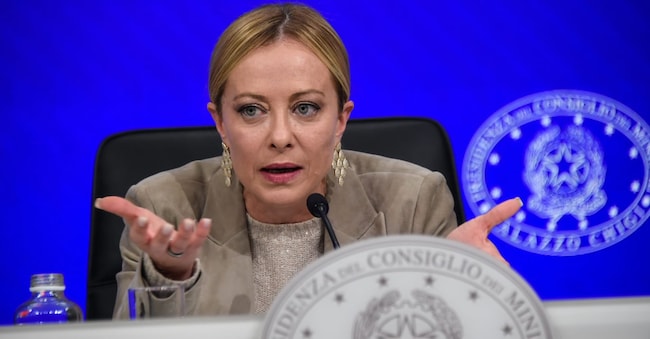
"Giorgia Meloni, on the eve of the third birthday of the Executive - which was sworn in at the Quirinal on 22 October 2022 - entrusts her thanks to the electorate to a post on social media: 'Your support and your trust,' she adds, 'are the engine of our daily action.
The numbers: now only Berlusconi Governments 2 and 4 remain to be beaten
Più volte nelle scorse settimane, durante i comizi a sostegno dei candidati alle regionali, Meloni ha citato tra le prime «previsioni smentite» della sinistra quella della presunta breve durata che il Governo di destra avrebbe avuto. I numeri danno ragione alla premier: oggi l’Esecutivo taglia il traguardo dei 1.094 giorni, superando il primo Governo di Bettino Craxi che era rimasto in carica per 1.093 giorni nel periodo compreso tra il 4 agosto 1983 e il 1° agosto 1986. Aveva già superato l’Esecutivo di Matteo Renzi, durato 1.024 giorni (dal 22 febbraio 2014 al 12 dicembre 2016). E adesso corre per battere i record dei Governi di Silvio Berlusconi: il Berlusconi II è il più lungo della storia della Repubblica, rimasto in carica per 1.412 giorni tra l’11 giugno 2001 e il 23 aprile 2005. Al secondo posto c’è il Berlusconi 4, con 1.287 giorni: dall’ 8 maggio 2008 al 16 novembre 2011.
Stability as a value
It is not a matter of simple calendar calculations. Because political stability, for Meloni, goes hand in hand with prudence in the management of public accounts, confirmed by the lightest manoeuvre in the last decade: just over 18 billion. Stability and prudence are the pillars chosen by the Prime Minister, in tandem with the Minister for the Economy, Giancarlo Giorgetti, of an overall strategy to acquire for the country that credibility that has too often been lacking in the past.
Rating agencies' verdicts
An asset that is earning Italy the trust of the markets, as shown by the recent verdicts of the rating agencies: the promotion of Fitch from BBB to BBB+ (with a stable outlook), the confirmation of Standard&Poor's, which had promoted the country in April and confirmed it, and, lastly, the rise of Dbrs Morningstar to A from BBB, with a stable trend. The explanation lies in the stability-credibility combination: Italy - Dbrs emphasised - is going through a "period of political stability that guarantees greater predictability in the formulation of policies and credibility in its budget plans. The opposite of France, which in fact
The path designed with Brussels
The merit, of course, does not lie with the government alone. Europe has been decisive in calling the Member States to come back from overruns with the medium-term structural budget plans. A task that Italy is implementing with particular diligence, with the aim of exiting the infringement procedure for excessive deficit a year early, as early as 2026, and activating the national safeguard clause of the Stability and Growth Pact, which is worth a maximum of 1.5 per cent of GDP in flexibility to exclude defence spending.


