
Meloni towards Cyprus summit amidst Hormuz, Ets and Unifil dossiers
PM prepares for battle on energy, but increases pro-Europeanism for a mission in the Straits and Lebanon

Key points
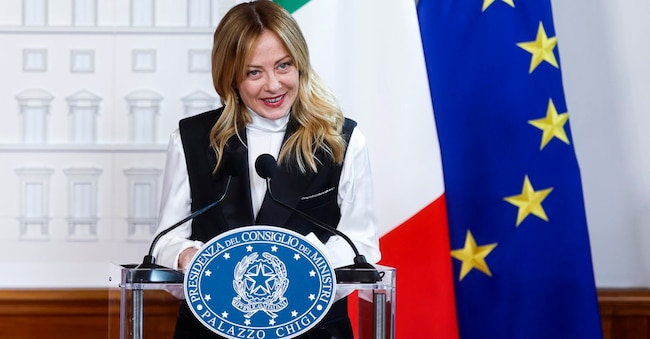
It will be a two-sided informal European Council for Giorgia Meloni, the one scheduled in Cyprus on 23 and 24 April. On the one hand it should certify the prime minister's yes to greater European interventionism in the Strait of Hormuz and in Lebanon, for the post-Unifil period: an almost obligatory reaction in the face of Donald Trump's disengagement (and impasse) in Iran. On the other hand, however, it is expected to take a snapshot of the differences between the Twenty-Seven on the measures against the high energy prices proposed by the EU Commission, with Italy disappointed and in the forefront in demanding the general suspension of the Stability Pact and the temporary halt to the Ets on thermoelectric power.
The dual axis with France on the Middle East
Confirming that the European alliances are increasingly variable, Friday's summit of the Willing in Paris saw the positions of Meloni and Emmanuel Macron come closer again, after the frost of recent months. Within the E4 format that drove the summit - with the Germany of Friedrich Merz and the United Kingdom of Keir Starmer - the harmony between the Italian leader and her French counterpart was evident. First of all on Hormuz: the need for a mission to ensure safe navigation in the Strait was shared by all. But Merz cited the UN umbrella and the need to involve the United States, while Macron spoke explicitly of a 'neutral mission' with 'non-belligerent countries'. Meloni, on the other hand, dropped the stake of the UN resolution, impractical given the vetoes paralysing decisions. And on the US, in the light of the attacks by the tycoon on Meloni, she is pragmatic: their participation is not a conditio sine qua non, explain from Palazzo Chigi.
For Unifil, the idea of a European operation
The need to relaunch European action before multilateral bodies in deep crisis also animates the embrace between Italia and France over Lebanon. After the killing of the French soldier, the Minister of Defence, Guido Crosetto, returned to express doubts about the Unifil mission, which expires at the end of the year and is led by Italia. At the end of March, after the umpteenth incident at the Shama base, Crosetto had already sent a letter to the UN Secretary General, Antonio Guterres, to request changes to the rules of engagement of the Blue Helmets to protect the soldiers involved. From the pages of Corriere della Sera, he raised the white flag on 20 April: 'Unifil is too late to change because it will end in December. And we will have to think how to replace it. Because a Lebanon that explodes is yet another problem for the world'. The government is waiting for the proposals that the UN secretariat general must present by the summer: from there it will reflect on what to do. In this framework, the hypothesis of an operation led by France and Italy and open to other EU partners is circulating in European chancelleries. But Palazzo Chigi is putting the brakes on: it is too early to talk about it.
Energy, Italian bitterness over Brussels proposals
At the Cyprus Council, however, all eyes will be on the economy and on gas and oil supplies, which have been put to the test by the war in Iran and the blockade of Hormuz. The EU Commission's proposals will be officially put on the table on 22 April, but according to the forecasts on the eve of the meeting the plan will be the one already announced, based on price containment measures that follow the recommendations of the International Energy Agency (smart working, alternate number plates, limits on electricity consumption, from "smart" cooking systems to stakes for air conditioners in summer, and so on), on the spur to joint purchases between Member States and on "targeted and temporary interventions" for the most exposed families and businesses, together with greater flexibility on state aid.
The Knots: Stability Pact and Ets
The new Temporary Framework, however, due on 20 April, comes to the rescue of states with budgetary margins. This is not the case for Italia, which is weighed down by debt. This is why Meloni, in tandem with the Minister for the Economy, Giancarlo Giorgetti, has instead continued to call for a generalised suspension of the Stability Pact, but has always received a denial in return: the stop is only possible in the event of a recession in the Eurozone, which at the moment there is no recession. Also the other demand on which Meloni will return to the charge - the suspension of the European system for emissions trading (ETS) on thermoelectric power - finds strenuous resistance from the Nordic countries, Spain and von der Leyen herself.


