
Meloni today at press conference, focus on international crises
The leader of Fdi on the eve of the event prepared herself for the 40 questions (last year she answered for two and a half hours), which will most likely range from Donald Trump's blitz in Venezuela to the fate of Alberto Trentini, from developments in the negotiations to resolve the Ukrainian crisis to electoral law, from Mercosur to the referendum on justice, passing through economic issues

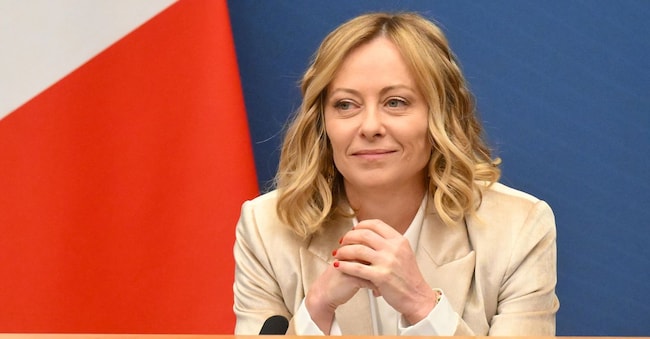
First the international crises, starting with Ukraine, Gaza and Venezuela, with the defence of Donald Trump's US blitz against Maduro. With the issue of defence spending intertwined with that of support for Kiev. But the topics that could be raised in the classicGiorgia Meloni press conference organised for the late morning of Friday 9 January by the National Council of the Order of Journalists in collaboration with the Parliamentary Press Association are actually many.
The leader of Fdi on the eve of the event prepared herself to face the 40 questions (last year she answered for two and a half hours), which will most likely range from Donald Trump's blitz in Venezuela to the fate of Alberto Trentini, from developments in the negotiations to resolve the Ukrainian crisis to electoral law, from Mercosur to the referendum on justice, passing through economic issues.
According to the Financial Times analysis ahead of the 2027 elections, Meloni 'has little more than a year to prove that she is more than a prudent administrator of the existing, and that she can offer concrete political solutions to Italy's pressing economic challenges'. At Palazzo Chigi, the date of 4 September, when this will become the longest-lasting government in Republican history, is circled in red, and reconstructions on the hypothesis of an early vote to exploit the wave of a possible Yes vote in the referendum on justice are dismissed as fantasy.
The knot of internal balances within the majority
There is no shortage of variables, however. The main one is the internal balances within the majority. Just think of the tensions at the end of December over pensions, at the tail end of the approval of the manoeuvre, or those before the decree to support Ukraine was passed. If the vote in Parliament on the variance is far off - for defence spending, also in view of NATO commitments, it is 'crucial to wait for the outcome of the 2025 deficit estimate that Istat will notify to the European Commission in March', specified the Minister of Economy Giancarlo Giorgetti -, the next test will be the majority resolution to be voted on during the communications on the Ukraine decree by Defence Minister Guido Crosetto in the Senate next Thursday. The centre-right group leaders have not yet got their hands on it, but it is a safe bet that no small amount of political diplomacy will be needed to make the reaffirmed commitment of FdI and FI coexist with the Leghist caution on military support for Kiev.

