
Meloni: ‘MPS: the market will decide its future; the government has no role to play at present’
The Prime Minister reassures producers of ‘white gold’. Fuel: ‘targeted’ measures to be introduced next week

Key points
- MPS? ‘A matter for the market’
- The relaunch of Martina’s candidacy for the FAO
- A tribute to the rice-harvesters and the struggle for the eight-hour working day
- Saying ‘no’ to free trade agreements that lower standards
- An Italian battle over the CAP
- ‘Agriculture at the heart of national policies’
- Fuel: a ‘targeted measure’ is on the way
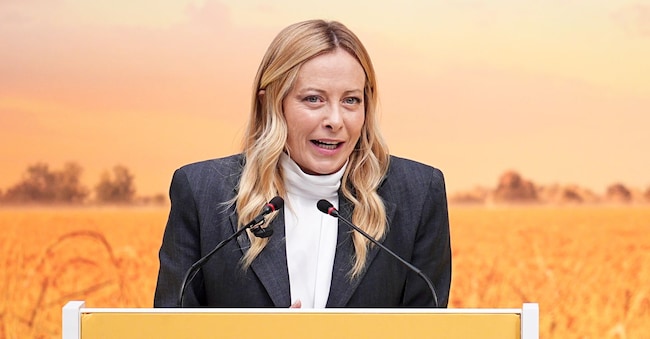
“Rice is much more than just a product: it is the epitome of excellence in our agri-food sector and an iconic ingredient in our cuisine”, which generates “exports worth over 800 million euros a year, and the heart of this production lies in this extraordinary region between Lombardy and Piedmont”. This was stated by Giorgia Meloni, speaking at the second edition of Risò, the International Rice Festival which opens today in Vercelli. The event opened with a minute’s silence for the passing of Emma Bonino and Raffaele Costa, called for from the stage by the Minister for Agriculture Francesco Lollobrigida.
MPS? ‘A matter for the market’
When asked on the sidelines, the Prime Minister returned to the subject of the banking crisis. The future of MPS – she said – “is a matter for the market; the Government currently has no role to play. “I can say little about the future, but I can say a great deal about the past. When we came to power, MPS was a problem; today, it is objectively a gem that is, in fact, the subject of considerable interest.”
The relaunch of Martina’s candidacy for the FAO
Meloni, who was greeted on her arrival by a long round of applause, acknowledged amongst those present the deputy director of the FAO Maurizio Martina, “Italia’s candidate to succeed as Director-General, because we believe that Italia, like few others, can claim to have a say on how to ensure good food for all the peoples of the world”. This was a direct dig primarily at Spain’s Pedro Sanchez, whose candidate is in the running.
The Cavour Canal: ‘an example of the speed required for infrastructure’
The Prime Minister, greeted on her arrival by a long round of applause, spoke from the stage about the Cavour Canal, ‘the most visionary achievement of the visionary water revolution’, and described it as one of the ‘lessons for today’s politics: the speed with which extraordinary infrastructure used to be built, and the focus on water. Let us seek to learn from what our grandparents knew how to do better than we do’.
A tribute to the rice-harvesters and the struggle for the eight-hour day
Meloni recalled how the Festival is linked to another anniversary: ‘It has been 120 years since the eight-hour working day was secured. Today we take it for granted, but at the start of the 20th century it was a genuine revolution, fought for and won by women.’ We owe the rice-paddy workers, who ‘worked 12–24 hours a day’, ‘an enormous debt of gratitude, because through their struggles and demands they won rights that today represent the very pillars of labour and the welfare state. On this point,’ she concludes, ‘even Emma Bonino might agree with me.’


