
The Monteponi Mining Archive: a treasure trove of history, culture and industrial innovation
An extensive archive houses documents, photographs and models that tell the story of life, work and training in the mines of Sardinia and Italy

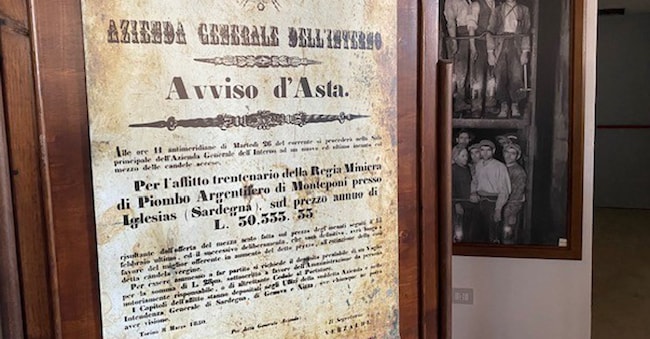
The photo of the children in front of the school. The one of the workers on the building site or in the cage (read: lift) travelling into the darkness more than 100 metres below ground. And then the ‘state-of-the-art’ equipment in the chemical laboratory, the first computers. But also the wooden models of mechanical parts to be assembled by hand. And the sheet music, because ‘almost every tunnel had its own tune’.
The Monteponi mining archive, on the outskirts of Iglesias and managed by the regional government’s in-house company Igea, tells the story not only of the mines that once brought life to parts of Sardinia and northern Italia, but also of an economic and social world – an industrial and cultural one. Spanning three linear kilometres of documents – cleaned, catalogued and classified – lies a universe made up of families, children attending schools funded by mining companies, and workers operating within set rules. And the production cycle, with its boom and bust.
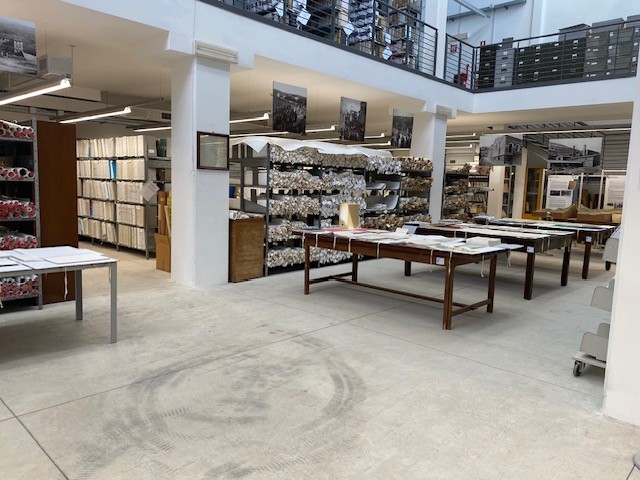
“The mining sector,” says Alessandro Cuccu, head of the archive, “was the one with the lowest number of accidents. This was because training was provided and the first safety protocols were already in use.” Leafing through the papers that bring the archive to life, housed within the mining complex, one finds documents that tell the story of the mines of Montecatini, those in northern Italia – particularly in Lombardy – which were later closed by Eni. “For a very simple reason,” says the manager, “because Eni decided to move all the documentary and archival records to the offices nearby.” Then, over the years, the move to Monteponi, where documents from now-defunct mines in other regions are also kept.
“This archive, given its structure,” adds Cuccu, “is the first of its kind in Italy and one of the few in Europe; it tells the story not only of the mines but also of the microcosm that revolved around them.” From the schools, funded by the mining companies to give children the chance of an education, to the after-work clubs, funded by the companies to ‘channel’ the workers. “One could say that this served to control the workers for the rest of the day,” continues the archive manager, “but, at the same time, it created an educational pathway that did not exist in other contexts and which, in any case, was governed by rules.”
Industrial system
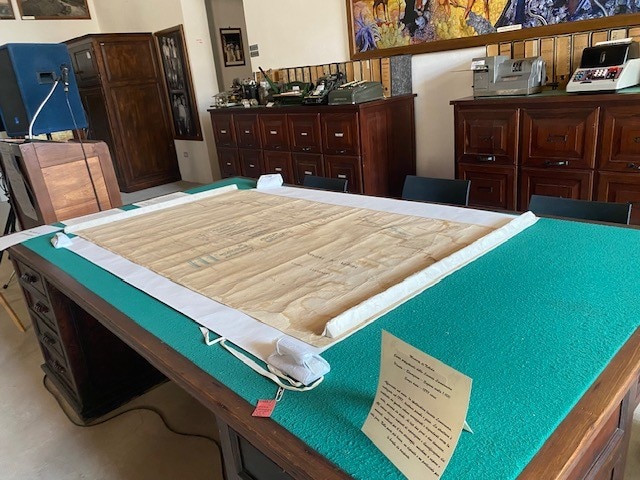
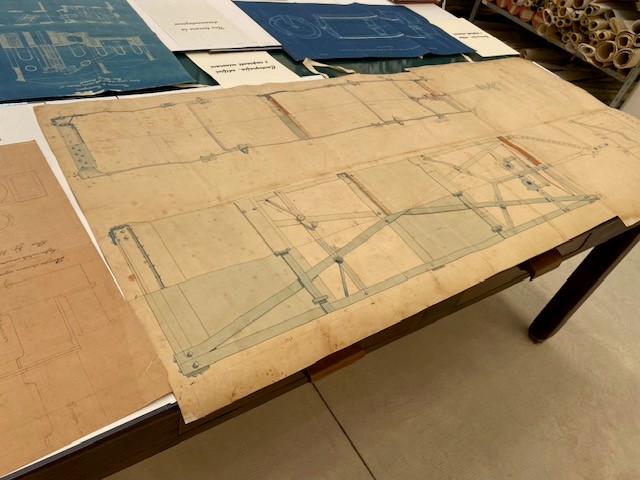
The archive documents also illustrate the capacity of an industrial system capable of regenerating itself. In a display case there are some orange wooden models. “These are the prototypes of the mechanical parts that were rebuilt in the various departments of the mining companies,” he adds. “Because in the event of a breakdown, the in-house expertise was available to build the model and then the part that had failed. We must remember that in the 1950s or 1960s, communication wasn’t as fast as it is today.” The archive, at the heart of a ‘massive’ digitisation project, not only chronicles the history of mining companies and a few other industrial firms, but is also the place where historical documents that would otherwise have deteriorated are brought back to life. This is the case with the late 19th-century maps, created with precision down to the smallest detail and painted in watercolours. Or the registers and ledgers, where even torn pages are reconstructed. “Many documents, maps or books, were at risk of being lost ," says Federica Murgia, a restoration technician. "In our workshop, after analysing the components—from the inks to the paper—we work to preserve these documents by both cleaning them of dust and treating the parts at risk of deterioration, making them usable." Lest we forget.

