
Memories that Bud Bunny did not photograph
In "Debí Tirar Más Fotos Bad" Bunny renounces synthesis and constructs a record that functions as an archive of places, relationships and everyday gestures

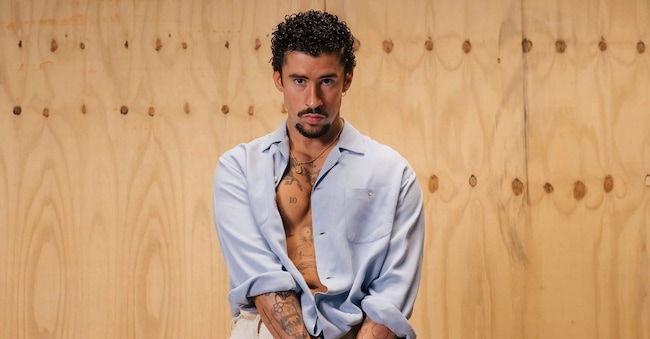
Bad Bunny has become a central figure in world pop music without ever renouncing an explicit geographical location. Even as his music has occupied ever larger spaces, Puerto Rico has remained a constant reference point. 'Debí Tirar Más Fotos' comes after a phase of hyper-production and continuous visibility and seems to react to that condition with an opposite gesture. The title suggests a belated, almost domestic awareness, far removed from the hype of success. It is not an album constructed to relaunch a narrative of ascent. Rather, it is a work that takes permanence as a problem and a necessity, questioning the very idea of the pop album as a compact and immediately readable object.
Writing and collecting the present
The making of 'Debí Tirar Más Fotos' coincides with a more stable return of Bad Bunny to the island, and this choice has obvious consequences on the sound and writing. The references to Puerto Rican music are not mere citationism: salsa, plena and Afro-Caribbean rhythms weave the tracks, resisting the plasticity of the mainstream market. The opening with 'Nuevayol' mixes nostalgia and political criticism, English and Spanish. In the record's seventeen tracks, Bad Bunny seems less interested in constructing a linear path than in recording states, encounters, fragments. The writing also follows this direction. The lyrics alternate between personal observations and collective references, often related to the transformation of the island, economic pressure and the loss of shared spaces.
A global artist, a precise geography
Musically, 'Debí Tirar Más Fotos' is deliberately irregular. Some tracks achieve a rare balance between rhythm and content. "Baile Inolvidable" imprints on the salsa sound the bitterness of an ended love, while "Café Con Ron" and "Voy A Llevarte Pa Pr" use the body and movement in a political key, as forms of belonging. "Lo Que Le Pasó a Hawaii" tackles the theme of uprooting with measured writing. The texts avoid slogans and simplifications. They remain colloquial, specific, often addressed to an interlocutor who needs no explanation. Bad Bunny does not translate Puerto Rico for a global audience, but writes as if he were speaking within that context. "Debí Tirar Más Fotos" is many things at once: it sounds at once personal, political, nostalgic, identitarian. Above all, true.

