Innovation

The Mercedes electric car of the future has paint that recharges the batteries and motors in the brakes

Solar paints, neuromorphic computers, bio-tech fabrics, innovative brakes and the use of mixed reality will completely change the German company's automotive experience

by Mark Perna
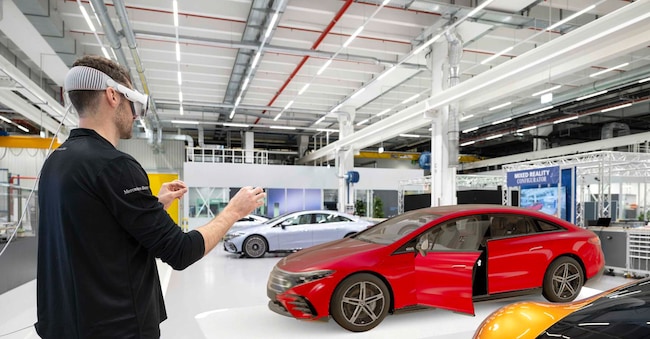
Mercedes-Benz sta implementando una serie di tecnologie di realtà aumentata e realtà mista per la progettazione, la personalizzazione e l’assistenza alla guida delle prossime auto

4' min read

4' min read

Surviving change in an environment where technology is ever faster and more decisive is no easy feat for Mercedes-Benz. However, the company that invented the automobile almost 140 years ago is relying on the pioneering spirit of its origins to defend a leadership position challenged both by a market in severe crisis and by unprecedented competition.

Innovation is a necessary and strategic choice that the German giant wants to manage with a long-term vision but keeping its feet firmly planted on the ground. 'For us, innovation only makes sense if it offers our customers real added value,' said Markus Schäfer Chief Technology Officer of Mercedes-Benz. This was demonstrated by the solutions that were shown for the first time when the doors of the highly secret Future Technology Lab in Böblingen were opened.

Loading...

The goal is an ambitious one: 'to create a new kind of automotive experience' that responds better to user needs but is equally attentive to sustainability. Mercedes-Benz envisions a world in which vehicles become intelligent companions, adapting perfectly to the needs and preferences of users. The MBUX Virtual Assistant, already presented at the CES in Las Vegas, represents the first step towards this reality. Powered by advanced artificial intelligence, the system learns from the driver's habits and anticipates his or her needs.

Mixed reality and augmented reality for driving, customising and designing the car

Experimentation in the use of augmented reality (AR) glasses that enable the driver to obtain advanced navigation instructions while keeping his or her eyes on the road goes in the same direction. The Stuttgart-based company is also exploring the integration of AR glasses following the 'Bring Your Own Device' approach, i.e. letting these devices easily connect to the car's ecosystem. This technology opens up new possibilities for entertainment, wellness and comfort, creating a holistic digital experience that extends beyond the vehicle.

Mixed reality (MR) is another frontier that Mercedes-Benz is exploring. The MR configurator developed by the company allows designers and developers to collaborate on virtual vehicle models, regardless of their geographical location. This not only simplifies the design process, but also reduces the need for physical prototypes, saving valuable resources. For customers, on the other hand, mixed reality offers the possibility of customising their vehicles in a virtual environment, creating a more immersive and interactive shopping experience and getting a preview of their customisation in real time and especially on a 1:1 scale.
Neuromorphic computers for more powerful and efficient artificial intelligence

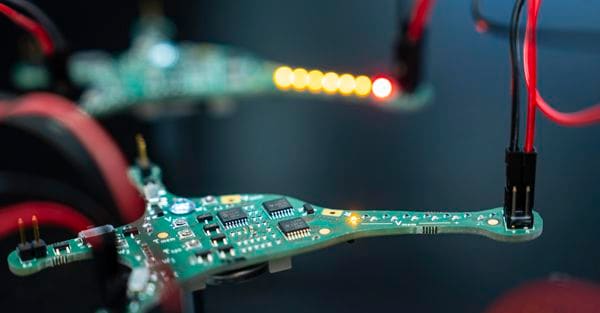
Of particular interest is the work Mercedes-Benz is doing on the development of neuromorphic computing solutions with the aim of revolutionising autonomous driving and artificial intelligence functions. Unlike traditional computing systems, neuromorphic technology mimics the neural networks of the human brain, enabling faster and significantly more energy-efficient processing, with savings of up to 90 per cent. Mercedes-Benz's collaboration with the University of Waterloo highlights the potential of this technology. Neuromorphic systems could improve vehicle safety by recognising road signs, lanes and other road users more accurately, even in poor visibility conditions. Event-based cameras, which process individual pixels instead of entire frames, can detect changes as subtle as a driver's eye movements, enabling rapid responses to signs of fatigue.

Il nuovo sistema frenante integrato direttamente nel motore elettrico, praticamente privo di manutenzione

Biotech fabrics and new brakes to reduce environmental impact

Sustainability is a central goal for Mercedes-Benz and the company is exploring innovative materials that reduce environmental impact. Biotechnology plays a crucial role in this effort. One example is synthetic silk produced from genetically modified bacteria. This biodegradable, lightweight material is incredibly durable and has already been used in the Vision EQXX concept. Another promising innovation is an alternative to leather made from recycled plastic and bio-based materials that the company is testing to ensure it meets Mercedes-Benz's high standards for durability and luxury.

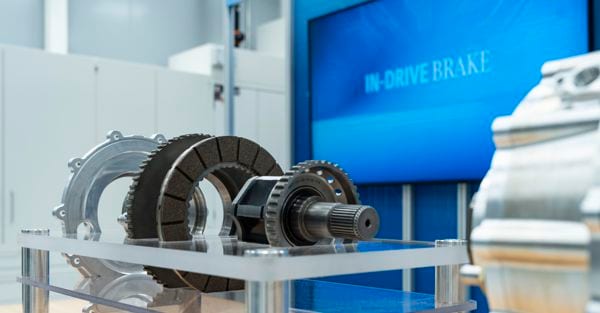
The market arrival time for another frontier solution called 'In-drive Brake' is closer. Conventional brakes are being rethought for electric vehicles, where braking is mainly through energy recovery. Mercedes-Benz is in fact implementing a new brake that is fully integrated into the electric drive unit. This original design reduces wear, eliminates rust and requires minimal maintenance. The brake position also allows lighter wheel/tyre combinations, improving ride quality and aerodynamics as well as completely eliminating particulate emissions typical of conventional brakes.

La tecnologia neuromorfica imita le reti neurali del cervello umano, consentendo un’elaborazione più rapida e decisamente più efficiente dal punto di vista energetico

A revolutionary photovoltaic paint for the electric cars of the future

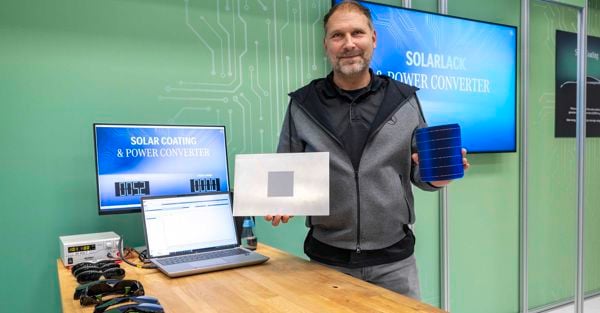
Definitely one of the most exciting developments in Mercedes-Benz research concerns the implementation of a special paint with photovoltaic capabilities. This ultra-thin material can be applied to the bodywork of a vehicle, generating electricity from sunlight. With an efficiency of 20 per cent, an area equivalent to that of a medium-sized SUV could produce enough energy to drive more than 12,000 kilometres per year. The solar cells continue to generate power even when the vehicle is stationary, potentially reducing the need for frequent recharging. This solar paint is made from non-toxic and readily available materials and is easier to recycle than conventional solar panels.

High-voltage architectures are also being transformed by a new generation of power converters. Mercedes-Benz is developing micro-converters that operate at the battery cell level, enabling more precise control and communication between cells. This solution guarantees a constant output voltage regardless of the battery's state of charge or health, optimising energy flow and increasing efficiency. The modular design of these converters could simplify production, reduce resource usage and enable new configurations for electric traction systems.

All these innovations respond to Mercedes-Benz's vision of the future of the car, an exercise not at all an end in itself but with the clear aim of improving every aspect of the driving experience. From hyper-customised interactions and sustainable materials to cutting-edge computing and solar power, the company is redefining what it means to drive a luxury vehicle. As Markus Schäfer rightly said, innovation at Mercedes-Benz is not just about technological advancement: it is about creating real value for customers and shaping a future that is smarter, more sustainable and more connected than ever before.

Mercedes Benz sta lavorando a una vernice fotovoltaica da usare sulle proprie vetture capace di generare un’energia in grado di assicurare 12.000 km di autonomia

Copyright reserved ©
Loading...

Brand connect

Loading...

Newsletter

Notizie e approfondimenti sugli avvenimenti politici, economici e finanziari.

Iscriviti