Automotive

Mercedes, profits 2023 down. 'Electric cars more expensive for years'

Drop in demand for plug-in cars, change of targets to 2030. Dividend slightly increased. Buyback up to 3 billion

by Alberto Annicchiarico

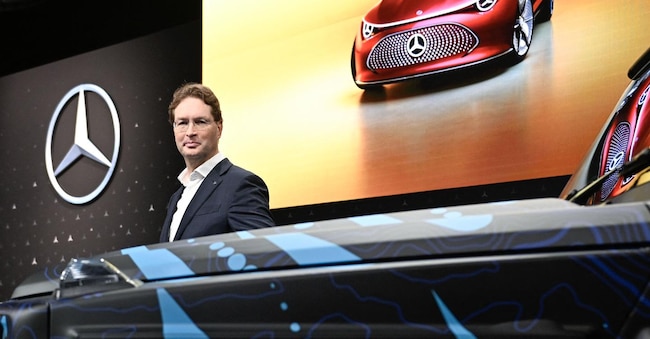
Il ceo del gruppo Mercedes-Benz, Ola Källenius, durante la conferenza annuale, a Stoccarda. (Photo by THOMAS KIENZLE / AFP)

4' min read

4' min read

Mercedes-Benz changes targets on electrification. Demand does not match forecasts and prices also promise to remain at high levels for some time to come, according to the Stuttgart-based manufacturer. And so, on the very day on which the President of the European Commission, Ursula von der Leyen, confirms 2026 as the date for a ban on internal combustion engines (2035), comes the reassurance: we will be able to update the technology and produce internal combustion cars until the next decade.

Meanwhile, the group ended 2023 with a net profit of EUR 14.53 billion, -1.9% compared to 2022. Revenues, on the other hand, rose 2.1% to EUR 153.3 billion. Ebit fell 3.9% to EUR 19.66 billion, while adjusted Ebit stood at EUR 20 billion (-3.2%). Free cash flow of the industrial business reached EUR 11.3bn (+39.2%, from EUR 8.1bn in 2022), mainly due to the still high profitability, high cash conversion rate and lower working capital. Industry net cash rose to EUR 31.7bn (from EUR 26.6bn at end-2022). Earnings per share (EPS) stood at EUR 13.46 (-0.7 %).

Loading...

Dividend up and buyback up to 3 billion

As for the fourth quarter 2023, Mercedes-Benz Group reported revenues down 1.8% to EUR 40.261bn, Ebit of EUR 4.326bn (-20.1%) and net profit of EUR 3.16bn (-21.5%), with eps of EUR 2.99 (-19.7%).

At the shareholders' meeting on 8 May, the Board of Directors will propose the distribution of a dividend of EUR 5.30 per share (EUR 5.20 last year). In addition, the group announced a further share buyback programme with a maximum value of EUR 3 billion. For 2024, group revenue is expected to be at the level of 2023, Ebit is expected to be slightly lower, as is free cash flow.

The market especially welcomed the dividend philosophy and buyback, because the figures themselves were disappointing and the outlook for 2024 unexciting. 'In the long term, our policy is investor-friendly. We have their interest in the future in mind,' said CEO Ola Källenius. The share closed with +4.85 per cent (+18 per cent in the last 30 days, which is worth the momentary third place in the global ranking by capitalisation, at 76 billion, after Tesla and Toyota; -3.7 per cent in the last 12 months).

Declining demand for cars on tap

.

At its annual conference in Stuttgart, Mercedes-Benz warned that electric vehicles will continue to cost more than those with internal combustion engines for a long time to come. The manufacturer of premium and luxury cars (including the Amg, Maybach and Smart brands as well as its namesake brand) is preparing for a cooling of demand for plug-in cars and forecast a reduction in profits in 2024, citing the challenges posed by the economic slowdown. This is 'exceptional' uncertainty, caused by conflicts in the Middle East and Ukraine and tensions between China and the US. Supply chain bottlenecks for critical components remain 'a significant risk factor', while the potential for an 'even more pronounced' slowdown in economic growth could impact automotive markets.

Sales in the first quarter are therefore likely to be below the previous year's level.

For 2024, the Stuttgart-based group said it expects a lower return on adjusted sales than in 2023 (12.6 per cent), 10-12 per cent for cars and 12-14 per cent for vans (down from 15.1 per cent last year).

Cost equality "many years away"

.

A not insignificant problem, however, is that variable cost parity between electric vehicles and conventional cars would be 'many years away', is Källenius' reading. "You can see this in the prices." Mercedes-Benz, in fact, increased the average price by 2 per cent to EUR 74,200. This is in spite of recent forecasts by Goldman Sachs, which estimated cost parity between electric and thermal already achievable by 2025, thanks to the collapse (-40%) of raw material prices for batteries, which are 30% of the cost of a Bev (battery electric vehicle).

After all, demand for electric vehicles has cooled across Europe, with rivals China and Tesla exposing the competitive weaknesses of continental manufacturers. Volkswagen, for example, has shelved plans to list its battery business. The signs on demand in Spain, where Vw aims to build its third cell factory in Sagunto, near Valencia, and whose production is expected to start by 2026, are negative.

Long-relevant plug-in hybrids, changing targets

To make itself better understood, Mercedes-Benz has warned customers and investors: the company is well-positioned to continue producing cars with internal combustion engines and upgrading the related technology well into the next decade. What's more, targets are changing: now in Stuttgart they expect 50 per cent (no longer 100 per cent) of sales by the end of the decade to come from electrified cars. Källenius had already warned at the end of 2023 that Europe would probably not be ready. Manufacturers' investments in capacity and technology development have outstripped the actual demand for electric vehicles, increasing the pressure to cut costs.

That is why 'we think that plug-in hybrids will remain relevant for a long time to come', the Mercedes-Benz CEO said yesterday. And it is precisely hybrids, according to a Deloitte survey anticipated by Il Sole 24 Ore, that are the real drivers of demand among European consumers, along with thermal cars. For the boom in demand for electrics we still have to wait. Do you want to see that Toyota, which has been second in sales on the Old Continent for two years now thanks to its hybrids, was right about electric cars?

Copyright reserved ©
Loading...

Brand connect

Loading...

Newsletter

Notizie e approfondimenti sugli avvenimenti politici, economici e finanziari.

Iscriviti