
Mercosur, the next steps after the painful green light from the Twenty-Seven
The ambassadors of the member states authorise by qualified majority the signing of the treaty with the South American countries. The consent of the European Parliament will then be needed
from our correspondent Beda Romano
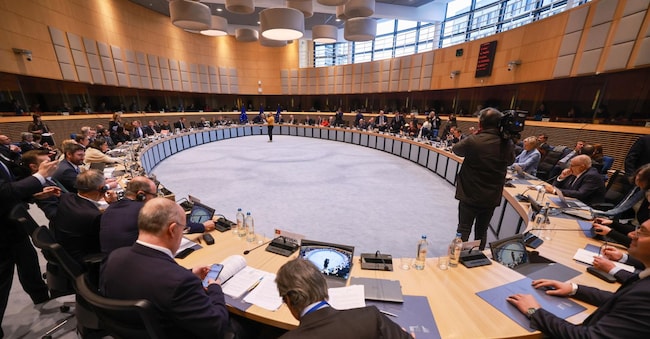
BRUSSELS - In an international context in turmoil, the Twenty-Seven gave the (painful) green light yesterday to sign the trade agreement with Mercosur. The approval came by qualified majority, and despite opposition from some countries, including France. The treaty must now obtain the consent of the European Parliament, as well as being endorsed by the South American partners. For the EU, the new treaty is as much an economic instrument as a political lever.
The approval was marked by a long eve of last-minute negotiations to get the green light from the countries most uncertain about what to do. Faced with the concerns of the agricultural world, the Commission proposed various measures, including financial ones. At the same time, the Twenty-Seven decided yesterday to further strengthen the mechanism for monitoring European imports of certain agricultural products from Mercosur.
Loading...
In this regard, the European Commission had proposed triggering an automatic investigation of inflows above the 10% threshold; the European Parliament suggested 5%. The Cypriot EU Presidency confirmed that the member states decided to align themselves with the Strasbourg position. Nevertheless, France, Poland, Hungary, Austria, and Ireland voted against signing the treaty, while Belgium abstained.
The written procedure vote was by qualified majority. The approval came with the yes of 21 countries (the minimum was 15), and just 68.8 per cent of the population (just above the minimum of 65 per cent). According to Nicolai von Ondarza, a researcher at the Stiftung Wissenschaft und Politik in Berlin, 'it is unusual for such a significant step to be adopted with such a small majority', even more so without Paris. It is now up to European Commission President Ursula von der Leyen to sign the agreement.
The consent of the European Parliament will then be required. According to information gathered in parliamentary circles, the divisions on the treaty are more by country than by group. That said, there is cautious optimism of obtaining a majority in favour (the vote is expected in February-March). The Lega, Italy's governing party, has said it will oppose it, while Jordan Bardella (Rassemblement National), has announced a no-confidence motion against Mrs von der Leyen, also on the Mercosur agreement.


Brand connect
Loading...
