Interview

'Mergers and IPOs restart: how Barclays wants to grow in Europe'

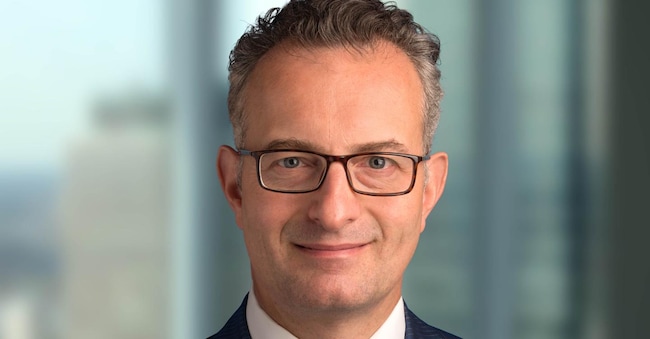
Francesco Ceccato, CEO of Barclays Europe: 'The approaching rate cut reopens the M& A market, companies ready for new acquisitions'.
by Alessandro Graziani

4' min read

4' min read

"The corporate finance market has recovered, including in the high yeld, and we are already seeing a revival of M& A and IPOs. Barclays intends to play a leading role in these activities in Europe and Italy'. Speaking is Francesco Ceccato, the Italian banker who leads the activities of Barclays Europe as chief executive officer (ceo). We meet him in the group's new Milan offices, with Barclays' outgoing ceo in Italy Enrico Chiapparoli at his side, who has been promoted to head the group's Emea Industrial Investment Banking business and will be replaced as country ceo Italy by Paolo De Luca, who has been appointed and is now subject to regulatory approval.

2023 was a slowdown year for M&A and for IPOs in both Europe and the US. Will there be a pick-up in activity in 2024?

Loading...

We believe so, several operations are on the launching pad. In general, we notice both in Europe and in Italy a great confidence on the part of companies in the growth of their businesses and the development of the markets in which they operate. M&A operations are bound to increase, also because the time of the interest rate cut by the ECB is approaching. Corporate financing markets have reopened, including the high-yield markets, and this will facilitate external growth for companies.

The stock exchanges are at highs. Are record valuations a brake for those who want to make acquisitions?

It is true that some companies in various sectors prefer to wait to make acquisitions for price reasons. But for the same reason many are considering IPOs. And an important contribution to the upswing in IPOs will come from private equity funds.

Speaking of IPOs, a number of European companies, including Italian ones, have in recent years decided to list on Wall Street, aiming for higher valuation multiples. There is also talk of giants such as the French Total, which may prefer New York to Paris. Do you think this is a transitory phenomenon? And how do you explain it?

When a company has an international profile, it is logical that it decides to list where it believes it has the most advantages. Not only in terms of ease of raising capital, but also in terms of market liquidity and research by analysts specialised in the various sectors. But it is a phenomenon that does not only affect Europe, even China's Alibaba ten years ago decided to list on Wall Street. The US is the largest financial market in the world.

For Europe to try to compete with the US, do we need a single capital market?

In my opinion it is a necessity, not an option to be considered. In the coming years, hundreds of billions will have to be invested in Europe for the energy and digital transition. It is impossible to think of financing this only through banks or states: it is essential to create an effective single capital market. But to achieve this, it will not be enough to act only on the supply side, it will also be necessary to incentivise share buyers by channelling the savings - including pension savings - of Europeans into equity.

Do we also need European champions to compete in the various sectors with the US and Chinese giants?

I realise it is not easy, but Europe needs a shared industrial policy. The automotive sector is undergoing an epochal transformation and the Chinese challenge on the electric car is now concrete. We believe that in the automotive sector in Europe there will be further consolidation, the size scale is crucial.

A few days ago French President Macron opened up to cross-border bank mergers in Europe. Do you think that political will is enough or do you need the completion of the Banking Union first?

The European Banking Union and common deposit insurance are crucial. But cross-border mergers between banks depend on two elements: the economic logic and the social environment. Cost synergies in cross-border operations are modest or difficult to realise. For now, we consider domestic reorganisation, as we are seeing in Spain, more likely.

Regarding the attempted takeover of Banco Sabadell by Bbva, do you think we will see more hostile takeover bids in Europe?

No, I don't see this as a specific trend. Rather, I think it is part of a more general upswing in M&A deals, of which hostile takeovers are a part. But these are difficult deals because it is not enough to convince just the shareholders but all the stakeholders.

The last two years have seen a flurry of share buy backs in Europe. Do you think this trend will continue or will capital be diverted to external growth?

Acquisitions make sense but then carry execution risks because synergies are not always so easy to realise. I believe that buy backs, along with dividends, will continue. Especially in those sectors, such as banking, where for years shareholders have on average received little remuneration.

In the context you have outlined, what strategy does the Barclays Group have?

Group targets were presented in February in the new three-year business plan 2024-2026. The financial targets are clear: Roe above 12%, £10 billion distribution between dividends and buy backs, investment banking Rwa below 50%. The logic of the plan is summarised in three qualitative targets: simpler, better, more balanced.

Barclays has remained the only major European bank to have a strong presence in the US. Is this an advantage for your business with European customers?

We consider ourselves the most American of European banks and the most European of Anglo-Saxon banks. Having direct access to the US market, which is the largest in the world, is a clear advantage for our customers in Europe. The goal is to grow further in Italy, which we continue to consider an interesting market, by deepening the relationship with our clients with a greater interchange of corporate and investment banking services.

Per approfondire

La coppia Intesa-UniCredit sorpassa in Borsa le due big francesi e vale quasi tre volte le tedesche

https://24plus.ilsole24ore.com/art/la-coppia-intesa-unicredit-sorpassa-borsa-due-big-francesi-e-vale-quasi-tre-volte-tedesche-AF6TQbKD

Copyright reserved ©
Loading...

Brand connect

Loading...

Newsletter

Notizie e approfondimenti sugli avvenimenti politici, economici e finanziari.

Iscriviti