
Merz rallies Germany in defence of the ETS system
The Chancellor defends the emissions trading scheme and rules out any extension of its scope to road transport and buildings: it is a ‘market-based system that works well and which we must not call into question’

Key points
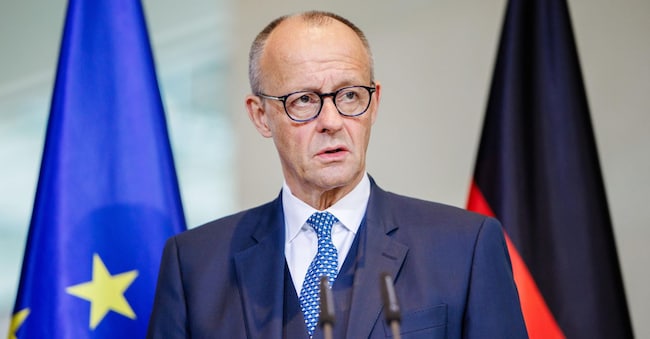
Chancellor Friedrich Merz is rallying Germany in defence of the ETS1 system – the carbon emissions trading scheme – which is a cornerstone of the European Union’s climate action. He has ruled out any changes to the ETS2, which extends the scheme to road transport and buildings.
Hands off
In recent days, as first revealed by the business newspaper *Handelsblatt*, Merz sent a letter to the President of the Commission, Ursula von der Leyen, to clarify his position. Berlin has never been in favour of weakening the mechanism, which has been strongly called for by Italia and the Czech Republic, who accuse it of imposing unsustainable costs on energy-intensive industries. In the letter, dated 6 November (and seen by *Il Sole 24 Ore*), Merz takes an official and clear stance for the first time. Among the objectives is also that of removing a thorny issue from the table, ahead of the extraordinary EU Council meeting at the end of the month and those on 17 and 18 December, where he would like to see a decisive acceleration on the long-delayed multiannual budget (2028–2034).
The Chancellor has disappointed Germany’s energy-intensive sectors, which, however, do not present a united front within Germany. A section of the steel industry – the part that has taken the lead on the green transition – is opposed to changing the rules midway through the process by reducing the projected level of CO₂ prices. ‘European companies in the energy and industrial sectors have based their business models on the expectation of reliable signals regarding the price of CO2,’ writes Merz. He adds that it is ‘extremely important that the EU guarantees investment security in the emissions trading scheme’. The ETS1 is a “market-based system that works well and which we must not call into question”. In short, a further change of course would undermine the reliability of the EU’s regulatory framework, following those concerning internal combustion engines and other Green Deal initiatives – which, in truth, are supported by Germany itself.
The German Chancellor is confident ‘that the European Commission will stay the course on emissions trading, thereby providing European businesses and households with the certainty they need to plan for the future. This is also important for boosting the EU’s resilience in the face of future crises in the fossil fuel markets’. Such as the one currently unfolding.
In July, the Commission presented a reform proposal, which makes the reduction in the ETS1 cap more gradual. The measure is expected to be finalised by the end of the year. Merz is calling for it to ‘be used to make the system future-proof and boost the industry’s competitiveness’ and for the ‘process to be concluded swiftly’.


