
Tariffs, Merz: good, escalation avoided. Positive outcome for automotive
Costa: Businesses are given certainty. Priority for cooperation

3' min read
3' min read
Now the word goes back to Europe and the Member States. To their 'ambassadors', first of all, who were constantly informed during the trip to Greenland organised for them in this weekend by Denmark, the EU's rotating president: they will now have to coordinate very shortly for the first technical assessments. Then will come the time for politics.
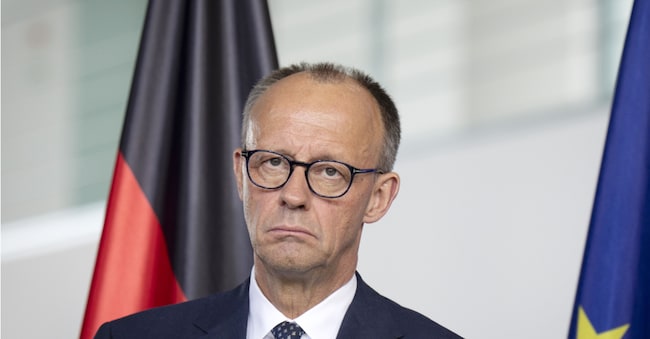
The first reactions are not lacking, but they mainly refer to the averted danger on the 30% tariffs: "An unnecessary escalation was avoided," said German Chancellor Friedrich Merz: "The agreement managed to avert a trade conflict that would have hit the export-oriented German economy hard. This is especially true for the automotive industry, where the current tariffs will be almost halved from 27.5 per cent to 15 per cent'. Merz pledged Germany's support for the Commission and wanted to look to the future, to the new situation: he will now demand, he said, tariffs to be reduced and trade barriers to be lowered on other treaties as well, starting with the Mercosur treaty.
Full support also came from European Council President Antonio Costa: the agreement "prioritises cooperation, protects the EU's core interests and gives companies the certainty they need. We must build on this achievement by further strengthening the EU's competitiveness and expanding our global trade network,' he said. More nuanced was the position of the President of the EU Parliament, Roberta Metzola, who 'welcomed' the deal and assured that 'the Eurochamber will play its part in analysing the agreement ensuring that it is in the best interests of businesses and consumers'.
The details will indeed be decisive. "I believe that all EU countries will be satisfied," said Donald Trump, but it is not up to him and his triumphalist (and, of course, 'US') rhetoric to pass judgement. Broadly speaking, the European objective has been achieved, but it was the minimalist one of damage reduction, in the name of stability and predictability, not by chance both evoked by Ursula von der Leyen. 'Now it is important to work out the details as soon as possible,' said Dutch Prime Minister Dick Schoof. The EU 'has avoided serious damage. However, this is only one way to limit the damage. We have to pursue new trade agreements and create a real European single market,' added EPP president Manfred Weber.
Not surprising is the caution of many, the silence of Emmanuel Macron, who commented instead on the Tour de France, or Pedro Sanchez, who praised the women's national football team. On agriculture, 'the impact will be great', said the US president, but it is clear that the new rules could touch strong French, or Polish, interests. On alcohol, the question is still open, as on medicines. On microprocessors a US procedure (called 232 by the Trade Expansion Act) is open to assess whether excessive dependence on imports poses a risk to national security and the results will be known within two weeks. It is true that on some strategic products, even in these sectors, von der Leyen added, reciprocal rates will be zero: aircraft and components, generic drugs, some semiconductor products, agribusiness, natural resources; and the list may be revised.


