
Merz: 'US humiliated by Iran', negotiations still stalled
German Chancellor against Trump and Israel: "They went to war without a strategy and they have no strategy in negotiations, Europe wants a diplomatic solution"
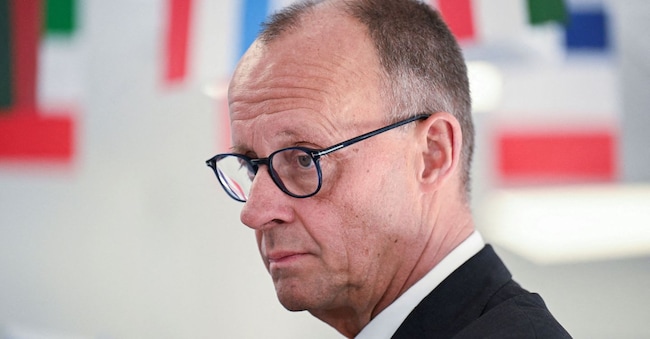
The Iranians "are humiliating" the US. German Chancellor Friedrich Merz said this in Berlin, harshly criticising the war decided by the US and Israel against the regime in Tehran. "I do not see what the exit strategy is, the Guardians of the Revolution have humiliated an entire nation. As Europeans,' he added, 'we want to strive for a diplomatic solution.
The long-distance negotiations between Washington and Tehran continue but no way out is in sight. While even the new proposal, delivered by Iran to the US, seems only destined to fuel further tensions. "President Donald Trump says he has won but he has not achieved a single one of his goals. That is why he is asking us to negotiate, we are evaluating," said Iranian Foreign Minister Abbas Araghchi from St. Petersburg where he met with Russian leader Vladimir Putin.
Loading...
From the White House had come on Sunday night an opening of sorts, conditional however on Tehran giving up its nuclear programme. "If they want to negotiate, they can call us. There is the telephone. We have secure lines," Trump had said after cancelling the mission to Islamabad of envoy Steve Witkoff and Jared Kushner, the tycoon's son-in-law now promoted to mediator in international conflicts. "The Iranians know what has to be in the deal. It is very simple: they cannot have a nuclear weapon: otherwise there is no reason to meet,' the US president added.
The new Iranian proposal
Today, Tehran then handed the United States a new proposal 'in stages' through the mediators in Pakistan: the regime - according to the Axios agency - said it was ready to reopen Hormuz, in exchange for an end to the blockade of Iranian ports still controlled by American military forces, and when it receives guarantees on the end of US and Israeli attacks. Only at a later stage, under stable conditions and without the threat of raids, will Iranian leaders agree to discuss the terms of its nuclear programme. The elements of the proposal were similarly described by Lebanese Al-Mayadeen TV, close to Hezbollah. And, in harsher tones, by the Iranian Tasnim agency, linked to the Pasdaran.
Trump "discussed the latest proposal" from Tehran" with his advisers, "but I wouldn't say the US is considering it," White House spokeswoman Karoline Leavitt said. While US Secretary of State Marco Rubio rejected the Iranian plan despite saying he was convinced that "the Iranian economy is on its knees" and that this is why Tehran "really wants" to reach an agreement: "Too many conditions, they want to maintain control over Hormuz, this is not an opening. These are,' Rubio said again, 'international waters. It cannot be Iran that decides who can access them, under threat of bombs'.


Brand connect
Loading...
