
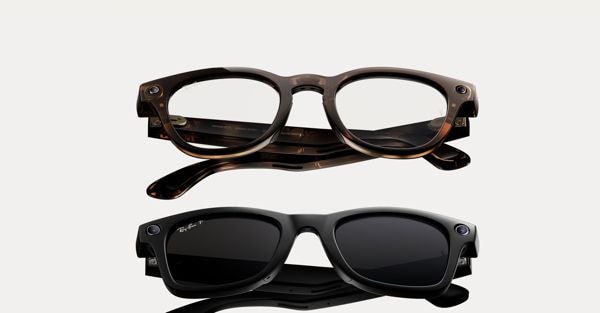
Meta is putting virtual reality into a pair of glasses and AI into Ray-Bans
At Connect 2026, Meta astonished everyone with its new Meta VR Glasses and showcased its ambitions in the field of wearable devices

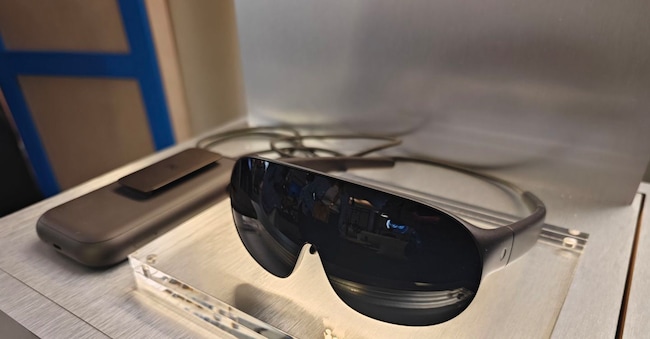
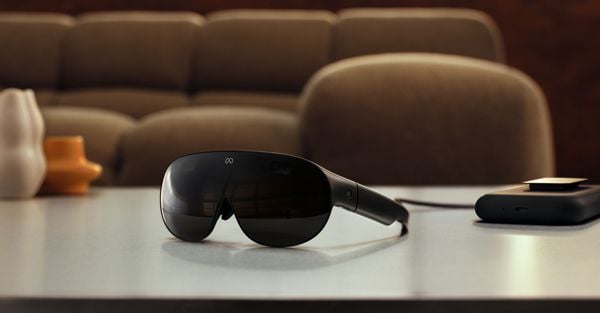
At Connect 2026, Meta astonished everyone with the new Meta VR Glasses and showcased its ambitions in the field of wearable devices, which, in fact, offer a glimpse into the next, more personalised way of using AI. We’ll no longer have to take it out of our pocket; it’ll be right at our fingertips, on the arms of our glasses. But let’s start with the most appealing device for tech enthusiasts. At last, VR fits into a pair of glasses. The new Meta VR Glasses, due out in spring 2027 at $1,299.99, do away with the clunky headset design and adopt a frame that looks much more like a pair of large glasses (ugly, but better than a headset). They weigh around 100 grams – five times less than the Quest 3 – have no head straps and leave the sides open, whilst the passthrough cameras allow you to continue seeing your surroundings. You still can’t drive a car whilst wearing them (because if they switch off, things wouldn’t end well), but it’s a decisive leap forward made possible by a significant compromise – though less so than you might think: the processor, battery and memory aren’t in the glasses themselves but in a small external box, connected via fibre optics to handle the enormous amount of data travelling between the two devices, and which can be clipped onto a pocket or bag. The display and sensors remain on the frame.
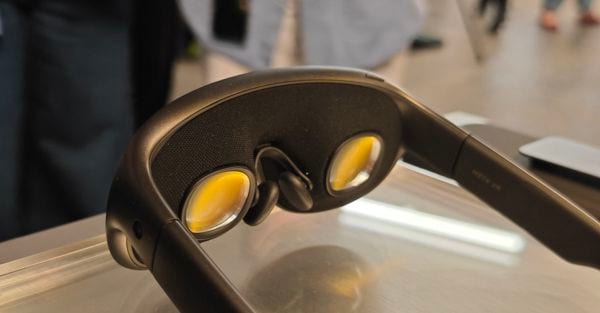
The system uses two micro-OLED panels with a combined 5K resolution and a pixel density of 37 pixels per degree, pancake lenses, Dolby Vision and Dolby Atmos spatial audio (good) integrated into the temples. The processor is Qualcomm’s new Snapdragon Reality Elite, whilst the external battery is rated for up to three hours of high-resolution video playback and supports 45-watt fast charging, much like the current Meta Quest 3.
Cinema, computers and consoles in a single device
Meta’s big gamble is to present its VR glasses not merely as a gaming device, but as a personal, wearable screen that can serve as a cinema, a workstation and a games console. This is why the move to a more affordable format, replacing the old, bulky headset, is essential – as is doing away with the need for controllers. They will still be available to buy (and compatible with those for the Quest 3), but the interface is now designed to work differently. You select icons with your gaze, click and scroll through menus with thumb movements, and use voice commands. The workspace option is particularly interesting: you create extra virtual screens for your PC, position them wherever you like, and switch nimbly from one to another. These are all things you can do with the Quest as well, but once again, the compact, glasses-style design makes all the difference.
There is full compatibility with the existing Quest catalogue, and over 75 games playable using only your hands will be available at launch. Xbox Cloud Gaming, on the other hand, will allow you to play via streaming by connecting a standard Bluetooth gamepad. Titles designed to take advantage of the new hand-tracking technology will include Dragon Grove in spring 2027, Phoenix Wright Ace Attorney: Dual Destinies VR and Tetris Effect: Mixed Realities later in 2027. Beat Saber will also receive a major update in spring 2027 that will allow players to play entirely without a controller and will introduce Flux mode, in which the hands become an integral part of the gameplay. Also of interest is the Hologram feature for video calls: the system creates a photorealistic digital version of the user, reproducing their expressions and reactions in real time. Those wearing the glasses see the person they are talking to in the space in front of them, whilst those joining via a smartphone or PC see the avatar on their normal screen. The technology is also set to be rolled out for apps such as WhatsApp and Zoom.
TV series might not be the same either
Immersive video was one of the Quest’s big promises – one that was never fully delivered on – but here too there is a milestone that will hopefully change things. On 29 September, ‘Open Season’, the first original series from Meta Presents, makes its debut on Quest. The plot isn’t part of the canon, as it centres on NBA star Draymond Green during a series of sessions with sports psychologist Carrie Hastings during the 2025–2026 season, but it was filmed entirely in 180-degree stereoscopic VR video, placing the viewer virtually in the room alongside the protagonists. We know this is a difficult approach to get right, but the decision to go with 180° could be more manageable than 360°. Furthermore, for the new VR glasses, Meta is also preparing 3D and VR-enhanced cinematic content, immersive 8K sport, and collaborations with Disney, IMAX, ESPN and other streaming services. The first Disney+ content in 3D is set to arrive in November 2026, whilst immersive versions of films such as *Avengers: Infinity War* and *Star Wars: A New Hope* are planned for the launch of the glasses in spring 2027. Sounds brilliant? Not quite. The field of view of the Meta VR Glasses is ‘only’ 70°, which means a significantly less immersive experience compared to the 100° of the Quest 3, but the designers insist they couldn’t have done any more to maintain a glasses format that is both comfortable and pleasant to wear. Furthermore, the price is really high. There’s a great deal of technology packed into them, and the inevitable consequence of the sky-high prices we’ve seen in recent months, but people have to consider their budgets, and such a high price tag could significantly limit their appeal. On the other hand, the decision to include a USB port in the box, to which you can connect a power bank to extend session duration, is a very positive feature.

