
Meta: Zuckerberg wanted to replace staff with AI (but then changed his mind)
Reuters: A plan to assign 60 per cent of tasks to machines was launched in January. Internal protests brought the whole thing to a standstill

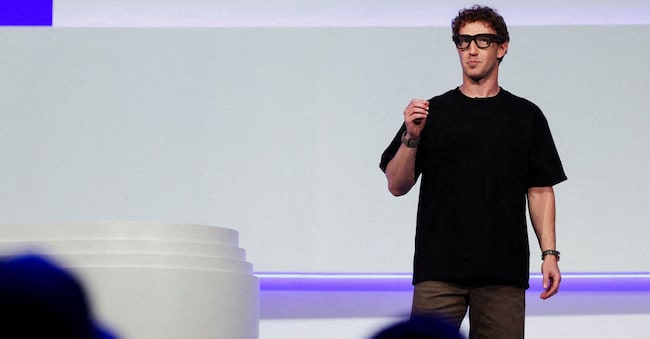
Mark Zuckerberg had a bold plan to replace Meta’s staff with artificial intelligence, but the plan failed due to protests by employees. This is according to a report on the Reuters website. To make its workforce ‘native to AI”, the report states, Meta considered drastically reducing the size of many teams across the company, by up to 60 per cent in two phases, as internal documents show.
However, the staff rebelled and, just a few hours before a mass redundancy in May, the CEO scrapped plans for further cuts. In January, Zuckerberg and his closest aides had gathered for their annual leadership retreat at his estate in Hawaii. There, they had devised a radical plan to rethink work within the social media giant in the age of artificial intelligence. The plan, codenamed Project Ot (an acronym for Organisation Transformation), envisaged an ‘AI-native’ future for the owner of Facebook and Instagram.
Artificial intelligence would have replaced much of the day-to-day work carried out by thousands of human employees. The virtual workers would have been supervised within Meta by smaller teams of highly qualified human staff, according to an internal planning document seen by Reuters and three people familiar with the project. During scenario simulations, two of these people said, executives considered drastically reducing the size of many teams within Meta, by as much as 60 per cent. Some employees would have been offered roles in new units, whilst others would have been made redundant as part of a staff reduction which, according to projections by an HR executive, would have been equal to or greater than the 25 per cent cuts made by the company three years earlier, according to another internal document.
The restructuring was to take place in two ‘phases’, beginning with an initial round of redundancies in May, followed by a further reorganisation in November. In addition to the redundancies, there would have been the closure of vacant positions and the dismissal of those whom Meta deemed to be underperforming. But on the night of 19 May, just a few hours before the first wave of redundancies, Zuckerberg relented. Meta made 10 per cent of its workforce redundant the following day, but cancelled its planned November redundancies, according to an internal document seen by Reuters.

