
Cloe Piccoli’s Miart focuses on synergy with the city
An ambitious event, backed by Milano Fiera and Intesa Sanpaolo, featuring a new €50,000 prize for Italian art

Key points
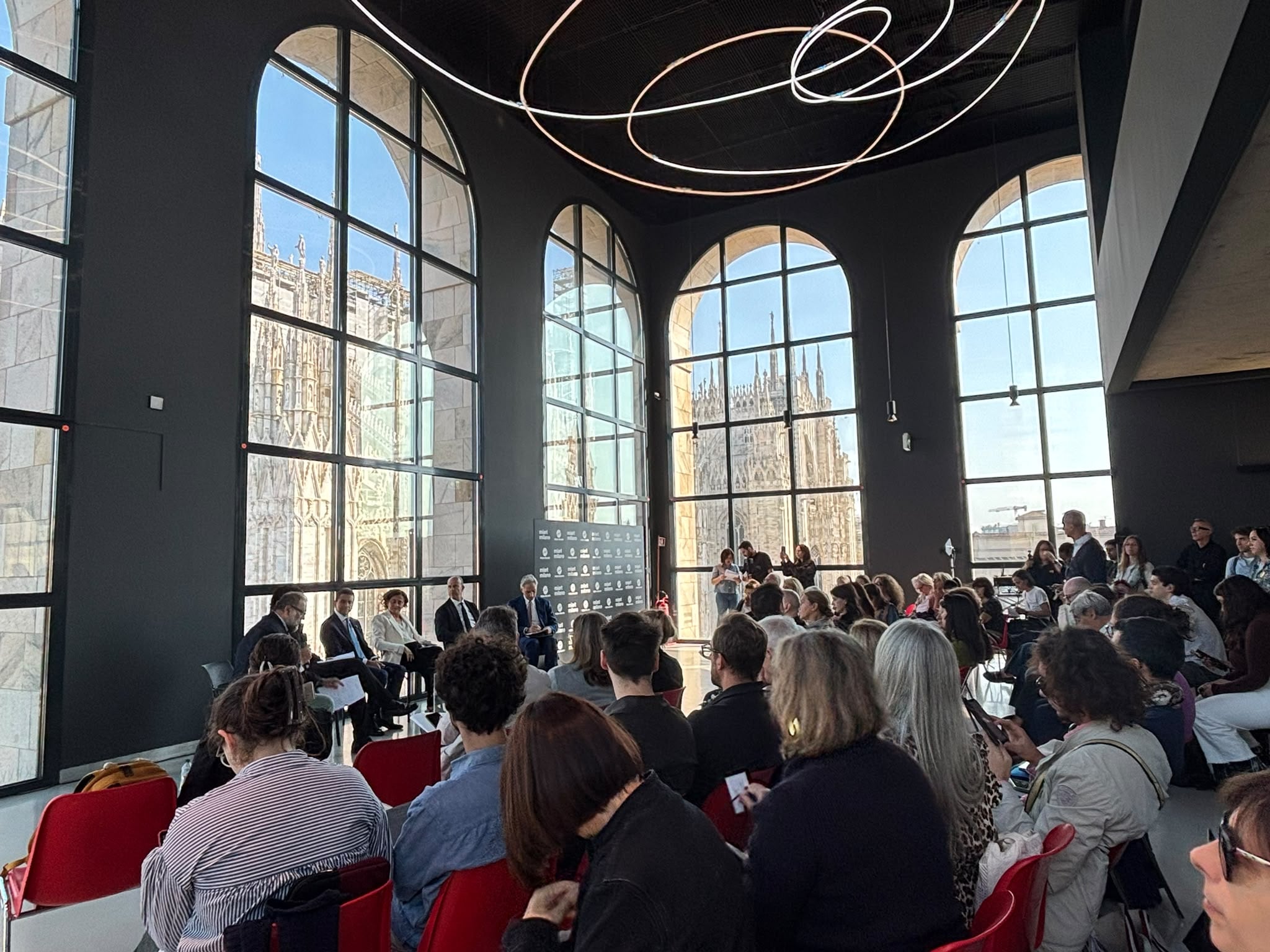
In the magnificent Sala Fontana at the Museo del Novecento in Milan, opposite the Duomo and next to the second Arengario – already covered in scaffolding – with the promise that work will be completed by May 2028 and a new art museum will be handed over to Milan, the 31st edition of the Miart art fair was unveiled. Or rather, Miart Milano, because under its new director Cloe Piccoli, who succeeded Nicola Ricciardi – the man who steered the fair through the Covid pandemic and the change of venue for the last edition – the fair aims to strengthen its connection with the city – with all its current appeal – through a rebranding project. “The idea is to create a strong synergy with the city, which has a significant network of galleries, public institutions, businesses and collectors; it is well situated at the heart of Europe and enjoys the major advantage of a 5 per cent VAT rate,” stated the new director at the press conference. “We have expanded the VIP and Gallery Liaison departments to travel the world, tap into new energy and boost Milan’s international profile. The watchword is to network and work as a team with the city.”
Projects in dialogue with the city
The project presented is still to be finalised, as the new management only took up their posts on 1 September, but it is set to run for three years and promises to realise its vision within this timeframe. There are therefore no names to share as yet, apart from that of Francesco Bonami, who will launch a series of talks called “The Ring” at iconic venues in Milan, featuring leading figures from the international art world. However, it will not wait until April (the fair is scheduled for 9–11 April), but will begin as early as December, with the aim of organising events even beyond the four days of the fair. In January, another series of talks called “Art Communities Conversations” will begin in collaboration with the Brera Academy and other institutions, running until the summer. Another planned project is “In and Out”, which will allow some galleries taking part in the fair, in agreement with the City Council and the institutions, to set up installations around the city, lasting one or two months depending on the institutions’ programmes.
The exhibition sections
But what will happen inside the fair? And, above all, where will it take place, given the galleries’ dissatisfaction with last year’s location within the exhibition hall? The answer is heartening: the fair is returning to its familiar venue for the art-loving public – the one used for the 2025 edition – on a single floor. The organisers are collaborating with a major architectural firm – the name of which has also not been revealed – to finalise all aspects of the fair’s layout, whilst work is also underway on a new wall system. There will be three sections: the ‘Main Section’ of modern and contemporary art, entitled ‘Atlas of the Arts’, an atlas of current trends in art across various media. Then there will be the ‘New Voices’ section, the only one to be curated – though discussions are still ongoing to determine who will curate it – and it will be dedicated to galleries working with emerging artists. And, finally, a section called “Close up” featuring solo or duo stands with dialogues between two artists. Applications for galleries will open at the start of next week. Within the fair, there will also be a small cinema called “On Film” to allow participating galleries to screen video works and films. Finally, the ‘Editions, Publishers and Magazines’ section is being relaunched to highlight the importance of art publishing in Milan.
Support from Fiera and Intesa Sanpaolo
Above all, the press conference provided an opportunity to reaffirm Fiera Milano’s renewed commitment to Miart. Although the modern and contemporary art fair is not the most important in terms of revenue, it is significant in terms of identity. “Because without art and culture, there would be no ‘Made in Italy’,” said the president Giovanni Bozzetti, “and there would be no trade fairs either, which serve as the showcase for ‘Made in Italy’”. Fondazione Fiera has reaffirmed its financial commitment of 100,000 euros to purchase works from galleries taking part in the event (thanks to these purchases, over time, it has built up an art collection of 170 works which, having been purchased for 1.5 million euros, is now worth double that amount). Furthermore, it has announced a new prize at the fair dedicated to Italian art, worth a considerable sum of 50,000 euros, though in this case too, the details have not been revealed. It has also launched the ‘My Fair Plus’ platform, designed for its customers, to keep them informed about the programmes of cultural venues in Milan and Lombardy, enabling them to buy tickets straight away and thereby vastly expanding the potential audience for culture.
Meanwhile, the fair is also working on setting up other ambitious awards in collaboration with companies, for which a Global Corporate Advisor has been appointed. Intesa Sanpaolo, a partner of Miart for the past ten years, has also reaffirmed its commitment. All this will form part of the City Council’s Milano Art Week, which last year featured 243 exhibitions, 183 openings and hundreds of events including talks, performances, workshops and special projects; however, to find out more, we will – once again – have to wait a little longer.

