Mind the Economy/Justice 174

Michael Bacharach and the wrong question in economics

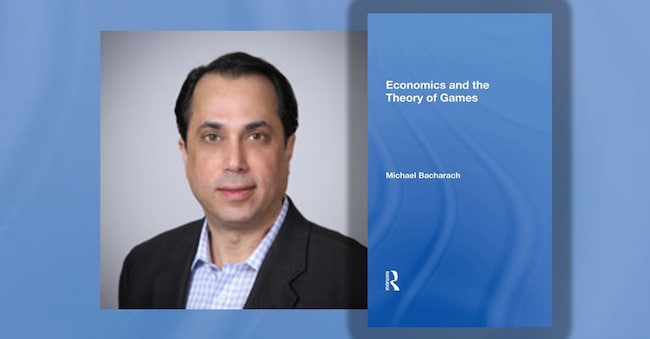
L’eonomista Michael Bacharach

9' min read

Translated by AI
Versione italiana

9' min read

Translated by AI
Versione italiana

Let’s imagine two people who have to choose, separately and without being able to speak to each other, between two options: High and Low. If both choose High, each earns 10 euros. If both choose Low, they each earn 5. If they choose different options, neither of them earns anything. What should they do? The answer seems almost too easy. It’s better to choose ‘High’. Ten euros is better than five and, above all, it’s better for both of them. But let’s try to explain why it is rational to choose ‘High’. If I think the other person will choose ‘High’, it is in my best interests to choose ‘High’ too. But if, for some reason, I think the other person will choose ‘Low’, then it is also in my best interests to choose ‘Low’. My rational choice depends on what I believe the other person will do. But the other person’s choice also depends on what they think I will do. I can then ask myself what they think I think they will do, and carry on like this without ever reaching the conclusion that seemed obvious from the start. Why on earth would two rational people agree on five euros when they could have ten?

It is the game that the Oxford economist Michael Bacharach called Hi-Lo. On the face of it, it is one of the simplest games imaginable. For Bacharach, however, it becomes a very rigorous test of rational choice theory. There are two equilibria: High-High and Low-Low. The former is clearly better than the latter for both players, yet standard theory, reasoning in terms of best individual responses, fails to provide sufficient reasons to prefer it. We can certainly think that if we expect the other player to choose High, it is better to choose High. But from this conditional proposition we cannot derive the unconditional conclusion that it is always better to choose High. It is precisely this difficulty that Bacharach regarded as one of the fundamental problems of game theory.

Loading...

This point is particularly interesting because there is no conflict of interest here. Nobody has to be selfless. Nobody has to give anything up so that the other person can be better off. Nor is there a problem of distributive fairness: High-High allocates more to both than Low-Low. If the theory struggles to explain High’s choice, therefore, we cannot get away with introducing social preferences, aversion to inequality or reciprocity. The problem lies elsewhere. And it is here that Bacharach begins to challenge a much deeper assumption underlying economic theory. Who is it that chooses? 

Before choosing

To attempt to answer this question about the identity of the decision-maker, however, we need to take a step back. Before turning his attention to this topic, Bacharach had worked extensively on another classic problem in game theory: that of the so-called focal points, a concept introduced into economics by Nobel laureate Thomas Schelling. How do two people coordinate, Schelling wondered, when there are many possible solutions and they cannot communicate with one another? In a famous experiment, Schelling asked people where they would go in New York to meet, without having had the chance to agree in advance on a place and time. In principle, there are thousands of possible combinations. Yet most people indicated Grand Central Station at 12 noon. Among all the possible solutions, Schelling observes, some ‘stand out’. They become focal points. This is where standard theory encounters a problem. If two alternatives are identical in terms of the outcomes they produce, there should be no rational reason to choose one over the other. In real life, however, people constantly make use of characteristics that the model considers irrelevant: a famous place, a round number, a particular shape, a colour that stands out from the rest.

Bacharach takes this anomaly very seriously and develops a theory, the Variable Frame Theory, to explain how it works. The underlying idea is simple, but it has profound consequences. An individual never makes a choice whilst observing the world from a completely neutral point of view. Some features of the situation enter their mental representation, whilst others do not. The frame is precisely the set of variables through which the subject conceptualises the problem. Suppose, for example, that we see a series of letters and have to choose one. The same physical action – circling the letter U – can be represented as ‘choosing the U’, ‘choosing a vowel’ or ‘choosing the letter that is different from the others’. The action is the same, but the object of the choice changes depending on the description under which it is considered.

This is an important step. Rationality does not begin when faced with a set of perfectly defined alternatives, as if the world were presenting the decision-maker with a ready-made menu. Even before evaluating the alternatives, we must perceive that something as an alternative. Rational choice takes place within a frame; the frame determines what the decision-maker sees and therefore which reasons become available. The experiments subsequently conducted by Bacharach together with Michele Bernasconi on coordination games demonstrate precisely this mechanism. Participants were presented with objects having different characteristics and were asked to choose the one they thought another participant would also choose. The probability of coordination depended on which characteristics became salient and, therefore, on the way in which the participants represented the options to themselves. The most interesting finding was not simply that certain characteristics attracted more attention. It was that the actual structure of the problem depended on what the players were able to perceive within the problem itself (“The variable frame theory of focal points: An experimental study”. Games and Economic Behaviour, 19(1), pp. 1–45, 1997). 

Change the subject

At this point, Bacharach makes the decisive move. If we can change the way we represent alternatives, why should the way we represent ourselves whilst making choices be fixed? Standard economic theory normally takes one answer for granted. The fundamental unit of action is the individual. I choose my strategy, you choose yours. I may, of course, be concerned about you. I may be generous, altruistic, or opposed to inequality. I may even attach the same weight to your utility as to my own. But the subject carrying out the calculation always remains an ‘I’. Bacharach challenges this tacit assumption regarding what he calls the unit of agency. By adopting different frames, in fact, I can represent myself as an individual agent but also as part of a collective agent. In the first case, the problem is ‘for me’; in the second, it becomes a problem ‘for us’. This is not merely a linguistic difference. The very structure of the reasoning changes.

Let’s go back to the High-Low game. If I think about it on my own, I ask myself what I should do. To answer that, I have to form an expectation of what you will do. If I think you’ll choose High, I choose High; if I think you’ll choose Low, I choose Low. But to predict your choice, I have to ask myself what expectations you have of me, and so the problem starts all over again. Let’s suppose, instead, that I frame the situation as a problem concerning the two of us. The first question then becomes: what should we do? Now the answer is entirely unambiguous. We should choose High-High. It is the best course of action for the group. Having established that, the second question is much simpler: what is my part in what we should do? Choose High.

Bacharach describes this type of reasoning as a form of team reasoning that operates on two levels. First, the best combination of actions for the group is identified, and then each member identifies their own part within that combination and carries it out. As he puts it, team reasoning describes what a coach would do if they had to determine the best plan for the whole team and then assign each member their part.

If I think we should shift the play to the left flank – to use an example from Bacharach – I must also consider that I need to shift my own action to the left. Once I have identified the best formation for ‘us’, my action follows from the position I occupy within it.  

Loading...

It’s not altruism

We might think that Bacharach is simply introducing a sophisticated form of altruism. But this is not the case. Let us consider an altruistic individual. When making a decision, they take into account not only their own well-being but also that of others. Their utility function changes. But they continue to ask themselves which action they should choose to maximise what they value. The subject of the decision remains the individual. This is the approach taken by many behavioural extensions of game theory. We can transform the payoffs, the outcomes of the game, by introducing so-called social preferences: aversion to inequality, as Ernst Fehr and Klaus Schmidt or Gary Bolton and Axel Ockenfels have done; or reciprocity, as Matthew Rabin has done. In all these cases, we enrich the individual’s motivation, whilst keeping the unity of action intact. Bacharach takes a different approach. His transformation, as Natalie Gold and Robert Sugden have emphasised whilst reconstructing Bacharach’s unfinished project in Beyond Individual Choice, does not simply concern payoffs; it concerns agency. We move from the payoffs that govern the choices of a certain unit of action to the payoffs relevant to another unit of action (Bacharach, M. (2006). Beyond Individual Choice: Teams and Frames in Game Theory (N. Gold & R. Sugden, Eds.), Princeton University Press). The High-Low game, in its extreme simplicity, makes the difference crystal clear. There is no inequality to correct and no favour to return. Any preference for equality leaves the structure of the game unchanged: both High-High and Low-Low distribute exactly the same sum to the two players. Yet we still think that choosing High is the sensible thing to do. According to Bacharach, the reason is that, at least in certain circumstances, when we decide what to do we are not simply maximising a more generous individual utility function, but we are changing the subject of the reasoning. For him, this is one of the strongest arguments in favour of team reasoning.  

From ‘I’ to ‘we’

This, of course, remains a huge problem. Where does this ‘we’ come from? Bacharach does not argue that we should always reason collectively. Nor does he claim that rationality requires us to identify with a group. On this point, his position is surprisingly restrained. Both individual and group reasoning can be valid forms of instrumental rationality. Rationality tells us how to act given a certain frame, but it does not determine which frame should be activated. If a person regards the situation as a problem ‘for me’, they will reason individually. If they regard it as a problem ‘for us’, they may reason as a member of the group. Which of the two representations emerges is, for Bacharach, a psychological matter. This brings us back to the earlier work on focal points. Just as certain characteristics of an object can become salient and alter the way we represent a choice, so certain characteristics of an interaction can make our membership of a group salient. In High-Low, for example, Bacharach speaks of strong interdependence. My outcome depends heavily on your action, and yours on mine. Furthermore, our interests are perfectly aligned. A situation of this kind can foster identification with the group and thus bring out the frame of ‘us’. But this is by no means automatic. Collective identification is a psychological response to the situation and may occur with varying probability in different contexts. A significant part of the economic theory of cooperation seeks to understand how to modify incentives so that separate individuals find it advantageous to coordinate. Bacharach’s position is more fundamental and leads us to ask: what causes those people to view the situation as an individual problem or as a shared problem? The difference has consequences that go far beyond the High-Low game. A group of colleagues, for example, might ask themselves what division of tasks is in each person’s best interests, or what organisational structure enables the group to work most effectively. Two governments might ask themselves which agreement maximises the benefit for each country separately, or which solution best addresses a problem that both recognise as a common one. Citizens might view paying tax as a deduction from their own income, or see it as part of the problem of financing goods that they produce together. It is not necessarily the case that the shift to ‘we’ always produces the best choice, nor that every ‘we’ is desirable. Bacharach does not argue this. He demonstrates something more limited, namely that the way in which we define the agent alters what counts as rational reasoning.

And this is also a significant step in relation to the issue of justice. If institutions, norms and social contexts contribute to making certain descriptions more accessible than others, their effect is not felt solely through prices, incentives and constraints. They can also help determine whether an issue will be perceived as ‘mine’, ‘yours’ or ‘ours’. Even before we ask ourselves what the right solution is, there may therefore be a more fundamental question concerning who we think should resolve it. Bacharach thus brings us to the threshold of the most difficult problem. High-Low is a relatively straightforward case. What is best for ‘us’ is also what is best for each individual, taken on their own. But what happens when individual and collective interests diverge? In the prisoner’s dilemma, another classic and extensively studied game, cooperation produces a better outcome for both parties, but each individual, taken separately, has a reason not to cooperate. And that is where we will pick up again next week with Mind the Economy to analyse whether and how changing the subject asking the question – from ‘I’ to ‘we’ – might also change the answer.

Vittorio Pelligra, Professor of Economics (13/A2), C-BASS (Centre for Behavioural and Statistical Sciences) – Director.
Department of Economics and Business – University of Cagliari –

Copyright reserved ©
Loading...

Brand connect

Loading...

Newsletter

Notizie e approfondimenti sugli avvenimenti politici, economici e finanziari.

Iscriviti