
The geopolitics of microchips

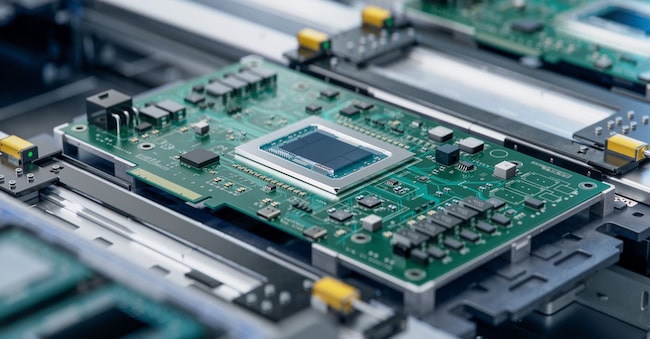
What would happen if China attacked Taiwan and stopped exporting microchips or new conflicts again endangered the global supply chains of these components? A recent New York Times investigation raised the US dependence on the island in this sector and detailed the - ineffective - steps taken by the US to reduce the serious impacts on its economic system.
But what is the European situation? Our Continent is also dependent on Taiwan, albeit in a very different way. The EU situation is the result of years of both industrial and political choices that led Europe to miss the transition from an industry made up of companies that designed, manufactured and sold their own components (IDM, integrated device manufacture, integrated device manufacturers) to one where - although IDMs are still present and with the exception of memory manufacturers - the industry is dominated by companies that have specialised either in the manufacture of circuits for third parties (Foundries), of which the most advanced is Taiwan's TSMC, or in their design without their own production capacities (Fabless), of which the best known is Nvidia. Today, if we base ourselves on ownership, in Europe we have three IDMs, including Italy's STMicroelectronics, with production capabilities but in mature or specialised technologies, and a few foundries. However, all the players present - both IDMs (except Intel in Ireland) and foundries such as US GlobalFoundries or the Taiwanese ESMC (a joint venture between TSMC and some of its European customers) - only have technologies at least four generations behind Taiwan. Very few and very small are fabless. This is a first profound difference between Europe and the US, as the European lag is not only limited to manufacturing capabilities but also to the design capabilities of new components. The absence of advanced manufacturing capabilities - and this is the second big difference with the US - is due to the lack of domestic demand. In contrast to the early 2000s and still in the US, there are no longer consumer electronics players and integrators of advanced systems such as supercomputers and datacenters in Europe. It is these that constitute the markets with the necessary production volumes and the drive for new technologies that have driven developments in Asia and the US. Automotive, aerospace and industrial electronics are the only sectors where European industry still has a strong presence. Unfortunately, this domestic market remains too small to sustain, on its own, the huge investments that would be needed to stimulate advanced production on the continent.
For Italia and Europe, therefore, the lack of advanced chips produced only in Taiwan would have an important but quantitatively limited impact on the domestic industry. For mature technologies, on the other hand, a progressive diversification of suppliers and better supply chain management could compensate for a possible blockage in supply, albeit at the price of an increase in costs. The real, very serious impact would be indirect. There would be no shortage of chips, but all consumer electronics, supercomputers and all electronic systems for which today, we depend on imports from the USA and Asia. For this reason, a European strategy cannot be limited to chips but must address the problem of the entire electronics supply chain.
The Chips-IT Foundation, at its level, seeks to provide an answer to the problem of the lack of design capabilities. By building for the first time in Italia a state-of-the-art infrastructure in the sector, Chips-IT aims to provide research capabilities that can strengthen Italian industry in its key sectors and stimulate the birth and growth of Italian and European fabless. Achieving this goal involves setting up research groups of the highest quality that give brilliant electronics engineers the opportunity to stay and bring back others who have left abroad. Active for eighteen months now, the Foundation is on track with its planned development programme and has already established partnerships with industrialists such as Luxottica and Stellantis.
Carlo Reita, Director of the Chips-IT Foundation

