
Microsoft accelerates AI agentica: all the new features of 365 Copilot
According to the Redmond giant, an adoption of AI can generate an annual increase in Italy's GDP of 18% to 2040, an added value of EUR 336 billion per year

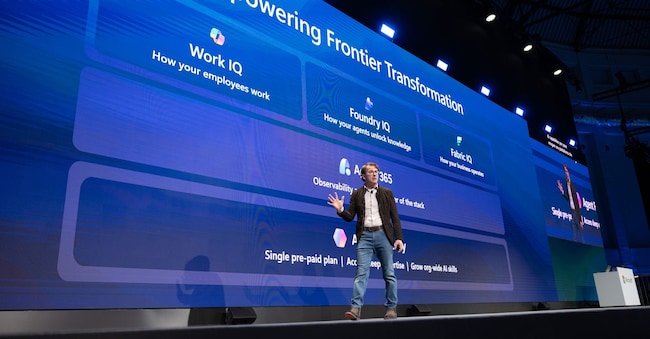
The race for artificial intelligence has entered a new phase, and the ballet of the big tech players knows a new script at periodic intervals, always and in any case oriented towards redefining strategies and platforms to preside over what has in fact become the main area of competition between Microsoft and Google. The former is pushing, and has been for some time, for the integration of intelligent agents into its own productivity applications and corporate workflows, while the latter (yesterday, the protagonist of a substantial update to Workspace, which brought Gemini into the heart of the suite's various tools) is following suit by focusing on multi-model ecosystems and development tools designed to orchestrate agents and cloud services. The comparison is played out on a key point: transforming AI from a simple conversational assistant to an engine capable of performing tasks and coordinating complex processes. And it is in this scenario that the announcements presented by the Redmond company at the CityOval in Milan during the AI Tour, an international event that brought together some 2,500 entrepreneurs, managers and IT professionals. The various Microsoft representatives who took to the stage emphasised the 'Frontier Transformation' strategy, a path through which the company intends to accompany companies towards a more strategic use of artificial intelligence, going beyond the phase of simple experimentation to arrive at a deeper implementation of the technology in business models. Slogans aside, it is clear by now how BigTech is riding the mantra of AI no longer being limited to a mere efficiency tool but becoming a critical factor in development and growth.
Growing, with reservations, adoption in Italian companies
The Milan event provided an opportunity to take stock of the state of adoption in Italia thanks to data from the 'AI Skills 4 Agents Observatory 2026' research, carried out by the Teha Group in collaboration with Microsoft itself and Avanade, and full of certainly interesting indicators. The first concerns the annual increase in Italy's GDP that AI could generate by 2040, quantified at around EUR 336 billion in added value across all sectors, with manufacturing in the front line thanks to a potential increase of over EUR 60 billion. The second, on the other hand, certifies the 'popularity' of artificial intelligence in large companies: almost 90% use tools based on algorithms and LLM models (a percentage that is on the rise compared to 2024), even if their application remains mainly focused on operational efficiency (one company in three claims productivity gains of over 5%).
The picture is more complex for agent-based AI, which is proceeding more cautiously, although 95% of large companies see it as a driver of efficiency and productivity: 'only' 27% of companies, however, link it to a competitive business advantage, while 55% see it as a significant technological leap that requires preparation and organisational changes. The main obstacles to its diffusion are the lack of digital culture and change management skills (72% of companies say so) and the lack of internal skills, an item cited by 68% of the sample surveyed. In order to overcome these obstacles, Vincenzo Esposito, Managing Director of Microsoft Italia, was very explicit in his recipe: 'it is essential to move from experimentation to large-scale adoption, we need a change of mindset that leads to considering this technology as a strategic lever'. The initiatives that refer to the AI L.A.B. and AI Skills Alliance proframs go in this direction: the former has so far involved more than 500 companies and 38 partners in the development of more than 700 projects, while the latter brings together 36 organisations and 12 technical partners to offer AI training courses dedicated to various corporate functions.
Product innovations: Anthropic comes into play
One of the central moments of the Milan event was dedicated to the agent-based updates of Microsoft 365 Copilot, the intelligent assistance platform integrated in the productivity tools. Presenting them was Judson Althoff, for the first time in Italia in the role of CEO of Microsoft Commercial Business, who was immediately ready to reel off the numbers certifying the goodness of the direction taken by the company: Copilot licences at global level have in fact increased by more than 160% on an annual basis, while daily active use has grown tenfold over the previous year. Large-scale deployment projects (over 35,000 active locations) have also tripled year-on-year, and today 90 per cent of Fortune 500 companies use Copilot, the manager reiterated.
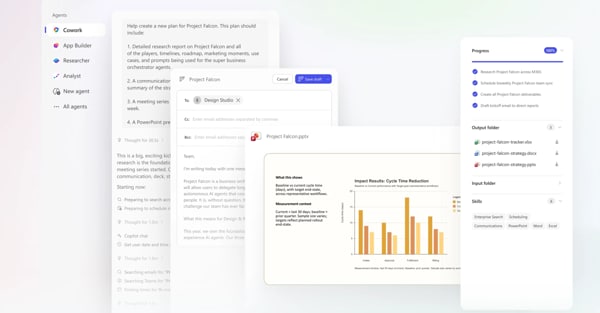
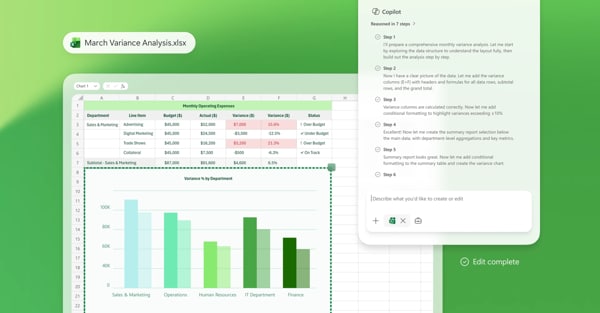
As for the actual product innovations, the so-called 'Wave 3' marks a new stage in the evolution of the AI assistant, which now harnesses the potential of the WorkIQ component to integrate advanced agent capabilities within applications, from Word to Excel to PowerPoint and Outlook. The advantage for users? Being able to automate even the most complex workflows, transforming Copilot from a writing (or research) support tool into a true task coordinator. The new wave of Microsoft 365 Copilot also extends the Copilot Chat experience, which from now on allows the creation of customised agents and, above all, the integration of different Gen AI models: with the Frontier programme, it will be possible to use not only the latest OpenAI technologies in the tool, but also Anthropic's Claude.

