
Microsoft, 18 employees arrested after protests against alleged dealings with Israel
The company rejects the accusations and announces an independent investigation, but internal dissent grows: workers demand clarity on the role of technology in conflicts

3' min read
3' min read
A garrison turned into a makeshift encampment, signs with fiery slogans, and a plaza renamed "Martyred Palestinian Children's Plaza". So, in Redmond, Washington, dozens of Microsoft employees and former employees chose to break the silence. In the heart of the East Campus, headquarters of the company founded by Bill Gates, the software giant came to terms not with its competitors, but with its own workers. The accusation is a heavy one: its technology, in particular Azure cloud services, was allegedly used by the Israeli army to surveil the Palestinian population in Gaza and the West Bank.
At least 18 arrests
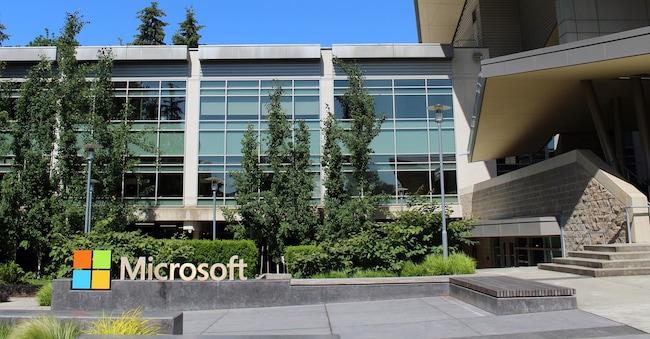
.At least 18 people were arrested in the two-day protests by Microsoft employees at the Redmond, Washington campus. Unlike Tuesday, when about 35 protesters occupying a plaza between office buildings left after the company asked them to leave, yesterday the protesters "resisted and became aggressive" after the company told police they were trespassing. The protesters also sprayed red paint similar to the colour of blood on a sign bearing the company logo and the words Microsoft in large grey letters. "We said, 'Please leave or you will be arrested,' but they chose not to leave, so they were stopped," reported police spokeswoman Jill Green. There are "several charges against the 18 arrested, including trespassing, vandalism, resisting arrest and obstruction," the police pointed out.
The media revelations
.The discontent took shape after investigations published by the Guardian and the Israeli +972 Magazine, which revealed how Israeli intelligence unit Unit 8200 allegedly stored millions of phone conversations of Palestinian civilians on Azure servers. An accusation that Microsoft rejects, although it has launched an independent investigation by the law firm Covington & Burling, the results of which should be made public in the coming months. But for a part of the employees this is not enough.
In the heart of campus
Activists from the group 'No Azure for Apartheid' occupied the space in front of the Microsoft logo, erecting tents, black drapes to symbolise the victims of Gaza, and even a 'negotiating' table with the inscription: 'Microsoft Execs, come to the table' (translated, 'Microsoft Executives, sit at the negotiating table'). The slogans left no room for interpretation: 'Join the Worker Intifada - No Labor for Genocide' and 'Stop Starving Gaza' dominated the scene for over two hours, before the local police ordered the eviction for trespassing.
The company's location
.Microsoft employs about 47,000 people in Redmond. Many watched without intervening: some expressed solidarity, others dismissed the action as unhelpful. The company, for its part, reiterated in a note that 'based on internal and external audits conducted to date, there is no evidence that Azure or Microsoft's artificial intelligence technologies were used to surveil or target civilians in the Gaza conflict'. A position consistent with what management has already stated: the contracts with the Israeli Ministry of Defence would be 'standard commercial agreements', in line with the company's ethical codes and policies.

