The most exposed sector

War on Iran puts Made-in-Italy valves in crisis

Blocked orders, skyrocketing shipping costs: the region is worth 15% of exports, for some companies two thirds of business

by Luca Orlando
3' min read

Translated by AI
Versione italiana

3' min read

Translated by AI
Versione italiana

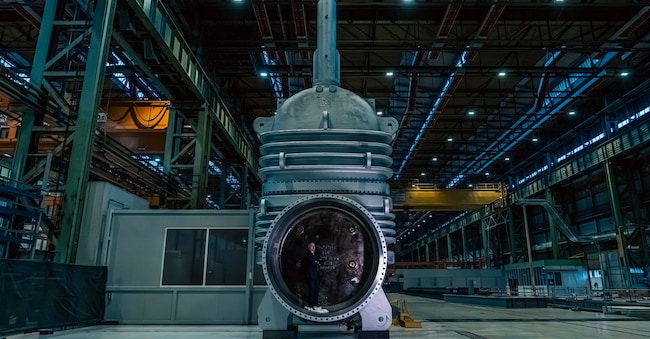
"What do some customers write to us? That due to force majeure they cannot collect the goods for the time being. And so they don't pay'. Luca Farina, CEO of Orion Valves, a manufacturer of valves for the oil & gas sector, which generates two thirds of its revenues in the Middle East and which a few weeks ago, before the crisis, fortunately managed to deliver a $3 million maxi-plant to Saudi Arabia, the largest valve in the world in its category. The difficulties of Arab customers in giving the go-ahead to ship these high-tech valves are now creating a - hopefully temporary - obstacle for the company worth a few million euros in lost revenue.

'Firm cargo creates problems,' the entrepreneur explains, 'and we are organising ourselves to find alternative routes, for example via Haifa and then by land. But freight rates have gone crazy'.

Loading...

The attack on Iran and the blockade of Hormuz are certainly not the ideal scenario for the national sector most exposed to the area, with valves and taps accounting for 15% of total exports to the Middle East, almost four times the national average, around one billion euro per year. With difficulties concerning receipts but also logistics and future orders.

'This is definitely a labour-intensive area,' explains Lvf general manager Claudio Piccinini, 'and now everything is blocked. The orders we have reassure us for 2026, because the processing cycles in our sector are long. But the problem, if the situation does not unblock, will be for next year's volumes. Already on the alert, however, are customers in other areas, for example in the US, who are asking us about our supply chain problems: they want guarantees on future production, on which we see no problems.

'In the Emirates we have a sales branch with eight people,' says Vir owner Savino Rizzio, 10% of revenue in the Middle East, 'and for us this situation is a low blow. In the short term we manage, but we have to organise ourselves differently to ship goods: either we go via Suez or we have to circumnavigate Africa'.

'The goods we cannot ship at the moment are worth 6-7 million,' explains Starline CEO Marco Ghilardi, 'and customers are asking us to store them here in Italia for the time being, asking us to evaluate the costs of the operation. As of today we are also negotiating to issue some down payment invoices in the meantime. For us, the Middle East is worth 70% of our revenues, so it is clear that this uncertainty worries us. Uncertainty also on future costs, since we are already seeing hypotheses of increases for some raw materials'.

Concerns that extend more generally to the entire area of miscellaneous mechanics represented by the Anima Federation, which sees 1.44 billion in exports to the Middle East in the first six months of 2025, 7% of the total, almost double the weight of the Gulf area in the national average.

Peirone (Ceipiemonte) "Esploriamo opportunità in Medio Oriente e Asia"

In addition to valves and taps, the weight of the area is particularly relevant for e.g. gas turbines (10% of exports) or water pumps (9%). Important revenues that have been progressively put at risk by the US and Israeli attack on Iran. "We sincerely hope," explains Anima president Pietro Almici, "that the current situation will be resolved soon. We are particularly concerned for Italian mechanics, a sector that exports around 60% of its products and has the capabilities to compete internationally. The Gulf countries represent a valid alternative in the market diversification strategy, especially in light of the current challenges posed by US tariffs. Let us also not forget the issues related to freight and maritime transport, which are already having an impact on exports and energy costs for our companies. These dynamics make the ratification of the Mercosur-EU treaty even more important, in order to open up new possibilities for development and cooperation for Italian and European industry'.

Area, the Middle East, which in Anima's figures sees a growth in terms of exports of 7%, one of the few positive areas within a flat 2025 overseas for miscellaneous mechanics (+0.4% in the first six months), more than double the average of the general trend of Italian exports. With Saudi Arabia, the Emirates and Qatar accounting for almost 90% of the total values in the Middle East for components in the Anima universe.

Copyright reserved ©
Loading...

Brand connect

Loading...

Newsletter

Notizie e approfondimenti sugli avvenimenti politici, economici e finanziari.

Iscriviti