
Unicredit posts its best half-year ever, with a profit of 6.3 billion
Growth was driven by strong growth in commission income and net profit from insurance operations

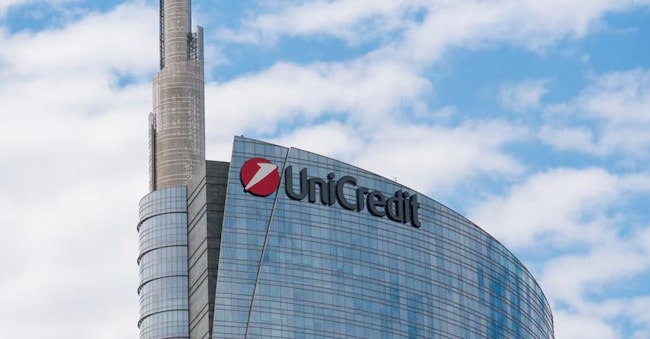
Unicredit has recorded the best half-year in its history. Net profit stands at 6.3 billion, up 3 per cent, or 24 per cent on an adjusted basis excluding -245 million euros in the second quarter from an extraordinary item under trading income – mainly due to hedging and financing costs linked to the increase in its position in Commerzbank – and the related protection – reported under trading income. In the second quarter, profit stood at 2.9 billion, beating forecasts. Analysts had predicted 2.83 billion euros.
The growth in results was driven by accelerating core net revenue, which rose by 3.6 per cent half-year-on-half-year to 12.2 billion, “demonstrating the resilience and quality of the revenue profile”, the group notes. This growth was driven by strong momentum in commission income and net insurance underwriting profit, alongside a sequentially accelerating net interest margin, supported by high-quality volume growth. The acceleration in core revenues, combined with disciplined risk management which resulted in loan loss provisions of 0.4 billion, led to net revenues of 13 billion in the first half of the year, up 6% compared with the first six months of the previous year, excluding the one-off item relating to trading income, or up 4% otherwise. In the first half of the year, net interest income fell by 0.8% compared with the first half of the previous year to 7.2 billion, “a resilient performance given the lower Euribor during the period and the impact of the situation in Russia, or an increase of 0.2% excluding this”, notes Unicredit.
This performance was underpinned by an improvement in the quality of the loan portfolio, which rose by 82% compared with the first half of 2025. A further sequential improvement in the net interest margin is expected. Fees and net insurance income totalled 5 billion in the first half of the year, a substantial increase of 11% compared with the first half of the previous year. Together, they accounted for approximately 38% of net revenue in the first half of the year. Trading income stood at 229 million, down 55% compared with the first six months of the previous year. This was largely due to a negative one-off item in the second quarter amounting to 245 million euros. The cost of risk remained structurally low at 17 basis points. The group generated 2.5 billion or 85 basis points of capital organically in the second quarter.
Orcel: record first half-year
“UniCredit has once again achieved an exceptional set of results, leading to our best-ever operational performance and a record first half of the year.” So said Andrea Orcel, Chief Executive of UniCredit, commenting on the results for the first half of the year. “Unlimited is driving a change of pace: we are accelerating profitable revenue growth, with clear evidence of gains in high-quality market share and strong commercial momentum, whilst continuing to redefine the boundaries of efficiency. Net profit reached 6.1 billion in the first half of the year, up 24 per cent on the previous year on an adjusted basis, with an excellent ROTE of 24 per cent. These results, together with our robust defences, have enabled us to upgrade our guidance for net profit in FY26 to well over 11 billion, or around 11.5 billion excluding integration costs. This performance reflects the disciplined execution of our strategy across all the markets in which we operate. We are growing the business whilst making it leaner, faster and more efficient, investing in our people, technology and AI to strengthen our competitive advantage and deliver a better experience for our customers. I am particularly proud, across all the countries in which we operate, of our people, who embody our winning strategy and our shared culture. The progress achieved through our transformation, together with our diversification and our lines of defence, enables us to capitalise on attractive organic growth opportunities whilst maintaining discipline in pursuing value-enhancing inorganic options, and remaining well-equipped to perform across a wide range of environments.”

