
Migrants, centres in Albania now hanging in the rain: costs and unknowns
The latest obstacle is the rains slowing down the work in Gjader

4' min read
Key points
4' min read
It will still be a long wait for the opening of the new migrant centres in Albania. The first 400 places should not even see the light of day next week. Many unforeseen events have slowed down the take-off of the two facilities in the areas of Shengjin and Gjader which, according to the Italy-Albania memorandum of understanding signed on 7 November and ratified by law 14/2024, should have seen the light at the end of May and host no more than 3,000 migrants at the same time: in the end it will stop at just over a thousand among those rescued in international waters, directed to Italy and coming from the so-called 'safe' countries.
The latest hindrance to the work: after the abnormal heat, the incessant rainfall
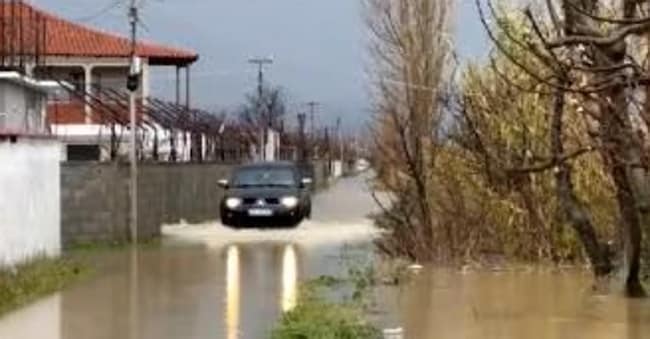
'Operational difficulties'. This is how Prime Minister Giorgia Meloni had defined the stumbling blocks at the 30 August Council of Ministers meeting, adding: "We are overcoming them one by one because we strongly believe in this innovative project, which the majority of EU Member States have asked the Commission to take as a model. We are aware that we have our eyes on it, and that is why we are determined to do everything properly'. After the abnormally hot summer weather, the latest obstacle was the incessant rainfall, which slowed down the work of the Albanian company called to lay asphalt on the area destined for the hotspot in the Gjader hills (where a military base once stood), which turned out to be the most problematic structure due to the tightness of the ground. This was also discussed at the meeting at Palazzo Chigi chaired on 12 September by Undersecretary Alfredo Mantovano, attended by the ministers involved and Rome Prefect Lamberto Giannini.
What centres will be born
.The puzzle to be put together is very complex. According to the announcement published on 21 March by the prefecture of Rome, the centres that will see the light are of three types: in Shengjin there will be a hotspot for the disembarkation and identification of migrants rescued in international waters, which is almost ready, while in Gjader a first reception facility with 880 places for asylum seekers should be created, where accelerated border procedures will be applied to decide whether they will be entitled to protection or will have to be repatriated (the prefecture of Rome will have 28 days to evaluate), and a centre for the repatriation of 144 places. There will also be a penal institution, with a maximum capacity of 20 people, for migrants who may be subject to precautionary measures for crimes committed in the facilities.
The cost puzzle
.The construction and management of the centres are borne by Italy (for about 62 million euro), but the costs certainly do not end there and appear to be the most complicated puzzle to solve. The expenses listed in the ratification law amount to around 650 million and include a wide variety of items, from maintenance to recruitment, from insurance to staff travel from Italy: the latter is the largest item (over 250 million). For the rental of the ship, the 'preliminary market consultation' launched by the Viminale speaks of a maximum of 13.5 million for three months. The cooperative Medihospes won the contract to manage the reception for 24 months with a bid of EUR 133.8 million. On 5 June, on a visit to Tirana, Meloni had recalled that "overall the funds allocated for the implementation of the protocol amount to 670 million euros for five years, i.e. 134 million euros a year, which corresponds to 7.5 per cent of the expenses related to the reception of migrants on the national territory and we are convinced that these resources are not to be considered an additional cost". According to Palazzo Chigi's calculations, 'with the current capacity of these centres at full capacity, considering the migrants who are not received in Italy, we will save €136 million'.
The Interior's estimate: about 160 million a year for five years
But, also because of unforeseen events, the costs would be more: at the Question Time on 7 August in the Chamber of Deputies, Interior Minister Matteo Piantedosi spoke of 'about 160 million a year', thus arriving at the 800 million over five years (the protocol lasts for this long, renewable for another five years) repeatedly evoked by the opposition as 'a waste of public money'. For the head of the Viminale, on the other hand, 'this is an investment that will make it possible to cut the costs of reception management, which, to date, amount to around 1.7 billion euro a year, which the current government has inherited from previous eras, characterised by massive and uncontrolled arrivals of migrants'.


