
Migrants, differences (and similarities) between Sanchez and Meloni on flow management
The governments of Madrid and Rome are polar opposites on several fronts. When it comes to landings, the approach shows some similarities
by Alberto Magnani (Il Sole 24 Ore, Italy), Lola García-Ajofrín(El Confidencial, Spain)
 Aggiungi Il Sole 24 Ore
ai preferiti su Google
6' min read
6' min read
Los Lances beach, a pristine and wild stretch of coastline in Tarifa, Cadiz, has a sombre place in history. Here, on 1 November 1988, the first of many documented victims of African migration to Spain was found, according to the APDHA Foundation's 2023 report on human rights at borders.
In 2023 alone, 56,852 people arrived irregularly in Spain, entering either by sea or crossing the land borders of Ceuta and Melilla, according to figures released by the Spanish government. This is an increase of 25,633 people from the previous year: an increase of 82.1 per cent.
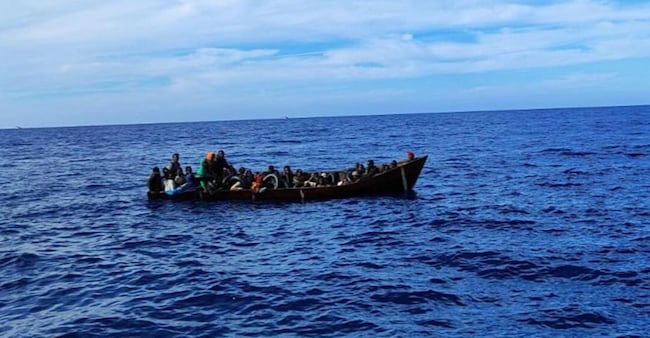
Although arrivals across Spain's southern border account for only 4 per cent of irregular migration, 'alarmist talk justifies militarisation and border fortification,' said the APDHA Foundation. This tightening of security means that thousands of people lose their lives every year trying to reach Spain. Last year was the deadliest ever recorded on Spanish coasts since data collection began, with an average of 18 deaths per day.
According to Caminando Fronteras' 'Monitoring Right to Life 2023' report, 6,618 people died trying to reach Spain in 2023, including 363 women and 384 children. This represents an increase of 177% compared to the previous year, when 2,390 people lost their lives. The NGO's annual report explains that since June there has been a significant increase in the number of boats leaving Senegal, an exodus caused by the country's 'significant social and political instability'. It also points out that systematic efforts have been made throughout 2023 to use the failure to provide assistance at sea as a means of immigration control.
Asked about the current Spanish migration policy, Gonzalo Fanjul, researcher and anti-poverty activist and director of investigations of the PorCausa journalistic initiative, stated that in his opinion 'there is no right or left-wing policy', but simply 'an anti-immigration policy and a pro-immigration policy'.


