
Mikro Kapital against banking desertification: help for small businesses

5' min read
5' min read
Banking desertification and social exclusion are two sides of the same coin: the difficulty of accessing credit.
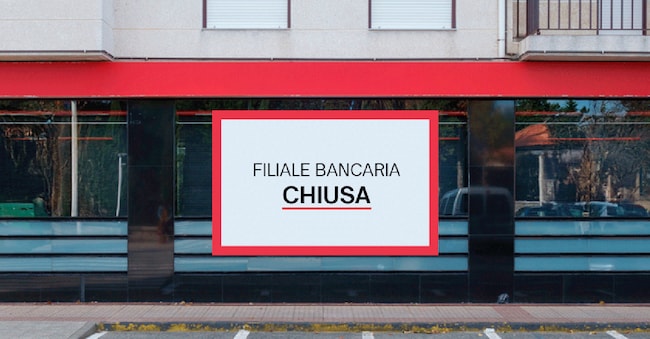
More and more small businesses and ordinary citizens find themselves without proximity banking services due to numerous mergers. This process is referred to as banking desertification and is caused by several factors, which we will look at in detail, discovering the consequences.
The causes of banking desertification
The digital revolution, which has changed the way we use services, is certainly among the main causes of banking desertification. Digital transactions and the pervasive use of apps to carry out all banking transactions have reduced the use of branches.
This has enabled a reduction in costs by banks, which have shifted towards digital and efficient service models. The approval of more stringent banking regulations has also led to an increase in branch costs, making it less sustainable to keep branches open.
The first effects of banking desertification have occurred in smaller and sparsely populated countries. The decreasing population and its ageing further contribute to the increase of this phenomenon.
To summarise, we could say that banking desertification is caused by:
- the disruptive effect of digitalisation;
- the increase of operating costs;
- the policies of rationalisation of banks.
The consequences of this phenomenon are the contraction of the possibilities of access to credit and the difficulty of development for local businesses, with the effect of an overall loss of competitiveness for the suburbs.
The numbers of bank desertification in Italy
The UILCA report offers a discouraging picture of the phenomenon with 4,557 branches closed between 2019 and 2024: on average 76 fewer branches every month. In 2024, branches throughout the country will become less than 20 thousand. In Lombardy as many as 90 per cent of citizens have suffered the closure of branches, highlighting an ever increasing difficulty of survival of small towns and the small and medium-sized enterprises located in them.
The map of banking desertification in Italy draws a patchy phenomenon with Valle d'Aosta, Umbria and Sardinia among the worst affected regions. Last year alone, 101 municipalities were left without bank branches, bringing the total to 3,381 municipalities currently without bank branches, or 42.8% of the national total. And it is not only a matter of small, sparsely populated realities, for the first time, in fact, it was a municipality with more than 20,000 inhabitants (Trentola Ducenta) that remained without branches.
The number of Italians (4.6 million) - and consequently also of businesses (282,688) - that reside in totally deserted municipalities do not have physical access to banking services is also growing.
An estimated 11 million citizens are deprived of access to credit, with consequent repercussions on the number of businesses in operation.
Social and financial exclusion
For citizens who do not have access to digital technologies, or do not possess the appropriate skills, the consequence is social exclusion. An effect that also overwhelms the less well-off who have little means to reach a branch that is too far away. An aspect, that of lack of means, which triggers a vicious circle excluding these individuals from credit and, therefore, from any possibility of development. According to UILCA data, the closure of bank branches also reduces the propensity to invest. For as many as 75.4% of the population, having a bank of reference in the area influences financial decisions.
Banking desertification leads to poor development of the area, jeopardising the survival of all the small businesses that arise there. This is, therefore, the most serious form of financial exclusion.
Credit exclusion
What happens to small and medium-sized enterprises when the nearest branch closes? Many transactions, such as the possibility of cashing cheques or paying with cash, become impossible.
The reduced circulation of credit and the reduced possibility for SMEs to access finance, produces credit exclusion. From the point of view of access to credit, the assessment of the risk attached to the loan due to the absence of collateral and the lack of a credit history represent two insurmountable barriers.
Recourse to external credit favours mobility, professional training and business development and reduces the use of informal or illegal intermediaries. With banking desertification, companies are isolated, feel abandoned by institutions and deprived of possible future growth.
What alternatives remain for those who find themselves excluded at many levels and want to invest in their own business idea to grow the territory? Hope is called ethical finance.
Bank desertification: the antidote of ethical finance
More profitability and less social sustainability, this is the banking system's tendency to desertification.
The opposite is ethical finance, a sector of finance that puts the individual at the centre of lending. The underlying values are access to credit and financial inclusion of the weakest in order to support the real economy.
Prior to profit maximisation, the objective for ethical finance is to realise economic growth that generates collective wealth. By providing customised financing to the 'unbanked', microcredit is a good example of ethical finance.
This instrument allows the provision of small loans to micro-enterprises with little collateral or no credit history. Thanks to the action of realities such as Mikro Kapital S.p.A., the first company authorised for microcredit in Italy, access to credit becomes possible. Not only that, disbursement times are significantly reduced: with Mikro Kapital it is possible to obtain a resolution to a loan request in just 5-10 days.
Mikro Kapital, microcredit and financial inclusion
Versatile, quick to obtain and customised, microcredit takes into account the value of the project rather than classic financial algorithms.
Mikro Kapital is one of the most active companies on the national scene: on a global microcredit market that reached $182.7 billion in 2022, the Luxembourg-based Alternative Group, of which Mikro Kapital SpA is a part, boasts an asset of 314.8 million euros.
Knowledge of the reference market and the value of the project are decisive in the disbursement of the loan, which can reach a maximum of 100,000 euros for S.r.l. alone. The situation is different for other forms of companies excluding S.p.A., which can obtain up to 75,000 €.
In this way, financial institutions such as Mikro Kapital, are contributing to creating a more ethical and inclusive finance. Their tutoring activity also allows them to maximise loan resources to favour the sustainability of the financed project in the long term.
Visiting the mikrokapital.it website, one can discover how quick and easy it is to submit a microcredit request, filling in the form and sending the required documents to get a quote immediately.

