
Milan Cortina 2026: how Hpe redesigns the most widespread Olympic network ever
From managing over 22,000 square kilometres to Zero Trust security: Hewlett Packard Enterprise explains how it built the 'digital foundation' of the Games, abandoning legacy networks for a self-repairing infrastructure.


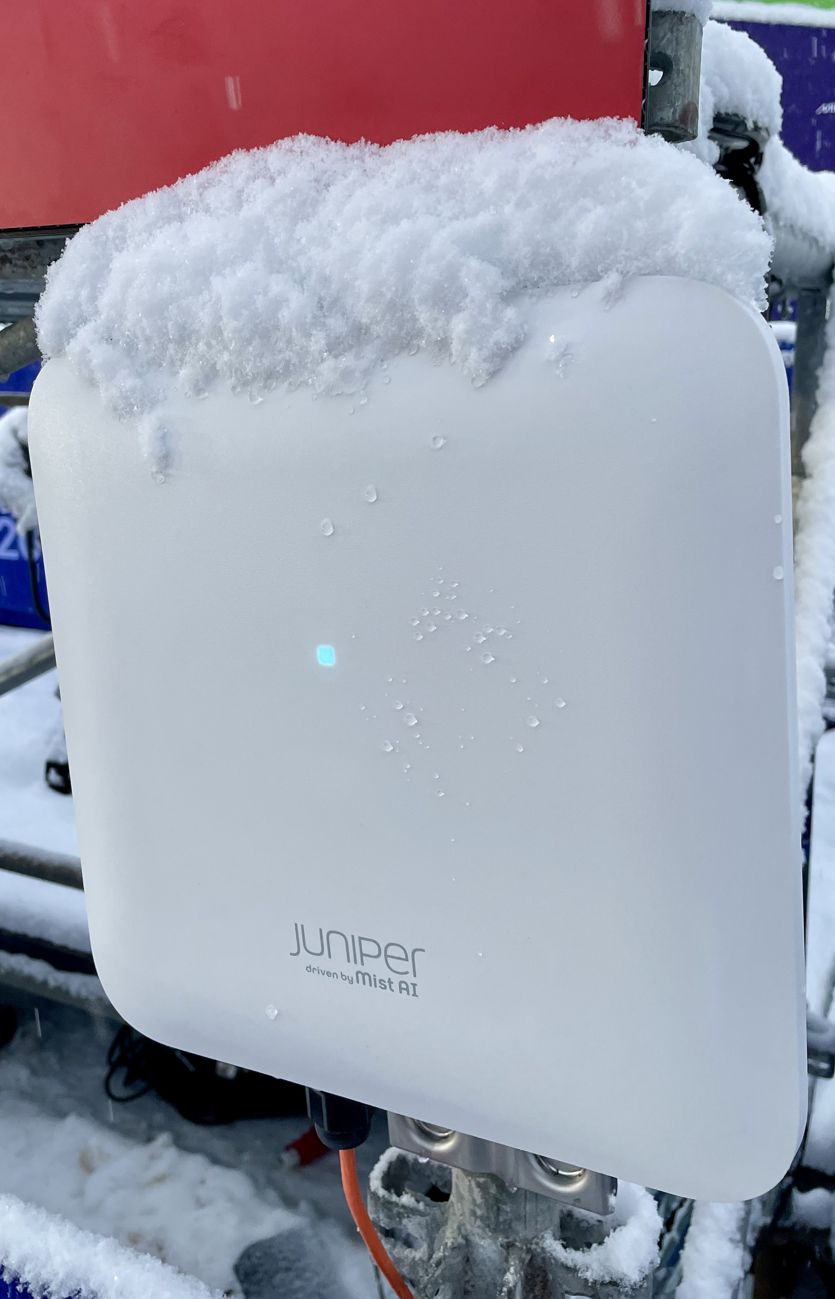
As the spotlight turns on Milan Cortina 2026's sporting spectacle rests on a stage that is invisible but as crucial as snow or ice: a network infrastructure that promises to be the most complex in the history of the Winter Games. Hewlett Packard Enterprise (HPE), the event's technology partner, is tasked with building together with other partners what its managers call the 'digital foundations' of the event, an engineering challenge that goes beyond simple connectivity into the territory of predictive data management and integrated security. During an event reserved for journalists, Hpe's managers explained that the complexity of the project stems first and foremost from geography. Unlike past editions, which were often concentrated in circumscribed clusters, Milan Cortina 2026 is the most geographically distributed edition ever. The infrastructure will have to cover an area of more than 22,000 square kilometres, extending over three different regions - Lombardy, Trentino and Veneto - and connecting more than 40 operational sites and more than 15 race venues, from metropolitan areas to Alpine peaks. Stefano Andreucci, Senior Sales Director, emphasised how this fragmentation involves critical environmental variables: the network must guarantee the same performance in a city hall and on a ski slope exposed to extreme and changing weather conditions.
To manage such a scenario, the traditional approach is no longer sufficient. Rami Rahim, president and head of Hpe's networking business (and formerly CEO of Juniper Networks), is adamant on this point: legacy networks, those built solely on speed and bandwidth parameters, are no longer adequate for the age of artificial intelligence. "A network that is 'on' is not necessarily a network that works well," Rahim explains. "Just because access points and routers have a green light, it doesn't mean that viewers, athletes or media are having a good experience."
HPE's response to this challenge is the 'Self-Driving Network', a self-driving network capable of self-configuring, self-optimising and, above all, self-healing. The stated goal is to reduce service tickets to practically zero. This paradigm shift is made possible by the HPE GreenLake platform and the native integration of artificial intelligence. Andreucci explains how the system uses a conversational interface called Marvis, based on Large Language Models, which allows IT operators to converse with the network as if it were a colleague. Instead of analysing complex codes, a technician can simply ask the system "What is the user experience in the skating arena?" and get an immediate analysis based on real-time and historical data of that specific user or location.
The need for an autonomous system becomes evident when one considers the numbers of devices involved. More than one million devices are expected to connect to the network on a daily basis, but it is not just the smartphones of fans and journalists. A crucial part of the traffic will be generated by the Internet of Things (IoT): stopwatches, biometric sensors, cameras and measuring devices. Rahim offers an enlightening perspective on this: 'Think of all the connected IoT devices. They don't have the ability to complain, they can't say 'Wi-Fi sucks' if the network doesn't perform'. This is where AI becomes indispensable, proactively monitoring the digital 'happiness' of every connected device before a disruption can impact the race or global broadcast.
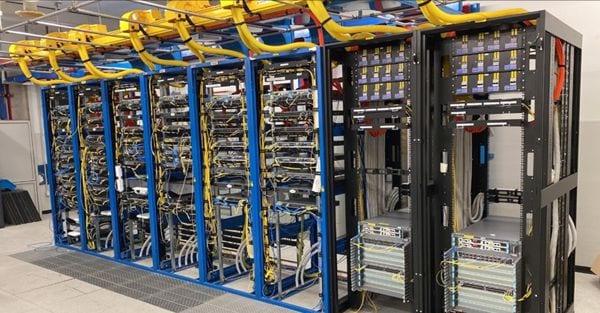
On the hardware front, the deployment of forces is massive. To cover the vastness of the territory, HPE will install some 4,900 wireless access points, more than 1,500 switches and a backbone of more than 70 Juniper MX universal routers. However, in an event of global resonance, computing power is nothing without control. Security was designed according to the 'Zero Trust' model, where no entity inside or outside the network is trusted a priori. Andreucci points out that security is not an a posteriori added layer, but is integrated into every layer of the infrastructure, with more than 50 SRX firewalls deployed to protect athletes' sensitive data, media feeds and logistical information from increasingly sophisticated cyber threats.


