
Milan-Cortina: work continues, spotlight on budget and cost overruns

Eight months after the start of the Winter Olympics in Milan and Cortina, many objectives have been achieved, but there are still some knots to be unravelled, including the extra costs of the Milanese works entrusted to private individuals and in general the increase in economic requirements. The Milano Cortina Foundation's budget was initially estimated at around 1.2 billion, today it has reached 1.7 billion (and that is not necessarily enough). Andrea Varnier, managing director of the body organising the Games, explained why yesterday during the round table organised by Radio 24 dedicated precisely to the 2026 sports event. 'When we won the hosting of the Games the world was different, then there was a pandemic, inflation, two wars still going on. It is a general problem'.
Varnier meanwhile emphasised that he had already reached the goal of 750,000 tickets sold, following various strategies: 'ensuring the participation of everyone, trying to have the facilities full and at the same time reaching the budget targets'. Yesterday the Minister for Sport Andrea Abodi intervened on this very point, responding to a question before the Culture Commission at the Chamber of Deputies: 'The fact that the Foundation's budget, dated 2021, has undergone an increase of less than 15% compared to everything that has happened in the last five years, I believe has been physiological, moreover the Foundation has paid great attention to cost containment according to the contractual standards signed with the IOC'. Fabio Massimo Saldini, Simico's CEO (and Government Commissioner for some works that need to be accelerated) also spoke at the round table yesterday. While the Foundation deals with the event, tickets, marketing and sponsorship, Simico is in charge of the contracts for the more than ninety works included in the Olympic dossier. Saldini recalled that it is a '3.4 billion package, 2.8 billion of which are invested in purely infrastructural works. We are mainly talking about roads, junctions, cycle paths and railways that had been postponed over time while waiting for funding and authorisations. As often happens, a big event turns into a fast track. All this represents 'the legacy for the territory,' Saldini emphasised.
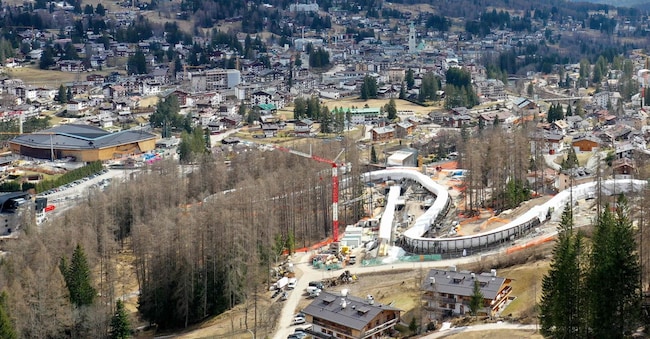
The Bobsled track, which has gone through various vicissitudes and will eventually be built by Pizzarotti, is among these works. Its commitment was reaffirmed yesterday by president Paolo Pizzarotti, also a guest on Radio 24. "It will be the best in the world," said Saldini. Also speaking about infrastructure and legacy were Daniel Alfreider, councillor for mobility of the province of Bolzano; Francesco Conci, CEO of Fiera Milano; Elisa De Berti, vice-president of the Veneto Region; and Maurizio Fugatti, president of the Autonomous Province of Trento. As far as the extra costs are concerned, the crux is still the same: the Milan facilities of the Olympic Village - which once the competitions are over will become a student residence - and Palaitalia - where the men's hockey will be held and which in the future will become a building for major events - have not yet found the resources to cover the extra costs, which amount to about 100 million in total. Varnier reiterated yesterday at the microphones of Radio 24 that it is not the Foundation that can find an answer, but the government. Government, however, which at the moment cannot find a solution to the problem of financing private entities with public money (and which will precisely carry out private activities once the Olympics are over). European rules prevent this. The solution still has to be found.


