Equality of rights

The Milan Court rules on the class action against social media platforms

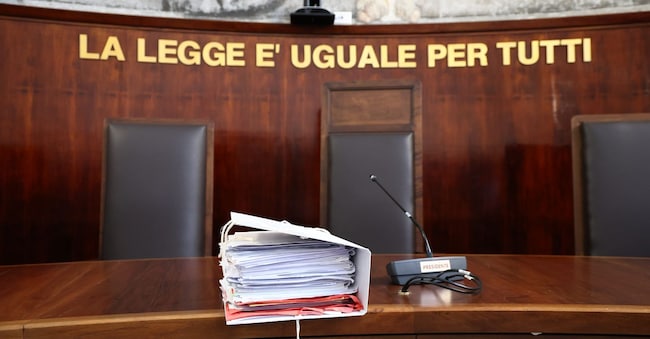
TRIBUNALE MILANO LA LEGGE E' UGUALE PER TUTTI FALDONE AULA INTERNO IMAGOECONOMICA

3' min read

Translated by AI
Versione italiana

3' min read

Translated by AI
Versione italiana

The class action brought by the Italian Parents’ Movement (Moige) against Meta (Instagram and Facebook) and TikTok is about to reach a turning point. The final hearing is scheduled for Thursday 19 November, when the Milan Court’s specialised commercial division will hear the collective action for an injunction brought by Moige, together with a group of families and with the assistance of the Turin-based law firm Ambrosio & Commodo in Turin, which is asking the judges to order the platforms to modify algorithms and features that are harmful to minors.

The Milanese judges will first have to settle the issue of jurisdiction. At the first hearing (which took place on 14 May), the lawyers for Meta and TikTok, before contesting the substance of the allegations, challenged the jurisdiction of the Italian courts, arguing that the dispute should be heard in Ireland, as both companies’ European registered offices are located in Dublin.

Loading...

This is a preliminary issue, and the Milan Court’s decision on it will be significant, not only for the Moige proceedings but also for future legal actions, for which it will set a precedent.

The objectives

The Moige class action is an injunction and not a claim for damages. In other words, it aims to compel the social media giants to change the way they operate in three areas:

- the introduction of effective age verification systems to prevent under-14s from registering and to delete existing accounts that have not been authorised by parents;

- blocking or modifying the mechanisms that create addiction by compulsively capturing users’ attention (such as infinite scrolling, constant notifications and profiling) and which, according to the prosecution, are used despite the companies being aware of their harmful effects;

- clear information on the risks and possible adverse effects on children’s mental and physical well-being (sleep deprivation, impaired concentration and psychological distress).

“We strongly reject these allegations, which ignore our commitment to supporting young people,” said a Meta spokesperson. “Teen accounts offer built-in safeguards that limit who can contact teenagers, the content they can access, and the time they spend on Facebook and Instagram. We will continue to work to protect young people and ensure their safety.”

Around the world

Loading...

Moige’s case is the first class action brought in Italia to protect minors in the digital world, but there are now thousands of cases against social media giants accused of causing mental health harm to children and young people, particularly in the United States. In a ruling described as historic last March, the Los Angeles Court ordered Meta and Google (YouTube) to pay six million dollars for causing a minor to develop an addiction and psychological harm, including body dysmorphic disorder, depression and anxiety (TikTok and Snapchat had reached a settlement before the trial began). Above all, however, according to the judges, Meta and Google knew that the mechanisms designed to maximise user engagement (and thus corporate profits) could cause problems for the most vulnerable individuals, yet they failed to prevent this.

In many cases, companies prefer to reach settlement agreements: in August, Meta settled the high-profile lawsuit brought by dozens of US states by agreeing to pay $17.1 billion over ten years and committing to introduce daily usage limits, scroll breaks and blocks on night-time notifications. However, the company led by Mark Zuckerberg has denied the existence of a cause-and-effect link between social media use and psychological harm to minors, and the settlement cannot be regarded as a legal precedent.

In early November, Meta, TikTok and Google also challenged the new Californian law which prohibits the provision to under-16s of features deemed to be psychologically manipulative (such as autoplay and personalised algorithmic feeds): according to the platforms, this violates the constitutional principle of freedom of expression and interferes with parents’ educational choices.

Copyright reserved ©
Loading...

Brand connect

Loading...

Newsletter

Notizie e approfondimenti sugli avvenimenti politici, economici e finanziari.

Iscriviti