Assolombarda

Milan, from the Games a jolt to GDP

In 2026 expected +1.7%, from the event (worth 0.4%) added value of one billion. Biffi: 'Now to transform momentum into structural growth'.

by Luca Orlando

6' min read

Translated by AI
Versione italiana

6' min read

Translated by AI
Versione italiana

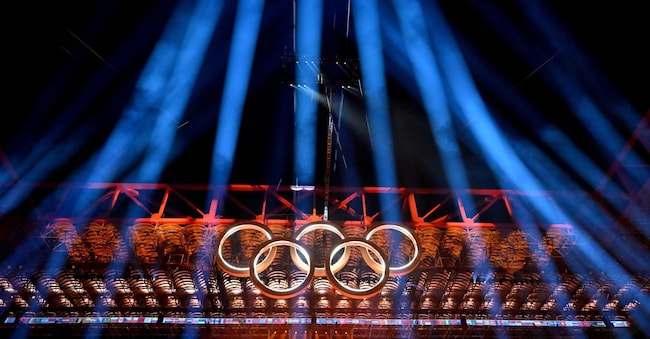
The boost of the Games. And then the surge in tourism, the growing influx of international students, the virtuous paths of services and industry. Development factors that will push Milan's GDP to grow by 1.7% in 2026, more than double last year's figure, with a non-trivial contribution (0.4%) linked precisely to the Winter Olympics.

A detailed estimate of the economic impact on the territory is provided by Assolombarda, which together with Milano&Partners is producing the fifth edition of the report 'Your Next Milan', analysing the main trends affecting the metropolis.

Loading...

Among the one-off variables, the impulse of the Winter Olympics is the most significant (the event, not by chance, is organised at Casa Italia), generating a production of 2.5 billion euro, corresponding to an added value of over one billion. A boost to GDP that is therefore worth 0.4%, even though it is distributed from the start of the works to the end of the event.

Lights, those highlighted by the report on Milan, are contrasted by some shadows in relation to the international benchmarks examined, particularly in terms of international greenfield investments (down from 59 to 47), talent and innovation. The comforting figure of foreign students, for example, at 7.8% of the total, still places us at the bottom of the class compared to the metropolises analysed, just as we are also last in the class in terms of tourism numbers.

These nodes, however, are decidedly fading into the background at a time when Milan's global visibility is at its highest thanks to the Winter Olympics, an event that produces beneficial effects in many respects. "It represents a great accelerator of public works that the territory has been asking for for years," explains the president of the Lombardy Region, Attilio Fontana, "plus a legacy of 30 thousand solid and qualified jobs.

'While it is true that in terms of immediate tourism the Winter Games have always been inferior to the Summer Games,' explains the Mayor of Milan Giuseppe Sala, 'the current Winter Games are the most viewed editions in the world and this extraordinary media visibility is already a huge success.

'Tourism, infrastructure and wellbeing are values that sport has always promoted,' explains CONI president Luciano Bonfiglio, 'and during the Olympics this happens at the highest level: three billion people look at these wonderful images of our territory, which in the light of the results also present Italia sport as a winning model.

Against a global budget of 9.4 billion, the part that gravitates on the Milan area is estimated at 735 million, a figure that rises if we include the indirect effects along the supply chains and the allied industries generated downstream, with spin-offs that are distributed widely, for example between hospitality (139 million), construction (57 million) and transport (51 million).

'When institutions move to tackle extraordinary events such as Expo or the Olympics,' explains Assolombarda president Alvise Biffi, 'the results always come: to take a step forward, it is time for the 'extraordinary' to become 'ordinary''.

Biffi emphasises the metropolis' long positive phase, which demonstrates Milan's ability to attract and generate value. 'Major events such as the Olympics,' he adds, 'represent an extraordinary accelerator. The real challenge is to transform this drive into structural growth, accelerating innovation, technology transfer, and the availability of capital and skills. In this perspective, it is necessary to provide Milan with tools suited to its international dimension, to simplify processes, strengthen the effectiveness of choices and support strategic investments. The debate on the special law for Milan goes in the right direction: we must consolidate the city's position among the most competitive and dynamic large European metropolitan areas'.

The effect of the Olympics

Against a global value of 9.4 billion, the budget of the Games in the Milan area is 735 million, including infrastructure organisation. Taking into account the expenses of visitors and participants, the direct expenditure is estimated by the study at one billion. Including the indirect effects along the supply chains and the ancillary industries generated downstream, the overall estimated impact is 2.5 billion in production, corresponding to 1.045 billion in added value: this is 0.4 percentage points of GDP, with repercussions that are widely distributed among hospitality (139 million), construction (57 million) and transport (51 million). Significant impacts also affect the advanced tertiary and professional services, metallurgy, wholesale trade and ICT.

With reference to infrastructure investments, all the main interventions have been conceived with a view to their use after the Olympics and, looking to the future, call for a direction oriented towards urban regeneration in the long term. The trajectory of the Olympic investments in Milan, in particular with the Scalo Romana and the Santa Giulia area, is clearly oriented towards the southern area, becoming part of a territorial design of rebalancing within the city, after the fact that in the last fifteen years Milanese development has been concentrated mainly in the north-west quadrant, starting from Porta Nuova, along the route leading to the Mind area.

The expectations of the entrepreneurial system confirm the importance of the event. The survey conducted among Assolombarda companies on the eve of the event shows that a quarter expect "very significant" economic returns, while a similar proportion foresee a "not very significant" stimulus and only 6% expect no impact. The sentiment on the reputational effect is even more positive: almost half of the companies foresee "very significant" returns for the city's image, against 15% of more cautious evaluations and a marginal 5% of no expectations. For 50% of the enterprises, the Games represent an opportunity for new infrastructures and urban regeneration, as well as a direct benefit for the Milanese economy and a driver of international visibility. 61% emphasise that the full success of the event will be measured over a longer horizon, in the three years following the event.

The Olympic event is also capable of increasing the attractiveness of the territory for these events, within a framework that is already positive in any case: in the decade 2016-2025 Milan has in fact attracted 64 major world sports events, ranking 5th among the 11 cities analysed, just below Barcelona and ahead of New York, on the basis of an index that weights the number of events according to the level of participation, media visibility and intrinsic characteristics. Simulating for Milan the effect of the Games, it can be evaluated in a significant increase of the city's attractiveness in the overall ranking, where it would rise to 4th place.

The comparison of the Lombardy metropolis with benchmarks

Looking at the international comparison, Milan appears in 85% of the examined rankings and ranks 24th for overall resonance out of a sample of 568 urban areas.

In particular, it consolidates its role as a tourist and events destination, where it ranks 10th in average position and 4th among the benchmark cities. The problems remain the same as four years ago and concern consideration as a competitive city for talent and as an innovation hub, areas in which it continues to show no significant progress (the Lombard capital is 46th and 49th respectively, penultimate and last among the benchmarks).

Looking at foreign investment flows, there is a decline almost everywhere, falling in all the cities analysed and with greater intensity in Europe (with the exception of Barcelona). In preliminary data, Milan attracts 47 new foreign investments, down from 59 in 2024 (-20.3%) and on the lowest level since 2019, but still above the average of the pre-pandemic decade. The drop recorded by the Lombard capital is more contained than that of other benchmark cities, such as Berlin (-56.3%), Munich (-33.9%), Amsterdam (-27.4%), London (-25.3%) and San Francisco (-23.6%), but a consistent quantity differential persists compared to many peers: Milan's 47 greenfields compare with London's 222 projects, Paris' 115, New York's 101, Tokyo's 80 and Barcelona's 78.

The third guideline of attractiveness concerns the university system. In the 2024/2025 academic year the number of students enrolled in undergraduate and postgraduate courses totals 236,000, with a split between Italian students (215,000, -0.7%, down for the second year running) and international students, who rise to 20,000, offsetting the national drop and keeping the overall total stable. The figure confirms the international recognition of the quality of Milan's universities, but indicates a lower attractiveness towards the rest of Italia, an element that opens up a broader reflection on issues such as quality of life, affordability and housing supply.

Finally, on the tourism front, Milan will reach an estimated record 8.7 million arrivals in 2025 (+9.1% compared to pre-Covid 2019). The strong growth in international tourism - 5.3 million arrivals in 2024, +17.1% compared to 2019 - is accompanied by a still weak domestic demand, stable at 2.9 million and 16.5% lower than pre-Covid levels.

Copyright reserved ©
Loading...

Brand connect

Loading...

Newsletter

Notizie e approfondimenti sugli avvenimenti politici, economici e finanziari.

Iscriviti