The reportage / Pulse

Milan, record incomes and struggling suburbs: growth that divides

In Milan, wealth concentrated in the city centre coexists with precarious living conditions in the suburbs, aggravated by a lack of services and social fragility

by Silvia Martelli (Il Sole 24 Ore, Italia), Francesca Barca (Voxeurop, France), Lena Kyriakidi (EfSyn, Greece) and Ana Somavilla (El Confidencial, Spain)

Ansa

8' min read

Translated by AI
Versione italiana

8' min read

Translated by AI
Versione italiana

The great European cities tell stories of prosperity and growth, but also of profound inequalities. Milan, Paris, Athens and Madrid show how economic and cultural centres can coexist with suburbs marked by precarious housing, difficult access to services and social marginalisation. From the Parisian banlieues to the Milanese working-class neighbourhoods, from the Athenian suburbs to the Madrid suburbs, a common thread emerges: urban development often advances faster than the social fabric, generating 'two-speed' cities where opportunities are not distributed equally. Analysing incomes, access to housing, transport and public spaces, this reportage dedicated to Milan inaugurates a series, part of the Pulse project, offering a comparative look at how the suburbs of European metropolises live a dual reality, between wealth and fragility.

Milan, a two-speed city

Milan is the country's economic capital, a hub of finance, innovation and fashion. It is the city that is home to a third of the multinationals based in Italia and which - according to the most recent data - in 2023 generated a per capita GDP of over 70 thousand euros, more than double the national average. But this image of prosperity runs the risk of becoming partial if not downright misleading: beneath the surface of skyscrapers, coworking and start-ups, there hides a peripheral fabric of low incomes, social housing often in precarious conditions and families struggling to meet daily expenses.

Loading...

The inequalities can be read clearly in the numbers. The latest MEF report shows that the average declared income in Milan is about 35,300 euro gross, but this figure hides an enormous imbalance. In the 20121 postcode, i.e. in the city centre (Duomo area), the average is close to 94,400 euro, while in Quarto Oggiaro (20157) it plummets to 18,500 euro. It is a ratio of five to one that photographs a structural gap.

If one moves to other historical suburbs, the scenario changes little. In Baggio and Muggiano, incomes are around 23,000 euro. In Comasina or Villapizzone we are on similar values, well below the city average. These figures correspond to single-income families living in council housing, young people who are unable to leave their parents' home and pensioners who have to choose between paying their bills or doing their shopping.

Milan's double face is also reflected in the Gini index, which measures inequality: the city reaches a value of 0.54, one of the highest in Italia. It means that the benefits of growth are not distributed equally, but are concentrated in a narrow band of the population.

First the pandemic and then inflation have accentuated these fractures. The Caritas Milan Observatory reports that in 2019 there were about 100 families being cared for: in 2023 there were almost 300. It is not just a question of migrants or people without work, but of the working poor, poor workers who, despite having a job, do not earn enough to live with dignity.

This centre-periphery divide is not a new issue, but it is becoming chronic. The global city, which attracts investment and tourism, risks turning into a 'two-speed' metropolis, where the distance between a manager who lives in a penthouse in Porta Nuova and a cashier who lives in a block of flats in Quarto Oggiaro becomes unbridgeable.

Housing, the unresolved issue of the suburbs

The housing issue is the litmus test of Milan's inequalities. In 2025 the average rent reached around 270 euro per square metre per year. This means that for a two-room apartment of 60 square metres you needed about 1,300 euro per month: impossible for a family living on a salary of 1,600 euro.

Data from the OCA-Politecnico Observatory say that a factory worker with an average net income of 1,360 euro per month today can buy just 19 square metres. An office worker buys 25, a teacher just over 20. These are areas well below the minimum habitable threshold.

Public housing plays a crucial role in this scenario. According to recent analyses, Milan has about 59 thousand public housing units managed by Aler and the Municipality, with over 130 thousand residents in the ERP estate. However, a significant proportion of this housing is not currently assigned: in the city of Milan alone, over 16 thousand units are estimated to be empty or unused for maintenance or organisational reasons, contributing to the shortage of available supply. The ranking lists for public or social housing include tens of thousands of families, with numbers in the order of 23-24 thousand households on the waiting list, well beyond the annual allocation capacity. On the eviction front, the numbers for delinquency executions in 2023 remain high according to social observers and trade unions, although there are no official statistics published with city details.

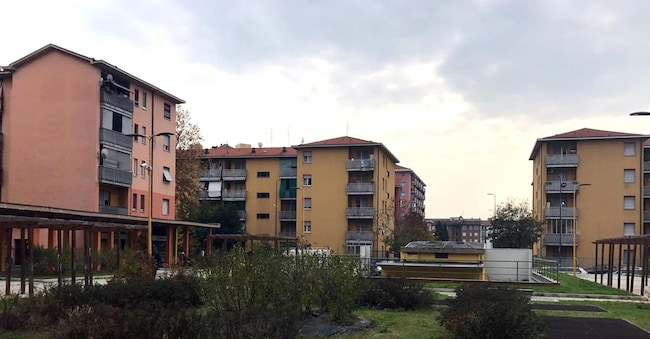
The most scarred suburbs - Gratosoglio, Quarto Oggiaro, Corvetto, Stadera - were born as working-class neighbourhoods and still bear the weight of that origin. In the affordable and social housing blocks, the average age of the buildings often exceeds 60 years. Infiltrations, broken lifts, obsolete boilers are the norm. Extraordinary maintenance is proceeding slowly, partly because the available funds are not sufficient to cover all needs. Meanwhile, town planning in recent decades has favoured the centre and prestigious areas. Porta Nuova, CityLife, the former Expo area transformed into MIND: these are multi-billion dollar operations that have changed the skyline. In the suburbs, on the other hand, regeneration is struggling to arrive. Projects such as the City Council's 'Neighbourhood Plan', which envisages investment in 88 areas including schools, green spaces and roads, represent an attempt at rebalancing, but the timescales are long and the needs immediate.

Elisa Numerati, head of Spazio Agorà in Quarto Oggiaro, explains that the families who attend the centre 'are people who tend not to be able to afford private rent. Most of them live in social housing, of which there are many here'. But access to the public is not easy either: 'Everything in the world of temporary housing still has waiting lists, even if there is an emergency'.

Housing thus remains the symbol of a split city: on the one hand lofts and luxury flats sold at over 10,000 euro per square metre, on the other council houses falling apart and families unable to pay their mortgages.

Health and the environment: more exposed suburbs

It is not only income that marks the distance between the centre and the suburbs: health is also unequal. A mapping conducted by the Milan Health Protection Agency shows that in some suburbs the mortality rate is up to 60 per cent higher than in the city centre.

There are several causes. First of all, the environment: areas with heavy traffic and fewer green areas record higher pollution levels. Fine particulate matter and nitrogen dioxide mainly affect areas such as Mecenate, Bande Nere, Lorenteggio. Here the health indicators get much worse: more respiratory diseases, more heart disease, more premature deaths. But there is also a social factor: in low-income neighbourhoods, less healthy lifestyles, lower levels of education and a lower propensity to take preventive action are more often observed. Those who struggle to make ends meet tend to postpone doctor's visits and check-ups. Result: delayed diagnosis, increased chronicity.

Not surprisingly, Caritas reports an increase in demand for basic medicines among assisted families. And neighbourhood associations report a boom in requests for food parcels that include fresh produce, which is often too expensive for family budgets.

In this scenario, the role of psychological services on the territory emerges as crucial. Francesca Acerbi, a psychologist and coordinator of the Jonas hub in Corvetto, recounts that the pandemic and economic precariousness have transformed citizens' demands: 'The questions we encounter are not of knowledge or personal growth, but of concrete need: families who do not make ends meet, isolated adolescents, lonely elderly people. The red thread that unites everything is loneliness'.

Thanks to the "Jonas in the suburbs" project, therapy in the hubs is accessible to all: the rates are social and range from free up to a maximum of EUR 15 per session, also supported by private entities such as the Amplifon Foundation. The aim is to guarantee continuity and respond quickly to emergencies without creating waiting lists, thus becoming a stable garrison for the neighbourhood.

The hubs do not only offer individual therapy: they create networks between schools, social services, communities and other institutions, helping people to find their way around the territory and to find support even for concrete needs such as political asylum or educational support. The approach is multidisciplinary and continuity-oriented.

In addition to psychological and psychotherapeutic treatment, the Jonas hub organises lectures and cultural activities, with the idea that culture itself is a garrison for the community and can counteract isolation: 'We don't want aggregation to be based only on marginalisation or to find space in crime,' Acerbi explains, 'but to have a place where culture vitalises the bond between people.

Rigenerazione urbana, perchè investire sulle città

Social composition and youth

Milan's suburbs are not all the same, but they share certain characteristics that highlight their fragility and inequalities. One of these is the strong presence of the foreign population: in neighbourhoods such as Corvetto or Gratosoglio, one in two newborn babies has at least one foreign parent. These communities are often well integrated, but live in precarious economic conditions and are concentrated in areas with low housing costs.

Alongside this, the suburbs register a higher presence of single-income or single-parent families, often with single mothers working part-time or in casual occupations. "The people we see are mainly families of foreign origin and in the vast majority only one member works," Numerati explains. This condition exposes them to vulnerability: it only takes an unforeseen event, an illness or the loss of a job to quickly slip into poverty.

A phenomenon that amplifies these fragilities is 'commercial desertification': many neighbourhoods have lost shops and neighbourhood shops, replaced by large chains or left vacant, reducing the vitality of neighbourhoods and increasing the perception of abandonment. Social fragmentation also fuels perceived insecurity, although crime figures do not show any significant increase.

Young people also suffer the consequences of these inequalities. About 20 per cent of 15-29 year olds in Milan fall into the NEET (Not in Education, Employment or Training) category, with a concentration in suburbs such as Comasina and Quarto Oggiaro. As Luca Giunti, author of the Polis report 'Giovani e periferie' (Youth and Suburbs), points out, "Milan tends to have less alarming indicators on average than other metropolitan city capitals, in terms of socio-educational discomfort. However, in some suburban areas the share of young people leaving education early can exceed 20 per cent, with values 'in line with or higher than the large cities in the south, for example Triulzo Superiore and Parco Monluè - Ponte Lambro, at around 28 per cent'.

Youth malaise is multidimensional: economic, educational and often psychological. Giunti observes that 'those who are born in a disadvantaged context, if there is no educational network to compensate for this disadvantage, are likely to fall into a condition of educational malaise, visible in the phenomena of early school leaving, insufficient learning and dropping out'. The cost of housing also contributes to reducing the opportunities available to young people, affecting the income of families.

In Quarto Oggiaro, the operators explain, something changed after 2020. "From 2020 onwards we have observed that the preadolescent and adolescent group finds it much harder to be in relationships and to manage their emotions, their inner world," says Numerati. "There was one year that every two out of three an ambulance would arrive for a panic attack at school."

However, the quality of local services can mitigate these disadvantages. Giunti explains: 'If a disadvantaged family has the opportunity to enrol its children in schools that work, and there is a strong social and educational network in the neighbourhood, the disadvantages at the start can hardly be cancelled, but they can at least be reduced'. For this reason, 'investing in the set of public services and the socio-educational network that can improve the condition of those who are born into a family that is disadvantaged to begin with is the main tool for combating existing inequalities'.

Milan continues to run. But as Acerbi says, in order not to leave anyone behind, it is essential that caring for the suburbs becomes a collective responsibility, and that there are permanent garrisons of support, not just occasional interventions.

*This article is part of the European collaborative journalism project "Pulse"

Copyright reserved ©
Loading...

Brand connect

Loading...

Newsletter

Notizie e approfondimenti sugli avvenimenti politici, economici e finanziari.

Iscriviti