
Milan: Housing Plan extended, but there is a shortage of contractors
The local council has postponed the deadline for the call for tenders, although neither cooperatives nor builders affiliated to ANCE intend to take part
by Sara Monaci
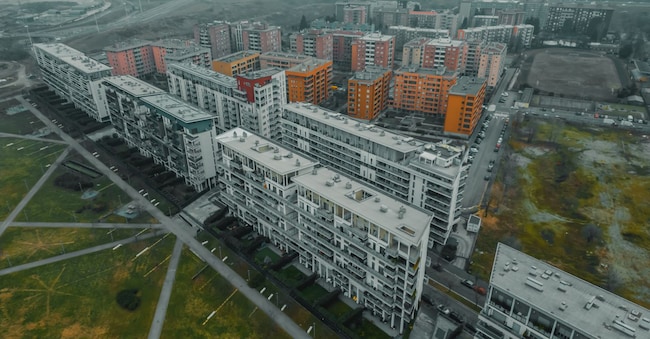
The City of Milan has extended the deadline for the major ‘Piano Casa’ tender: it was due to end today, but has now been extended to 31 August 2026. The aim is to find operators interested in a ‘90-year leasehold concession’ for the ‘Ex Palasharp’, ‘San Romanello’ and ‘Bovisasca’ property complexes, for the construction and management of affordable social housing and public housing services. However, no bids are currently on the horizon for these three large areas: the co-operative sector has not yet put forward a proposal and does not appear interested in doing so; the construction industry is equally unresponsive. There are now another two months to go, so never say never: nevertheless, the market is not currently providing the responses hoped for by Palazzo Marino.
The council’s Housing Plan is therefore currently experiencing delays and is characterised by a series of adjustments being made as the project progresses, which, however, are not yet achieving the objective. It began as a broad-brush plan at the end of 2024 under the previous councillor, Guido Bardelli, with the aim of building 10,000 flats over 10 years with an investment of around 10 billion, it took on its first concrete form in early 2025 under the leadership of the Councillor for the Budget and Public Property, Emmanuel Conte, who inherited responsibility for the scheme. However, last October it became clear that developers did not consider the proposal viable. The only tentative bid received was for 33 flats in Via Demostene (just one valid bid; the others were deemed invalid).
At the start of 2026, corrective measures were therefore introduced: a proportion of between 20 and 30 per cent to be offered for sale under a subsidised scheme, alongside the 70 per cent of homes earmarked exclusively for rent at 80 euros per square metre, intended for income brackets between 1,500 and 2,000 euros – that is, those who, in Milan, can no longer find suitable accommodation on the open market or even under the rent-controlled scheme (which, in the Lombard capital, is not much lower).
The first three new calls for tenders were therefore launched in March, with plans to launch a further two shortly afterwards (a design competition has also been mooted for Via Zama–Via Salomone and the Porto di Mare neighbourhood, given the size of the areas). Furthermore, Councillor Conte has scaled back the initial number of new homes to be built, introducing the possibility of ‘repurchasing’ existing buildings owned by the public administration (local councils and their subsidiaries) and redeveloping them using national and regional funds. A few days ago, in this regard, a call for tenders was launched for the regeneration of four buildings on Via Trivulzio, to be used specifically for social housing.
The call for tenders for the first three neighbourhoods has now been extended, though there is a distinct sense that, once again, no one is really interested in taking part: the co-operatives affiliated with Lega Coop believe that the conditions for participation are not in place and that the plans are not viable; the response from Confcooperative is equally lukewarm. If this is the assessment made by the co-operatives, one can only imagine the view of the construction firms belonging to the trade association Ance: as far as they are concerned, the project is completely unsustainable.


