
Milan: the former Olympic Village student accommodation opens, meeting 6 per cent of demand
80 per cent of the beds have already been allocated through agreements with universities and businesses. A state-of-the-art accommodation facility, the result of a major collaboration between the parties involved

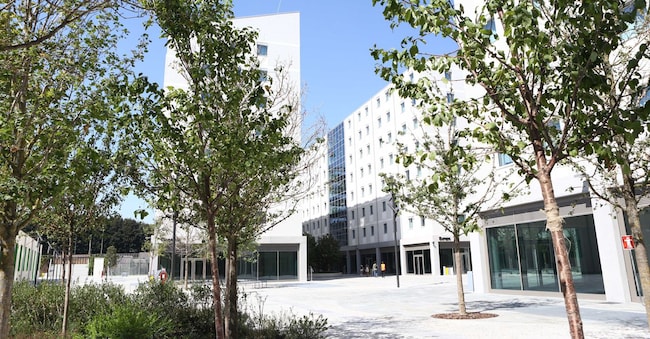
The Village officially opens its doors to students, Italia’s largest subsidised student accommodation complex with 1,698 beds, built for the 2026 Winter Games by COIMA SGR – a company specialising in the investment, development and management of property assets on behalf of institutional investors – and refurbished in record time. To date, 80 per cent of the accommodation places at the facility (around 1,300 students) have already been allocated through agreements reached with local public and private universities, companies and direct bookings via the website.
Managed by CXLiving under the CX Campus & Hotel brand, which oversees the facility’s community engagement, events, commercial letting and coordination of residential services, the Village – as explained in a statement from Coima – “welcomed its first residents as early as the end of August, ahead of the start of the academic term and fully in line with the objective of making the facility immediately operational for the 2026/2027 academic year”.
The student community
The student community currently living on campus “is large and diverse, reflecting the campus’s strong international character: over a third of the students are Italian (39 per cent), whilst the remainder come from 80 countries, with significant numbers from the United States (5 per cent), France (3 per cent), Turkey (6 per cent), India (5 per cent) and numerous other nationalities. Completed in a remarkably short timeframe with a construction schedule of just 30 months, the Village is now providing a home for students following a record-breaking conversion process: in fact, just four months have elapsed between the conclusion of the Olympic and Paralympic Games and the facility’s full restoration to use, making this one of the swiftest post-event transformations of temporary infrastructure on this scale”.
Accommodation capacity
The student accommodation “currently helps to meet 6 per cent of the demand for student beds in the city of Milan, estimated at 30,000 places out of a total student population of 200,000”. The Village is situated in the heart of the new Scalo Romana district, which will comprise a total of 105,000 square metres of residential space: “Of this, 50 per cent will be social and public housing, including the Village’s approximately 1,700 beds, thereby providing a concrete solution to the housing needs of over 2,500 people and actively contributing to the City of Milan’s Housing Plan and the sustainable housing plan promoted by Confindustria. In addition to the subsidised beds in the student accommodation, around 320 housing units will be built as social or subsidised housing under the framework agreement signed between COIMA and CCL (Consorzio Cooperative Lavoratori), of which 220 will be standard subsidised housing (with allocation costs of less than €4,000 per square metre), which will fund around 100 units in public housing (ERP, with an average annual rent of around €30 per square metre)”.
Fully backed by Italian institutional investors
The Village, the statement continues, “is a project funded entirely by Italian institutional investors, with a 5 per cent return provided for in the agreement signed with the City of Milan. This is a return that is in line with market rates, just one percentage point higher than the yield on 30-year BTPs (considered a risk-free instrument) and consistent with the social housing (ERS) nature of the project. The project has also involved extensive collaboration between investors and institutions: Intesa Sanpaolo, acting as both investor and lender alongside Crédit Agricole and the Istituto per il Credito Sportivo through a Green Loan of approximately 110 million euros, and CDP, which, through CDP Real Asset SGR and the National Social Housing Fund (Fondo Nazionale Abitare Sociale), contributed to the expansion of subsidised housing units.
The Impact Fund, the main pension schemes and other organisations
In addition to these is the Impact Fund – Italia’s largest national urban regeneration fund, with assets under management of 1 billion euros – supported by the country’s leading pension schemes, including numerous members of ACRI and Adepp: Cassa Forense, ENPAM, Inarcassa, Cassa dei Dottori Commercialisti, the Intesa Sanpaolo Group, Compagnia di San Paolo, Fondazione Padova e Rovigo, the Monte dei Paschi di Siena Pension Fund, ENPACL, and the BCC-CRA National Pension Fund. The project was also supported by a broad institutional coalition comprising the Lombardy Region, the Municipality of Milan, the Milano Cortina 2026 Foundation, CONI, the Ministry of Economy and Finance, the Ministry of Sport, the Ministry of Infrastructure and Transport, the Ministry of Universities and Research, and the FS Italiane Group”.

Brand connect


Newsletter Scuola+
La newsletter premium dedicata al mondo della scuola con approfondimenti normativi, analisi e guide operative
Abbonati