
MILANoLTRE: 40 years of the festival
This edition is running until 11 October at the Teatro dell’Elfo’s historic venue and at other venues such as the PAC, the BASE, the Sormani Library and the MA*GA museum in Gallarate

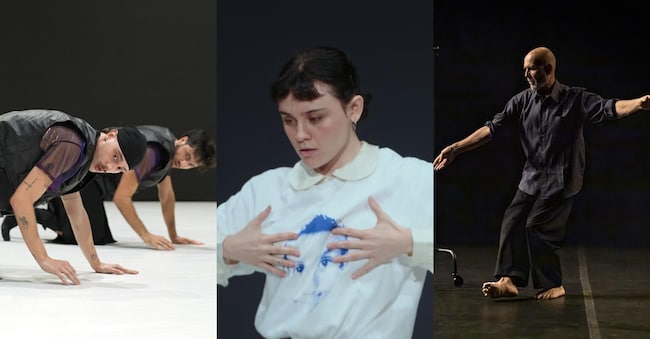
Forty years is a significant milestone for MILANoLTRE, one of Italia’s longest-running dance festivals. Amidst the celebratory atmosphere that characterises this year’s edition – running until 11 October at the historic Teatro dell’Elfo and other venues such as the PAC, BASE, the Sormani Library and the MA*GA museum in Gallarate – director Lorenzo Conti, who took over from Rino De Pace last year, is keen to emphasise how important memory is for moving forward: “‘Inheriting the future’ (the Festival’s theme) means continually creating the conditions for the new to emerge,” he states, in keeping with the founders’ maxim: “Our favourite show is the one yet to be discovered.”
The varied programme of this 40th edition therefore runs along several strands: on the one hand, there is a focus on ‘Dance and Sport’, the latest offshoot of the Milan-Cortina wave; on the other, there are international guest performances featuring the Ballet de Lorraine, Moritz Ostruschnjak from Germany, and Radouan Mriziga from Morocco.
Susan Sontag
But the main focus of the Festival is on Italian dance, featuring both delightful new discoveries and established masters such as Virgilio Sieni, who, until 3 October, will be presenting his poetic tribute to Pasolini, *Ma a che serve la luce?*, whilst on the 3rd and 4th, at the PAC, he will restage a site-specific version of *II corpo degli altri, a reflection on pain and memory inspired by the thinking of Susan Sontag.
In recent days, this “hotbed” of young Italian creativity has showcased, amongst other things, an intimate work by Noemi Piva, Settembre non arriverà mai, in which the young choreographer and performer weaves a personal diary of painful yet formative memories – a physical confrontation with recollections, traumas and emotions, in dialogue with the soundscape created on stage by Lorenzo Minozzi. Amidst tremors, jolts, automatic movements, falls and recoveries, Piva seeks to piece together the shards of a life, represented by the fragility of a tea set which she reassembles in a disjointed manner with the aid of coloured modelling clay. Whilst the words she utters copiously – even whilst aware that ‘vocabulary is insufficient to tell the truth’ – remain suspended like those of childhood, it is the body, and therefore dance, that takes on the task of processing the wounds. An eloquent and living body, like a heartbeat amplified by the microphone until the lights go out.
Young choreographers, who very often perform their own creations, frequently remain rooted in autobiographical themes, which, at best, become a paradigm of the confusion of our times. At times, they venture into metaphors about society’s technocratic drift, attempting to understand how this influences everyday life. Francesca Santamaria’s intriguing work, *Good Vibes Only (the great effort)*, appears to move in this direction, as she explores the uncontrollable overload of information, stimuli and images that digital devices bombard us with every day. Her performance is a dizzying, tragicomic succession of micro-choreographies derived from television formats and crass clips from TikTok and other social networks, interspersed with references to classical ballet, Pina Bausch’s *Nelken Line* and Ravel/Bejart’s *i**Bolero*.

