The project organised by Assolombarda

Milan steps into the future: the ZIS on Artificial Intelligence gets underway

Regional resolution approved. Biffi: ‘A key asset for competitiveness; this will enable us to continue attracting capital and talent’

6' min read

Translated by AI
Versione italiana

6' min read

Translated by AI
Versione italiana

Computer vision to reduce waste. Plus, rapid document extraction from diverse sources, data sharing throughout the supply chain, and simplified preparation of technical quotations for complex specifications.

These are just a few of the possible applications that integrate artificial intelligence into the day-to-day running of a business, examples of Physical AI that represent a key focus of Assolombarda’s ForgIA project, which aims to develop a shared and secure platform capable of harnessing the vast amount of existing industrial data by optimising model training and developing new applications. This is a central theme for Confindustria’s first regional branch, which has organised a dedicated event on Physical AI with the aim of providing an overview of the current state of the art, whilst at the same time revitalising the region’s role. From today, this initiative is gathering pace, becoming an Innovation and Development Zone (ZIS) specifically focused on these issues, as announced yesterday by the Lombardy Region and by Assolombarda itself, the promoter of the initiative. The regional resolution approving the application gives the green light to the new initiative, named Officina AI, with Assolombarda acting as lead organisation, whilst Made Competence Center will serve as the hub and managing body for a partnership that currently involves 19 public and private organisations.

Loading...

“Milan,” explains Alvise Biffi, president of Assolombarda, “is today taking a concrete step towards the goal we set out at the General Assembly: to make our region the hub of AI. Because we do not want to limit ourselves to simply adopting the technology: we want to help build it, starting with Physical AI, where our manufacturing and mechatronics sectors offer a unique advantage in Europe. But the gap between large companies and SMEs is still wide, and this is where ZIS must make a difference: bringing AI to small and medium-sized enterprises, along with the skills to use it. We are already doing this with forgIA, the shared and secure digital ecosystem we have promoted to harness the value of industrial data. Zis demonstrates how the Greater Milan area knows how to work as a cohesive system: institutions, universities, large companies, start-ups and training providers all working together in a public-private partnership that puts AI at the service of people and productivity – the only way to generate widespread prosperity.”

The Assolombarda Quadrilatero is the ideal location for this initiative, with an industrial added value of over 44 billion and more than 13,000 businesses in the mechatronics sector alone, in addition to more than 2,500 start-ups – almost a quarter of those operating in Italia.

“Today we are formalising a new manufacturing initiative: the ZIS strategy,” comments Guido Guidesi, Regional Councillor for Economic Development, “stems from a desire to make the most of the strengths and expertise of Lombardy’s regions, bringing together businesses, universities and research centres to strengthen the competitiveness of the entire production system. “Today we are continuing on a path that aims to create a manufacturing cluster specialising in AI production, promoting technology transfer and supporting businesses as they tackle the challenges of the future.”

“If we want to remain competitive on the world stage,” summarises ICE President Matteo Zoppas, “there is only one train passing by – that of artificial intelligence – and we must board it now. We must use these new tools to seize new opportunities, whilst amplifying the creativity of ‘Made in Italy’.” The main pillar of the strategy is to capitalise on the strengths of our industrial system. For whilst the US – and, to a lesser extent, China – clearly lead the way in terms of developments in models and platforms, it is in the practical application of these methods that Italia can play a leading role.

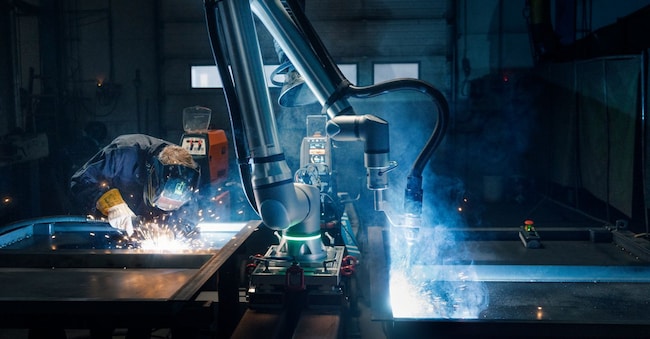
Manufacturing capacity integrated with new forms of intelligence – this is the challenge – can thus become a formidable asset for revitalising our role in global markets and attracting investment that views Italia as an advanced production hub. These objectives are achievable if our companies are able to make the transition: moving from generative AI to AI integrated into decision-making and operational processes. ‘Italia’s advantage,’ adds Marco Taisch, president of the Made Competence Centre, ‘is not the algorithm but our know-how. It is in this transition from pilot project to industrialisation that Made will make its expertise available to the new Zis. Starting with what we do best: our demonstration factory, where companies can see the technologies in action before they even invest; our secure testing environments; and our training programmes tailored to the needs of businesses.” At yesterday’s event, held at Assolombarda, the spotlight was very much on the companies themselves – both Italian and international – organisations (see articles on the opposite page) that showcased the Physical AI solutions they have developed: from welding robots and high-tech last-mile deliveries to robotic production lines for biopharmaceuticals and drones capable of mapping progress on a construction site. Not a possible future, but a clearly visible slice of the ‘present’. ‘Physical AI,’ concludes Biffi, ‘is central to our industry, and by developing this asset we can attract capital and talent: because young people, generally speaking, choose to go where the future is being created.’

Company stories/1: Fincantieri

Even in a sector that appears to be mature, such as shipbuilding, Physical AI is becoming part of day-to-day processes, as demonstrated by Fincantieri’s experience: the company has dedicated a specialised plan (Boost) worth 100 million and a centre of excellence staffed by 20 people to the areas of advanced automation and industrial innovation. Operational applications where AI comes into play – primarily during the machine learning phase – include, for example, robots used to monitor progress on shipbuilding sites, mapping and flagging changes at every point on the ship compared to the previous survey; this system is already operational at the Monfalcone site. There are also rovers that autonomously transport materials around the sites and drones that use computer vision to inspect welded joints. These activities are already being carried out using cobots and, looking ahead (with initial tests scheduled for Sestri Levante in 2027), humanoids.

“AI,” explains Pierroberto Folgiero, CEO and Managing Director of Fincantieri, “is a key driver for the transformation of shipbuilding and for the competitiveness of our industry. Bringing it into the physical world means supporting the evolution of industrial processes through ever-greater integration between technology, robotics and expertise. It is a process that boosts productivity, improves efficiency and enhances industrial know-how, strengthening the manufacturing sector’s ability to tackle the challenges of a constantly evolving environment.”

Business stories/2: Coco Robotics

Not in a garage this time, but in a student hall of residence. It makes little difference, however, because Coco Robotics’ grassroots journey confirms the vitality of the US start-up ecosystem, where ideas often manage to scale up rapidly. The company was founded six years ago in California by Zach Rash and Brad Squicciarini, at the time two recent UCLA graduates with a passion for autonomous driving technology.

Loading...

The initial idea, which was subsequently put into practice, was to create a compact electric mini-vehicle designed exclusively for the delivery of small parcels over the so-called ‘last mile’.

This expansion is extending even beyond the United States, as evidenced by the agreement reached with Deliveroo to roll out robot deliveries in towns and cities across the United Kingdom (starting in London at Canary Wharf). These projects are being fuelled by the $80 million raised from investors over the summer: as a result, the company has grown from managing deliveries for 50 brands two years ago to 5,000 today. Artificial intelligence comes into play to ensure accurate GPS positioning even in the most complex urban environments, whilst neural networks process data from Lidar and ultrasonic sensors in real time, as well as from high-resolution cameras, minimising the need for remote operator intervention and instantly detecting obstacles and pedestrians.

The company is growing rapidly and has already made more than 500,000 zero-emission deliveries since it was launched.

Business stories/3: Multiply Labs

Four people at present. That figure is set to rise to 20 as early as next year, reaching almost 50 the year after. Significant growth is expected for the Italian branch of Multiply Labs, a Californian start-up specialising in the development of robotic systems for advanced biological therapies. The idea, which has already been developed into practical applications, is to replace human handling of materials as much as possible, thereby eliminating the risk of contamination and exponentially increasing productivity. ‘In this way,’ explains Enrico Racca, Chief Manufacturing Officer at Multiply Labs, ‘the costs of these treatments – which can reach $300,000 for a single person – are drastically reduced, making them much more accessible. In terms of productivity per square metre, we can achieve a two-fold increase.” Moving from a setup with 4–8 operators who produce 1–2 doses per unit of time in a 100-square-metre space to one where a single operator, in half the space, can produce dozens of therapies. These results have been achieved by replicating the production processes and cell handling carried out by technicians using robotic systems and by applying Physical AI. ‘This,’ explains the manager, ‘allows us to use videos filmed inside the cleanrooms to teach the robots the exact movements and procedures to carry out, which are crucial to the success of the process.’ Multiply Labs already has a number of concrete applications on the market with pharmaceutical companies, with Italia playing a key role in the manufacturing roll-out of the entire process.

Copyright reserved ©
Loading...

Brand connect

Loading...

Newsletter

Notizie e approfondimenti sugli avvenimenti politici, economici e finanziari.

Iscriviti