The council’s accounts

Milan: budget adjustment totalling 203 million. Increased spending on public transport and salaries

Public transport has exceeded the one-billion mark this year

 ANSA

3' min read

Translated by AI
Versione italiana

3' min read

Translated by AI
Versione italiana

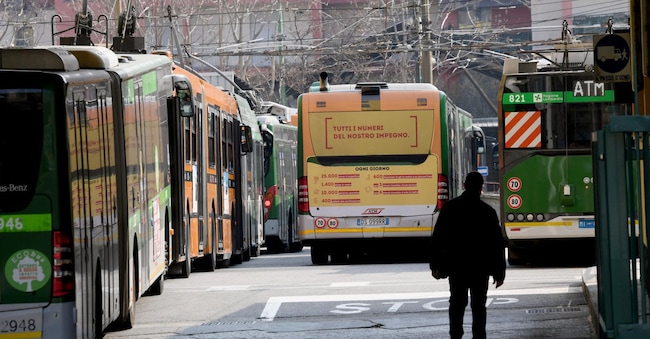
In Milan, a summer budget adjustment of 203 million, up on previous years. The starting point is that the council’s expenditure is rising partly due to external factors – from inflation to energy costs – and partly because certain sectors, foremost among them local public transport, are demanding ever-increasing resources: this year, local public transport expenditure has exceeded the one-billion-euro mark.

The main expenditure items included in the budget will be covered by a surplus of 165 million and, for the remainder, by a combination of cuts and increased revenue. This is a balance that Palazzo Marino is “accustomed” to achieving during the summer months, with a steady increase in budgeted expenditure. From 2022 to the present day, the figure has risen from 75 million to the current 203 million, the highest figure of the last five years.

Loading...

Here is how the increased expenditure will be allocated: 77 million will go towards public transport operated by the subsidiary ATM; staff costs will rise by 32 million (including 16 million to cover pay rises); 19 million will go to welfare; 12.7 million to culture; 9.5 million to housing; 9.6 million to property maintenance (for ancillary services, cleaning of schools and nurseries); 6.5 million to education; and 3 million to green spaces. It should be noted that energy costs for heating and electricity have risen by 15.3 million.

As regards the capital account, the largest items of expenditure amount to 322 million, of which 100 million is for the Housing Plan.

The impact of transport is growing

For the first time in Milan, the cost of local public transport has exceeded 1 billion. This is an item of expenditure that is set to rise and is having an ever-greater impact on the budget, particularly following the completion of Metro Line 4, which now accounts for around 100 million a year in the budget. At the start of the second Sala administration’s term, in 2022, the cost stood at 843 million.

400 million of the funding requirement is covered by ticket sales, to which is added 263 million from the national public transport fund, but ‘almost 400 million still falls on the shoulders of the council,’ says Emmanuel Conte, Councillor for the Budget and the Extraordinary Housing Plan. ‘ ‘This item has the greatest impact on the council’s overall tax revenue, which is why we have tripled expenditure since 2019.’

The issue of the tourist tax

For the forthcoming draft budget, the crux of the matter remains the same: the ‘loss’ of revenue from the increase in the tourist tax, which was only intended for the year of the Milan and Cortina Olympic Games – 2026, to be precise. From next year, the rate will revert to €5; it will no longer be €12 as it is now (of which, however, 50 per cent is returned to the government). For the City of Milan, this return to ‘normality’ means a shortfall of €30 million in revenue. ‘We are waiting to see whether they will bring us into line with other cities such as Rome, Florence and Venice, given that this is a tax paid mainly by foreign tourists and high spenders. It is not, therefore, a significant issue for families,’ emphasises Conte.

“We are in dialogue with the Minister for Tourism, Mr Mazzi,” he added, “but so far it has not yielded much. We are asking to be treated on a par with other cities.” Finally, regarding the forthcoming budget, the councillor was blunt: “I don’t think it will allocate any funds to local councils; I don’t expect significant funding, even though we always ask for it.”

Copyright reserved ©

Brand connect

Loading...

Newsletter

Notizie e approfondimenti sugli avvenimenti politici, economici e finanziari.

Iscriviti