
After the salvo in Milan, the political and building investment game is over
The capital city without the 'Save Milan' now awaits the judges' rulings and watches with concern the possible slowdown in investment

3' min read
3' min read
No Save Milan. At least for the time being. The game of the amendment that should, on the one hand, stop the investigations for building abuse initiated by the public prosecutor's office, sanctioning the 150 or so previous projects carried out in Lombardy's capital in the last 3-5 years, and at the same time create a commission to give new urban planning rules for the future, is not yet over: the League, which has just withdrawn its rule consisting of these two essential elements, aims to try again with the Infrastructure decree, which will be voted on in a couple of weeks. It is an uphill game, however, because for this last decree the vote on amendments has already been concluded and the introduction of a further change would be a stretch. Possible, of course, but complicated, also because the ideas at the moment are not at all clear.
However, the Lega amendment represented a partial solution for the Municipality of Milan: the previous part would in fact be remedied - albeit with a sort of implicit accusation of having committed abuses to be condoned anyway - but uncertainty would be created about the future.
Uncertainty that now remains. Without an amendment, therefore, first of all the institutional clash between the Public Prosecutor's Office and the Municipality of Milan continues: the former which believes that the tool of the Scia, a self-certification by builders, has been improperly used to build constructions higher than 25 metres and with a volume higher than 3 cubic metres per square metre for which a more complex Implementation Plan or a building permit under a public-private agreement would be necessary; the latter which maintains that the most recent regulations, the building code with its updates, make it possible to renovate with a simple Scia, as long as the volume does not change, regardless of the 'outline' of the building.
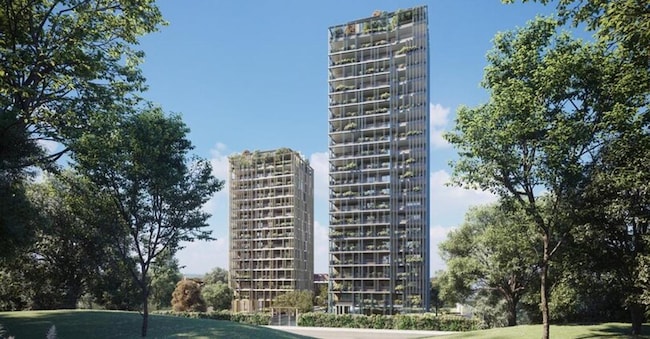
At this point, the enquiries will continue, and since some have even been closed (the most important ones, those relating to the Park tower, Piazza Aspromonte and Via Stresa), we will now have to wait for a clarifying judgement by a judge, in the hope that he will give a clearer interpretation of the rules. In fact, the main issue is all here, a different vision of the rules: for the magistrates the reference is the Ponte law of the 1960s; for Palazzo Marino the references are instead the Building Code and the updates up to 2011, which refer most of the choices to the regional laws and therefore to the local Pgt. A labyrinth of rules that the legislator has never clarified. An authentic interpretation would perhaps have been the simplest thing to do at the moment, and it is not ruled out that this type of solution could be worked on in the next two weeks.
In the meantime, investments in Milan are temporarily frozen, waiting for the scenario to clear up. For 'Real Estate Scenarios' the risk is to lose 38 billion in investments, with thousands of jobs, reducing the attractiveness to foreign funds coming to invest here.


