Cycling

Milan-San Remo, it will be a challenge between Van Der Poel and Pogacar. Italians lagging behind

Orphans of Vincenzo Nibali, and with Ganna more of a track phenomenon than a road phenomenon, for years we have been comprimarios, good backs with good technicians and mechanics. Never protagonists, though

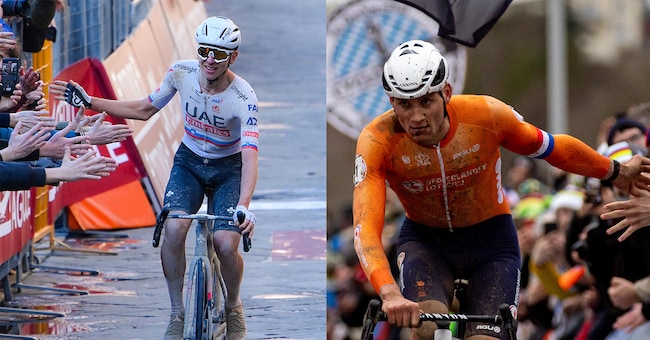
Tadej Pogacar e Mathieu van der Poel

4' min read

4' min read

With the 115th Milano-Sanremo, scheduled for this Saturday, cycling, a noble sport that has slowly emerged from its long winter hibernation, returns to centre stage. Some will argue that in reality cycling had already woken up for a while.

That it is no longer like in the days of Coppi and Bartali, when it was the flower race that kicked off the new season. And that some major races such as the Strade Bianche (won by Tadej Pogacar), the Tirreno-Adriatico (won by Jonas Vingegaard), Paris-Nice (Matteo Jorgenson) and Milan-Turin (Alberto Bettiol) have already struck a chord, highlighting, among other things, the two most titled champions (and rivals) of world cycling.

Loading...

All true, of course. Something important has already moved. But the problem with current cycling, especially Italian cycling, is that it no longer manages to make the headlines. Above all, to get off the pages of sports newspapers and specialised sites. And even if RAI covers it live, cycling has a hard time reaching the general public, increasingly crushed by football and other sports such as tennis which, thanks to Sinner and his brothers, has found a second youth.

The problem therefore concerns us, who, apart from Filippo Ganna, more of a track phenomenon than a road phenomenon, no longer have any champions of reference. There is a deep epochal and structural crisis. For years we have been comprimarios, good backs, good lieutenants with good technicians and mechanics. Never protagonists, though.

Orphans of Vincenzo Nibali (the last Italian to conquer the Sanremo in 2018) we are eternally waiting for an heir that does not arrive. And don't be fooled by the fine performance of the revived Alberto Bettiol at the Milan-Turin, a classic of ancient lineage deserted, however, by all the big names. Bettiol, a 30-year-old Tuscan, has been like a mirage in his career, disappearing after winning a resounding Tour of Flanders in 2018 and a stage of the Giro d'Italia in 2021 in Stradella.

Nibali "Milano-Sanremo? Occhio a Ganna"

We are dry, in short. We applaud with envy and admiration the young talents that seem to flourish only abroad. From the Dane Jonas Vingegaard triumphant winner of the last two Tour de France, to the Slovenian Tadej Pogacar, capable of dominating the Tirreno-Adriatico with an extraordinary breakaway of over 80 kilometres. And then the giants of the North: the Dutchman Van Der Poel, world champion and first at the last Sanremo; the Belgians Van Aert and Evenepoel, always protagonists; the seasoned but always fearsome Primoz Roglic, also Slovenian, only partly 'overshadowed' by the young cannibal Pogacar. And one could go on and on. Australians, British, Americans, Germans, Spaniards, some French. Globalised cycling speaks, apart from English, any language except Italian, which for decades has been the common lexicon of cycling.

We therefore arrive with our batteries undercharged at this Milano-Sanremo (starting in Pavia and finishing in Via Roma after 288 kilometres). We are held up by the remote hope that a sprinter like Jonathan Milan, the sprinter from Friuli who closed the Tirreno-Adriatico in style, will be able to remove the embarrassment with a sprint of his own. Because behind this 23-year-old, the Olympic track champion, who has electrocuted important names such as Kristoff and Philipsen, there really is a void. Suffice it to say that the first Italian in the general classification at Tirreno-Adriatico was Lorenzo Fortunato, the climber from Bologna who finished 14th, almost six minutes behind Vingegaard.

At least on paper, the duel for victory seems already written. And the protagonists are Mathieu Van Der Poel, rainbow champion and winner of the last edition, and the Martian Tadej Pogacar, a phenomenon who by now is even beating Eddy Merckx for his insatiable desire not to let any goal slip through his fingers. Two absolute big names who both have good reason to conquer the Sanremo. For the Dutchman, if he hits the one-two, it would be the best way to reaffirm that in one-day races he is number one. By winning in the rainbow jersey he would also enter the prestigious club of rainbow jersey winners in the classicissima (Alfredo Binda, Eddy Merckx twice, Felice Gimondi and Beppe Saronni).

As for Pogacar, there is little to add. He wants to win because he is a winner. Perhaps the Sanremo is more suited to the lightning-fast sprints of the Dutchman, but with the Slovenian, never say never. He has accustomed us to any feat. The only one who has put him in trouble so far is Vingegaard, beating him in the last two editions of the Tour. But the Dane is just another phenomenon, more built to excel on the big climbs of stage races. Pogacar is more like the old champions who test themselves on any terrain from February to October. That is why he is liked. He has virtually no weak points. And indeed, he will participate in both the Giro d'Italia and the Tour de France. A very ambitious programme, just as cheerfully ambitious as this Slovenian guy who, at 25 years of age, already has a frightening CV.

However, Van Der Poel has another arrow in his bow: that of Belgian sprinter Jasper Philipsen, his team-mate in Alpecin-Deceuninck, who was also a protagonist at Tirreno in the sprint to Follonica. In the event of a sprint finish, the Belgian could be a valid alternative. Just as we must also keep an eye on Slovenian Matej Mohoric, winner of the last edition and always ready to slip into the fight between the super bigs.

We shall see. As always, predictions at Sanremo are made to be denied. For example, Filippo Ganna, who has already come second once, is given as being late in terms of condition. That doesn't mean, however. You don't have to be one hundred per cent to win in Via Roma. Sanremo remains a strange race, fascinating but strange. Where everything is usually decided on the last ramp of the Poggio (3.7 km at 4 %). A long marathon that explodes about 9 kilometres from the finish line. You have to be good, concentrated and also lucky. Very lucky. That's what Merckx used to say, who won seven Sanremo races (an absolute record).

Never more than in this case does fortune favour the bold (and the deserving).

Copyright reserved ©
Loading...

Brand connect

Loading...

Newsletter

Notizie e approfondimenti sugli avvenimenti politici, economici e finanziari.

Iscriviti

Tutto mercato WEB